Key takeaways
- Airflow: Check the compressor’s CFM rating at 90 PSI and compare it with your spray gun’s requirements. A small mismatch can cause uneven coverage and frequent pauses.
- Tank size: Larger tanks provide a steadier reserve for longer passes, while smaller tanks save floor space and are easier to move around a home garage.
- Noise: Quiet operation matters in enclosed spaces, especially when painting furniture, panels, or trim near living areas. Oil-free models generally simplify ownership, though sound levels still vary.
- Portability: Wheels, a manageable footprint, and a convenient drain make a noticeable difference when equipment must be stored between projects.
- Spray setup: Confirm that the compressor, hose, fittings, regulator, and spray gun work together. Add a moisture filter to help protect the finish from water contamination.
What's inside
Choosing an air compressor for car painting is less about buying the biggest tank and more about matching airflow, noise, and workspace to the job. A compressor that looks capable on paper may struggle with a spray gun, cycle too often, or make a small garage unpleasant to use.
This guide compares practical options for home garages and compact work areas, focusing on tank capacity, usable airflow, oil-free convenience, portability, and painting suitability. The goal is to help you choose a compressor that supports smooth work without overwhelming your available space.
As an Amazon Associate we earn from qualifying purchases.


How to Choose an Air Compressor For Car Painting (2026)
- Airflow: Check the compressor’s CFM rating at 90 PSI and compare it with your spray gun’s requirements. A small mismatch can cause uneven coverage and frequent pauses.
- Tank size: Larger tanks provide a steadier reserve for longer passes, while smaller tanks save floor space and are easier to move around a home garage.
- Noise: Quiet operation matters in enclosed spaces, especially when painting furniture, panels, or trim near living areas. Oil-free models generally simplify ownership, though sound levels still vary.
- Portability: Wheels, a manageable footprint, and a convenient drain make a noticeable difference when equipment must be stored between projects.
- Spray setup: Confirm that the compressor, hose, fittings, regulator, and spray gun work together. Add a moisture filter to help protect the finish from water contamination.
The Best Air Compressor For Car Painting (2026)s Reviewed
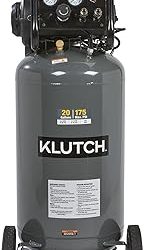
Klutch 29-Gallon Air Compressor
The Klutch 29-Gallon Air Compressor is the strongest choice here for larger painting sessions, with a 2.5 HP motor, 175 PSI maximum pressure, and 5.1 CFM at 90 PSI. Its vertical tank makes better use of limited floor space than a horizontal design, while the wheels and maintenance-friendly drain help keep a substantial unit practical in a home garage.
California Air Tools CAT-4610AC
The California Air Tools CAT-4610AC is a smart fit for compact workshops where noise and storage are major concerns. Its ultra-quiet, oil-free design, aluminum twin tanks, and 4.6-gallon capacity offer a convenient balance for lighter spray-painting work, trim, and intermittent automotive projects.
VEVOR 13-Gallon Air Compressor
The VEVOR 13-Gallon Air Compressor brings useful capacity without the footprint of a large vertical shop compressor. With 4.6 CFM at 90 PSI, 125 PSI maximum pressure, oil-free operation, wheels, and a stated 66 dB noise level, it is a versatile middle-ground option for spray painting, auto repairs, and woodworking.
MZB 6.4-Gallon Ultra Quiet Air Compressor
The MZB 6.4-Gallon Ultra Quiet Air Compressor suits makers who need a movable unit for occasional painting and repair work. Its oil-free steel-tank design, wheels, and 70 dB noise rating make it convenient for a shared garage, although its smaller tank is better suited to shorter sessions than continuous full-panel spraying.
Baotree 8-Gallon Portable Air Compressor
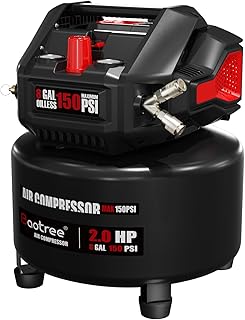
The Baotree 8-Gallon Portable Air Compressor is a practical entry-level option for mixed garage tasks, including spray painting, nailing, and basic car repair. Its oil-free tank, 150 PSI maximum pressure, and 2.8 CFM at 90 PSI provide useful flexibility, but painters should verify that their chosen gun does not demand more continuous airflow.
Frequently Asked Questions
What size air compressor is best for car painting?
For occasional panels and smaller projects, a compressor with a moderate tank and enough CFM for your spray gun can work well. Larger tanks and stronger airflow are preferable for full-car work or long, uninterrupted passes.
Is an oil-free compressor suitable for automotive paint?
Yes, an oil-free compressor can be suitable and is often convenient for home use. Moisture control remains essential, so use a regulator and an appropriate air filter or separator to help keep the spray stream clean.
Can a portable tire inflator power a paint sprayer?
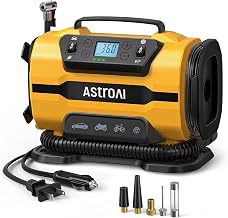
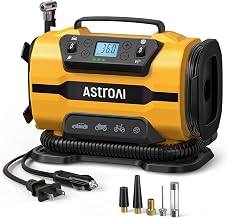
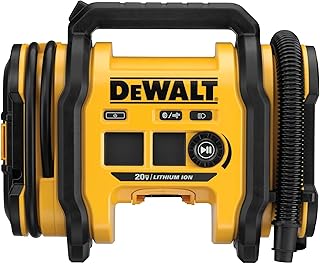
Usually not. The DEWALT Tire Inflator Portable Air Compressor 20V MAX is designed for tire inflation and includes automatic shutoff and an LED light, but its compact format is not a substitute for a compressor designed to deliver sustained spray-gun airflow.
Should I prioritize PSI or CFM?
Prioritize CFM at the pressure your spray gun requires. PSI indicates maximum pressure, but CFM better describes how much air the compressor can continuously supply during painting.
Final Thoughts
The Klutch 29-Gallon Air Compressor is the best fit for demanding home-garage painting, while the California Air Tools CAT-4610AC is especially appealing where quiet operation and compact storage matter. For a balanced middle option, the VEVOR 13-Gallon Air Compressor offers useful airflow, mobility, and capacity without taking over the workspace.