Key takeaways
- Airflow: Check the spray gun’s required CFM at its working pressure, then choose a compressor that can meet or exceed it. CFM at 90 PSI is a useful comparison point.
- Tank size: A larger tank provides a longer cushion between motor cycles, which can help produce steadier results on cabinets, dressers, and tabletops.
- Noise: Quiet operation matters in a small workspace. Models around the 60–70 dB range are generally easier to tolerate than conventional loud compressors.
- Footprint: Measure your storage area before buying. Upright tanks save floor space, while portable designs are easier to move around furniture and tuck away afterward.
- Moisture control: Use a regulator, quality hose, and inline moisture separator. Condensation in the air line can spoil otherwise careful paintwork, especially during long spray sessions.
What's inside
Spray painting furniture in a compact workshop is less about buying the biggest compressor and more about matching airflow, noise, and storage needs to your spray gun. A compressor that falls behind can create uneven coverage, while an oversized or overly loud model may make a small room unpleasant to use.
This guide focuses on practical choices for home furniture projects in 2026, with attention to usable airflow, tank capacity, portability, noise, and the realities of working in a garage, basement, or dedicated craft area. The included models range from compact hand-carry units to larger upright compressors suited to longer sessions.
As an Amazon Associate we earn from qualifying purchases.


How to Choose an Air Compressor For Spray Painting (2026)
- Airflow: Check the spray gun’s required CFM at its working pressure, then choose a compressor that can meet or exceed it. CFM at 90 PSI is a useful comparison point.
- Tank size: A larger tank provides a longer cushion between motor cycles, which can help produce steadier results on cabinets, dressers, and tabletops.
- Noise: Quiet operation matters in a small workspace. Models around the 60–70 dB range are generally easier to tolerate than conventional loud compressors.
- Footprint: Measure your storage area before buying. Upright tanks save floor space, while portable designs are easier to move around furniture and tuck away afterward.
- Moisture control: Use a regulator, quality hose, and inline moisture separator. Condensation in the air line can spoil otherwise careful paintwork, especially during long spray sessions.
The Best Air Compressor For Spray Painting (2026)s Reviewed
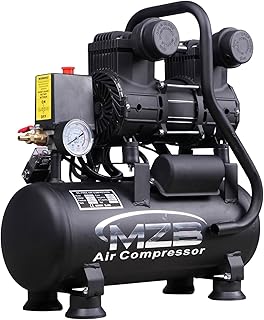
MZB 2.4-Gallon Ultra Quiet Air Compressor
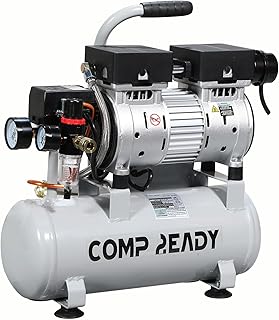
The MZB is a sensible fit for small furniture studios where storage and noise are major concerns. Its oil-free design, 5.65 CFM rating, and 115 PSI maximum pressure give it useful flexibility for detail work and intermittent spraying, though a small tank may require more frequent cycling during large projects.
VEVOR 13-Gallon Air Compressor
With a 13-gallon tank and 4.6 SCFM at 90 PSI, this VEVOR model offers a more comfortable reserve for drawers, chairs, and medium-size furniture pieces. Its wheels and 66 dB operation make it easier to reposition than many larger compressors, while the tank still needs a dedicated storage spot.
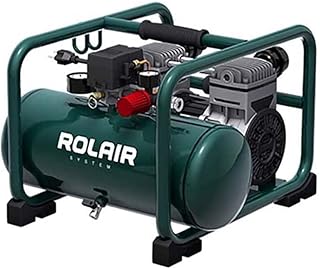
Rolair JC20 Super Quiet Hand Carry Compressor
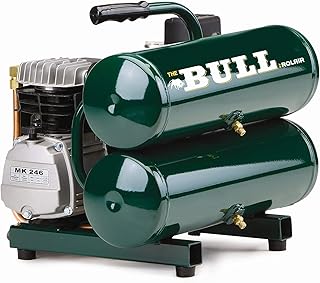
The Rolair JC20 is appealing when portability is more important than tank capacity. Its 2 HP motor and compact hand-carry format suit mobile touch-ups and smaller spray jobs, but users tackling full furniture refinishing should confirm that their spray gun’s airflow demands will not exceed the compressor’s output.
Rolair FC2002 2 HP Twin Stack Compressor
The FC2002’s twin-stack format provides a sturdy compromise between portability and usable reserve. Overload protection and a manual reset add practical reassurance for workshop use, while its shape is easier to store on a shelf or beneath a workbench than a tall upright tank.
MAX 18.5-Gallon Upright Air Compressor
This upright MAX compressor is the space-conscious choice for buyers who want substantial tank capacity without spreading equipment across the floor. Its larger reserve can be helpful for continuous furniture spraying, although the increased size and weight make it better suited to a semi-permanent workshop position.
Frequently Asked Questions
How much CFM do I need for spray painting furniture?
Start with the spray gun manufacturer’s CFM requirement rather than choosing by compressor horsepower alone. A compressor that delivers slightly more CFM than the gun needs is preferable because it reduces pressure drop and keeps the motor from running constantly.
Is a small air compressor suitable for furniture painting?
Yes, for small pieces, detail work, and short passes. A compact compressor can work well with a low-CFM gun, but larger surfaces may require pauses while the tank recovers. Plan your spray pattern and allow the compressor to catch up between sections.
Is an oil-free compressor better for paint spraying?
Oil-free compressors are convenient and require less maintenance, which suits many home workshops. Regardless of compressor type, use a moisture separator and inspect the air line regularly so condensation or contaminants do not reach the spray gun.
Does a larger tank improve spray-paint results?
A larger tank does not automatically improve atomization, but it can provide a steadier air supply and reduce how often the motor starts. The compressor’s actual CFM output, the spray gun, and proper regulation still determine whether the finish is consistent.
Final Thoughts
For compact workshops, the MZB 2.4-Gallon and Rolair JC20 are practical starting points when portability and noise control come first. Choose the VEVOR 13-Gallon for a useful balance of reserve and mobility, or step up to the MAX 18.5-Gallon upright when longer spray sessions and organized vertical storage matter most.