Key takeaways
- Measure the opening, not the window: Record the clear width and full vertical travel of the sash when fully open. Casement units like the Perfect Aire need roughly 23.5 inches of height and under 15 inches of width — verify both before ordering, since a half-inch shortfall means a return shipment.
- Decide between built-in and portable: A casement unit frees your floor entirely, which matters in a studio. A portable plus a vertical vent kit costs less and moves with you, but surrenders about two square feet of floor and needs hose clearance.
- Check hose diameter against the kit: Most portables use a 5.9-inch exhaust hose. Kits are built around that spec, so confirm yours matches rather than assuming — mismatches force you into adapters that leak conditioned air right back inside.
- Size the BTUs to the room, then stop: Roughly 20 BTU per square foot is the working figure. An 8,000 BTU unit handles a 350-square-foot bedroom; oversizing cools fast, then short-cycles and leaves the air clammy.
- Weigh noise more heavily in tight quarters: In a one-room layout there is nowhere to escape a loud compressor. Inverter-driven units run quieter and modulate output instead of slamming on and off, which is the difference between background hum and sleep disruption.
What's inside
Vertical sliding windows — the tall, narrow casement and slider styles common in apartments, converted lofts, and older brick buildings — are the one opening standard window air conditioners were never designed for. A conventional unit is wider than it is tall, so it simply won’t sit in a frame that opens side to side. Renters discover this the hard way, usually in late June, standing in a hallway holding a box that won’t go in the window.
The good news is that there are two workable paths, and both are genuinely livable in a small footprint. You can buy a casement-specific unit built tall and slim to fit the frame as-is, or you can pair a portable AC with a vertical seal kit that closes the gap without permanent modification. This guide breaks down the units and kits worth your money in 2026, plus what actually matters when you’re measuring a window you don’t own.
As an Amazon Associate we earn from qualifying purchases.




How to Choose a/an Air Conditioner For Vertical Sliding Window (2026)
- Measure the opening, not the window: Record the clear width and full vertical travel of the sash when fully open. Casement units like the Perfect Aire need roughly 23.5 inches of height and under 15 inches of width — verify both before ordering, since a half-inch shortfall means a return shipment.
- Decide between built-in and portable: A casement unit frees your floor entirely, which matters in a studio. A portable plus a vertical vent kit costs less and moves with you, but surrenders about two square feet of floor and needs hose clearance.
- Check hose diameter against the kit: Most portables use a 5.9-inch exhaust hose. Kits are built around that spec, so confirm yours matches rather than assuming — mismatches force you into adapters that leak conditioned air right back inside.
- Size the BTUs to the room, then stop: Roughly 20 BTU per square foot is the working figure. An 8,000 BTU unit handles a 350-square-foot bedroom; oversizing cools fast, then short-cycles and leaves the air clammy.
- Weigh noise more heavily in tight quarters: In a one-room layout there is nowhere to escape a loud compressor. Inverter-driven units run quieter and modulate output instead of slamming on and off, which is the difference between background hum and sleep disruption.
The Best Air Conditioner For Vertical Sliding Window (2026)s Reviewed
Perfect Aire 10,000 BTU Casement Window Air Conditioner
This is the straightforward answer for a true vertical slider or crank-out casement: a tall, narrow chassis that drops into the frame without adapters or improvisation. The Follow Me remote sensor reads temperature at your location rather than at the unit, which is a meaningful upgrade when the AC sits in a corner of an oddly shaped room.
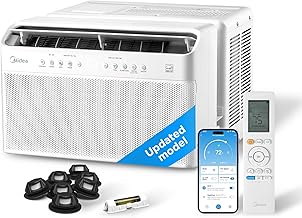
Midea 12,000 BTU U Shaped Window AC
The U-shaped design lets the sash close through the middle of the unit, which cuts noise dramatically and — critically for small spaces — leaves the window partly usable. At 550 square feet of coverage it suits open-plan studios where one unit has to handle sleeping and living zones at once.
Midea 8,000 BTU U Shaped Smart Inverter Window AC
The same clever architecture in a smaller, lighter package that one person can install without a helper. For bedrooms up to 350 square feet this is the efficiency sweet spot, and the inverter compressor holds temperature steadily overnight instead of cycling you awake.
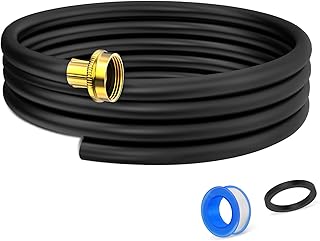
LOVIGA Portable AC Window Kit
A well-built seal kit with an adjustable panel spanning 40 to 64 inches, designed for the tall gap a vertical slider leaves behind. The waterproof sealing is the standout detail — cheaper kits let humid outdoor air seep back in and quietly undercut everything your portable unit is doing.
Portable AC Window Vent Kit, 5.9″ Adjustable Panel
A no-coupler design that works in both vertical and horizontal sliders, with a panel adjusting from 16.9 to 62.1 inches to suit narrow openings. Direct hose connection means fewer joints, and fewer joints means less leaked cold air.
Frequently Asked Questions
Can I use a regular window AC in a vertical sliding window?
No. Standard units are wider than they are tall and depend on the sash resting on top of the chassis to hold them in place. Forcing one into a vertical frame leaves it unsupported and unsealed — use a casement-specific unit or a portable with a vertical kit instead.
Do vertical seal kits actually stop air leaks?
Quality kits do. Look for foam or rubber gasketing along the panel edges and a snug hose collar. Adding removable weatherstripping at the contact points is worth the ten minutes, especially in humid climates.
Will my landlord allow either option?
Portable units with seal kits are the safer bet for most leases since nothing is drilled or permanently altered. Casement installations sometimes need a support bracket, so check your agreement before buying.
How much floor space does a portable unit really need?
Plan on a footprint of roughly 18 by 18 inches plus several inches of clearance behind for the hose to run without kinking. In a small bedroom, position it near the window and treat that corner as unavailable for furniture.
Final Thoughts
If your window can accommodate it, the Midea 8,000 BTU U-Shaped unit is the best overall choice for a small room — quiet, efficient, and it keeps your floor clear. Step up to the Midea 12,000 BTU for open studios. For a true crank-out casement, the Perfect Aire 10,000 BTU is purpose-built for the shape, and if you already own a portable, the LOVIGA kit is the sealing upgrade that makes it worth running.