Key takeaways
- Filtration: Look for a true or H13 HEPA filter to capture litter dust, dander, and other fine particles. Odor control is stronger when the unit also includes activated carbon.
- Room coverage: Match the purifier to the actual room, not the entire home. In an open-plan space, a larger model or a purifier positioned near the litter zone will generally work better.
- Maintenance: Washable pre-filters catch hair and dust before they reach the main filter. Check replacement-filter costs and cleaning instructions before buying.
- Noise: A quiet sleep setting matters for bedrooms and skittish cats. A purifier that can run continuously is more useful than one that is powerful but disruptive.
- Safety and placement: Keep cords and controls out of reach of pets, leave the intake and exhaust unobstructed, and be cautious with ozone-producing devices around cats and other animals.
What's inside
Cat litter smells are rarely caused by one thing. Fine dust, tracked particles, dander, and airborne odor compounds can collect in a small room, while an enclosed litter box may trap moisture and make the problem more noticeable. An air purifier can help, but only when its filtration, airflow, and placement suit the room.
This guide compares compact odor-focused devices with full-size HEPA purifiers for bedrooms, apartments, and dedicated pet areas. From a small-space organization perspective, the best choice is the one that fits your floor plan, is easy to maintain, and complements—not replaces—frequent litter removal and good ventilation.
As an Amazon Associate we earn from qualifying purchases.


How to Choose an Air Purifier For Cat Litter Smells (2026)
- Filtration: Look for a true or H13 HEPA filter to capture litter dust, dander, and other fine particles. Odor control is stronger when the unit also includes activated carbon.
- Room coverage: Match the purifier to the actual room, not the entire home. In an open-plan space, a larger model or a purifier positioned near the litter zone will generally work better.
- Maintenance: Washable pre-filters catch hair and dust before they reach the main filter. Check replacement-filter costs and cleaning instructions before buying.
- Noise: A quiet sleep setting matters for bedrooms and skittish cats. A purifier that can run continuously is more useful than one that is powerful but disruptive.
- Safety and placement: Keep cords and controls out of reach of pets, leave the intake and exhaust unobstructed, and be cautious with ozone-producing devices around cats and other animals.
The Best Air Purifier For Cat Litter Smells (2026)s Reviewed
LEVOIT Vital 100S-P
The LEVOIT Vital 100S-P is the strongest all-around option here for homes that need genuine particle filtration as well as odor support. Its washable pre-filter is particularly practical for cat households, catching hair and larger debris before they load the HEPA filter, while the quiet mode makes it suitable for a bedroom or compact living area.
AIRROMI A2005
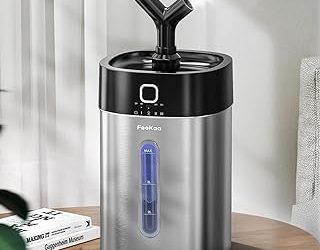
The AIRROMI A2005 is a space-conscious pick for a bedroom, office, or apartment corner where a cylindrical purifier is easier to position than a wide floor unit. Its HEPA-based design targets dust, smoke, allergens, and pet-related particles, and the compact footprint leaves more room around a litter station for storage or cleaning supplies.
uahpet Pet Air Purifier
For a larger home or an open living area, the uahpet Pet Air Purifier offers more ambitious coverage, along with an H13 HEPA filter, washable pre-filter, and air-quality monitor. It is best suited to households that want one substantial purifier rather than several small devices, although its larger size deserves a deliberate placement plan.
Cat Litter Deodorizer, Odor Eliminator (3 Pack)
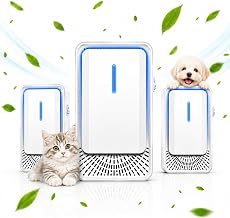
This three-pack of plug-in air ionizers is designed for small spaces such as a litter-room entryway, bathroom, or bedroom. Its compact format can be convenient when floor space is limited, but shoppers should verify the product’s emissions information and avoid relying on it as a substitute for HEPA filtration or regular litter-box care.
Cat Litter Odor Deodorizer with Sensor Monitor
This ozone and negative-ion deodorizer adds sensor monitoring and a compact, filterless format for targeted odor management. Because ozone can irritate people and pets, it warrants extra caution: follow the manufacturer’s instructions closely, keep it away from occupied pet areas unless explicitly approved, and consider a conventional HEPA-and-carbon purifier for everyday use.
Frequently Asked Questions
Do air purifiers remove cat litter smells?
They can reduce airborne odor compounds, dust, and dander, but they cannot eliminate odors at the source. Scoop the box frequently, clean surrounding surfaces, and use a purifier with activated carbon for the most balanced approach.
Where should I place an air purifier near a litter box?
Place it in the same room, several feet from the box, with clear space around the intake and exhaust. Avoid putting it directly beside dusty litter, where particles may overload the pre-filter, or inside an enclosed cabinet.
Is a HEPA purifier enough for litter odor?
HEPA is excellent for particles but is not designed primarily to absorb gases and smells. For odor control, choose a model that combines HEPA with an activated-carbon layer and keep the filter replaced on schedule.
Are ozone air purifiers safe for cats?
Ozone-generating devices deserve caution because ozone can irritate the respiratory system. Cats are especially sensitive to changes in indoor air, so a non-ozone HEPA purifier with carbon is generally the more straightforward choice for occupied rooms.
Final Thoughts
For most cat households, the LEVOIT Vital 100S-P is the best balance of filtration, maintenance, and quiet operation. The AIRROMI A2005 suits tighter rooms, while the uahpet Pet Air Purifier is the better fit for larger spaces; compact plug-in deodorizers are best treated as supplemental tools rather than complete air-cleaning systems.