Key takeaways
- Compatibility: Confirm the blade’s exact length, width, thickness, and tooth direction against your saw manual; even a small mismatch can prevent proper tracking or tensioning.
- Material: Carbon-steel blades suit many wood projects, while bimetal blades are a better fit for metal and demanding mixed-material work.
- Tooth pitch: Lower TPI removes material quickly in thick stock, while higher TPI produces a finer cut and works better on thinner material.
- Blade width: Wider blades track steadily for straight resawing; narrower blades turn more easily for curves and compact portable saws.
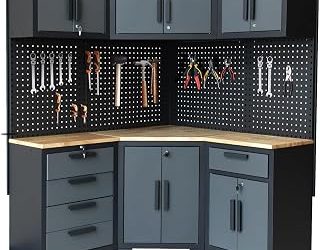
- Storage: Keep spare blades coiled safely in a labeled container or wall-mounted dispenser, which prevents damage and saves valuable small-shop space.
What's inside
Choosing a band saw blade for furniture work is less straightforward than it looks. A blade that slices smoothly through hardwood may struggle in steel, while an aggressively toothed metal-cutting blade can leave rough results or clog quickly in wood. Length, width, tooth pitch, material, and compatibility with your saw all matter—especially when your workshop has limited storage and you want one dependable blade rather than a drawer full of mismatched options.
This guide compares practical choices for portable and stationary band saws, with an emphasis on clean cuts, useful service life, and easy blade selection in a compact home workshop. The roundup includes wood-cutting and metal-cutting options, so check your saw’s specifications and intended material before ordering. As an Amazon associate, we may earn from qualifying purchases.
As an Amazon Associate we earn from qualifying purchases.



How to Choose a/an Band Saw Blade (2026)
- Compatibility: Confirm the blade’s exact length, width, thickness, and tooth direction against your saw manual; even a small mismatch can prevent proper tracking or tensioning.
- Material: Carbon-steel blades suit many wood projects, while bimetal blades are a better fit for metal and demanding mixed-material work.
- Tooth pitch: Lower TPI removes material quickly in thick stock, while higher TPI produces a finer cut and works better on thinner material.
- Blade width: Wider blades track steadily for straight resawing; narrower blades turn more easily for curves and compact portable saws.
- Storage: Keep spare blades coiled safely in a labeled container or wall-mounted dispenser, which prevents damage and saves valuable small-shop space.
The Best Band Saw Blade (2026)s Reviewed
LENOX Portable Band Saw Blades
These 44-7/8-inch LENOX blades are a sensible multipack for compatible portable saws and routine cutting jobs. Their 14 TPI configuration offers a useful middle ground for controlled cuts, while the five-pack gives a small workshop practical backups without taking up much shelf space.
Milwaukee Compact Extreme Thick Metal Blade
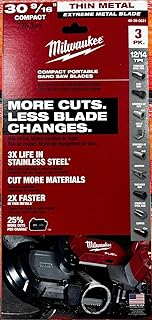
Milwaukee’s 30-9/16-inch 12/14 TPI blades are designed for compact portable saws handling demanding metal work. The variable tooth pattern is a practical choice when stock thickness changes, helping balance cutting speed with a more controlled finish.
Lenox Classic Tuff Tooth Bimetal Blade
This 93-inch Classic Tuff Tooth blade is built for a larger stationary saw and serious metal-cutting duties. Its bimetal construction, 18 TPI pattern, positive rake, and wavy set make it a strong option when durability and consistent tracking matter more than compact storage.
Timber Wolf 1/2-Inch 4 TPI Blade
The Timber Wolf 93-1/2-inch blade is aimed at woodworkers who need fast material removal in thicker stock. Its 4 TPI pattern is particularly useful for resawing and rough dimensioning, though it is not the first choice for thin boards or delicate curved cuts.
DEWALT Portable Band Saw Blade
DEWALT’s 32-7/8-inch, 18 TPI blades are a convenient three-pack for compatible portable saws and thinner metal sections. The finer tooth pattern favors controlled cutting, making this set a useful compact-shop complement to a faster, coarser blade.
Frequently Asked Questions
Can one band saw blade cut both wood and metal?
Some bimetal blades can handle occasional mixed-material work, but a dedicated blade is usually the better choice. Wood blades and metal blades differ in tooth geometry, pitch, and operating expectations, so using the correct type improves safety, cut quality, and blade life.
What TPI is best for furniture-making?
For general wood furniture work, a blade around 3 to 6 TPI is useful for thicker stock and resawing, while 8 to 14 TPI is better for thinner boards and cleaner detail cuts. Choose a pitch that keeps several teeth engaged in the material at once.
How do I know which blade length to buy?
Use the length specified by the saw manufacturer rather than measuring a worn blade as your only reference. The exact length, width, and thickness affect wheel tracking, tension, and clearance, so the product dimensions must match your machine.
Is the Imachinist M42 blade a good alternative?
The Imachinist S933414 M42 93-inch, 3/4-inch, 10/14 TPI bimetal blade is worth considering for compatible metal-cutting saws. Its variable pitch and M42 construction suit demanding work, but its relatively large dimensions make it a poor fit for compact portable machines.
Final Thoughts
For compact workshops, the LENOX portable five-pack is a practical everyday choice, while the Timber Wolf is the stronger pick for thick wood and resawing. For serious metal cutting, consider the Lenox Classic Tuff Tooth; just verify your saw’s dimensions before buying and store spare blades where they stay dry, protected, and easy to identify.