Key takeaways
- Length: Check your saw’s exact blade length before shopping. A blade that is even slightly too long or short may not tension correctly, regardless of its cutting quality.
- Width: Wider blades generally resist drifting during tall resaw cuts, while narrower blades are easier to steer and better suited to smaller wheels and compact saws.
- Tooth count: Lower TPI blades remove waste quickly from thick boards. Higher TPI options produce a finer cut but can pack with sawdust when pushed through substantial stock.
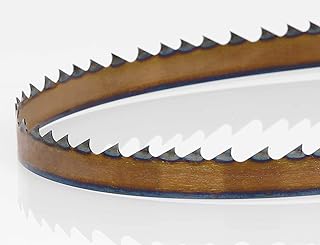
- Tooth pattern: Hook teeth are aggressive for fast stock removal, regular teeth offer a balanced general-purpose cut, and wavy-set teeth can reduce vibration in thinner material.
- Construction: Bimetal blades combine a durable cutting edge with a flexible backing, making them a sensible choice for frequent furniture work and demanding hardwood resawing.
What's inside
Resawing asks more of a band saw blade than ordinary crosscutting: the blade must stay straight through thick stock, clear sawdust without clogging, and leave a manageable surface for planing. The wrong width, tooth pattern, or length can turn an otherwise capable saw into a machine that wanders, chatters, or overheats.
This guide compares strong options for furniture makers, from heavy-duty bimetal blades for dense hardwoods to compact blades for 10-inch benchtop saws. The focus is practical shop fit: blade dimensions, tooth count, tracking behavior, and how each choice suits a small workspace where clean results and easy blade changes matter.
As an Amazon Associate we earn from qualifying purchases.


How to Choose a/an Band Saw Blades For Resawing (2026)
- Length: Check your saw’s exact blade length before shopping. A blade that is even slightly too long or short may not tension correctly, regardless of its cutting quality.
- Width: Wider blades generally resist drifting during tall resaw cuts, while narrower blades are easier to steer and better suited to smaller wheels and compact saws.
- Tooth count: Lower TPI blades remove waste quickly from thick boards. Higher TPI options produce a finer cut but can pack with sawdust when pushed through substantial stock.
- Tooth pattern: Hook teeth are aggressive for fast stock removal, regular teeth offer a balanced general-purpose cut, and wavy-set teeth can reduce vibration in thinner material.
- Construction: Bimetal blades combine a durable cutting edge with a flexible backing, making them a sensible choice for frequent furniture work and demanding hardwood resawing.
The Best Band Saw Blades For Resawing (2026)s Reviewed
Lenox Classic Tuff Tooth Vari-Raker 93-Inch
The Lenox Classic Tuff Tooth Vari-Raker is a well-rounded bimetal option for saws taking a 93-inch, 3/4-inch blade. Its 10-14 TPI range balances stock removal and cut smoothness, making it a practical choice for smaller furniture shops that resaw boards but still want a blade capable of general work.
Lenox Classic Pro Vari-Raker 106-Inch
With a 1-inch width and 5-8 TPI configuration, the Lenox Classic Pro is aimed at taller, more demanding cuts where beam strength matters. Its positive rake and bimetal construction suit hardwood slabs and thick furniture components, provided the saw has the wheel capacity and power to tension and drive it properly.
Lenox Diemaster 2 Hook Tooth 154-Inch
The 154-inch Lenox Diemaster 2 uses a 1/2-inch hook-tooth blade with a 6 TPI profile, giving it an aggressive feel for fast resawing. It is a compelling fit for larger machines that accept this unusually long blade, especially when productivity and efficient chip removal matter more than a ready-to-finish surface.
Lenox Diemaster 2 Regular Tooth 130.5-Inch
This 130.5-inch Diemaster 2 pairs a narrower 1/2-inch profile with 14-18 TPI and a wavy tooth set. It is better suited to controlled cuts in thinner or moderately thick stock than extreme slab resawing, and its slimmer specification can be useful when shop space and machine size limit blade choices.
AYAO 70-1/2-Inch Hardened-Tooth Blade
The AYAO blade is designed around compact 10-inch saws, including compatible Craftsman and Rikon models. Its 1/2-inch width and 4 TPI hardened teeth emphasize straightforward, aggressive cutting, making it a sensible small-shop option for thicker boards when exact compatibility has been confirmed.
Frequently Asked Questions
What TPI is best for resawing?
For thick hardwood, a lower tooth count such as 3-6 TPI usually clears sawdust more effectively and keeps the cut moving. A higher TPI blade can be preferable for thinner boards or when you want less post-cut cleanup, but feeding too slowly may encourage heat buildup.
Is a wider blade always better for resawing?
No. A wider blade typically tracks more confidently through tall stock, but only if the saw’s wheels, guides, and tensioning system support it. On a compact machine, a 1/2-inch blade may perform more reliably than an oversized blade that the saw cannot tension correctly.
Should I choose a bimetal band saw blade?
Bimetal blades are a strong choice for frequent furniture work because they combine a tough cutting edge with a flexible body. They usually cost more than basic carbon-steel blades, but their durability can make sense when resawing hardwood, reclaimed lumber, or abrasive materials regularly.
Why does my resaw cut wander?
Wandering can come from a dull or unsuitable blade, insufficient tension, incorrect guide adjustment, poor tracking, or forcing the workpiece through the cut. Confirm the blade length and width first, then set the guides close to the stock and use a steady feed rate.
Final Thoughts
For demanding furniture work, the Lenox Classic Pro Vari-Raker is the strongest wide-blade choice when your saw supports its 106-inch length. The Lenox Classic Tuff Tooth offers a versatile middle ground, while the AYAO is a practical compact-saw pick. Match the blade to your machine before prioritizing tooth count or brand, and resawing will be quieter, cleaner, and far easier to control.