Key takeaways
- Machine fit: Confirm the exact blade length, width capacity, and wheel size listed in your saw’s manual. Common sizes such as 70-1/2, 72, 80, and 93-1/2 inches are not interchangeable.
- Tooth count: Lower TPI blades remove waste quickly and suit thicker stock, while higher TPI blades make smoother cuts in thinner boards. For general furniture work, 3–4 TPI is a flexible starting point.
- Blade width: Wider blades track more steadily for straight resawing; narrower blades turn tighter curves. Do not exceed your saw’s recommended width or tensioning range.
- Tooth construction: Hardened or premium teeth generally hold their edge longer, particularly when cutting dense hardwoods. A variable or all-purpose profile can help reduce vibration and clogging.
- Project type: Match the blade to the job rather than buying solely by brand. Curved chair parts, cabinet panels, green logs, and routine crosscuts each reward different tooth and width combinations.
What's inside
Choosing a band saw blade for furniture projects can feel surprisingly complicated. Length, width, tooth count, tooth style, and machine compatibility all matter—and a blade that looks nearly right may still fit poorly, wander through hardwood, or leave more cleanup than expected. In a small workshop, the wrong blade also wastes valuable storage space and material.
This guide focuses on practical choices for woodworkers who need dependable cuts without collecting a drawer full of specialized blades. We compare blades for compact 10-inch saws, full-size 14-inch machines, stationary saws, and sawmill-style work, with attention to fit, cut quality, resawing, curves, and everyday furniture-making tasks.
As an Amazon Associate we earn from qualifying purchases.



How to Choose a/an Band Saw Blades For Wood (2026)
- Machine fit: Confirm the exact blade length, width capacity, and wheel size listed in your saw’s manual. Common sizes such as 70-1/2, 72, 80, and 93-1/2 inches are not interchangeable.
- Tooth count: Lower TPI blades remove waste quickly and suit thicker stock, while higher TPI blades make smoother cuts in thinner boards. For general furniture work, 3–4 TPI is a flexible starting point.
- Blade width: Wider blades track more steadily for straight resawing; narrower blades turn tighter curves. Do not exceed your saw’s recommended width or tensioning range.
- Tooth construction: Hardened or premium teeth generally hold their edge longer, particularly when cutting dense hardwoods. A variable or all-purpose profile can help reduce vibration and clogging.
- Project type: Match the blade to the job rather than buying solely by brand. Curved chair parts, cabinet panels, green logs, and routine crosscuts each reward different tooth and width combinations.
The Best Band Saw Blades For Wood (2026)s Reviewed
AYAO 70-1/2-Inch Hardened-Tooth Blade
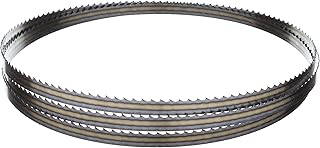
Designed for several popular 10-inch machines, the AYAO blade is a practical compact-shop option for general woodworking. Its 1/2-inch width and 4 TPI configuration provide a useful balance between controlled curves and reasonably quick cuts, while the hardened teeth are well suited to repeated work in common hardwoods and softwoods.
Timber Wolf 1/2-Inch x 72-Inch, 4 TPI
This Timber Wolf blade is a sensible choice for saws using a 72-inch blade length. The 4 TPI layout is versatile for furniture components, rough shaping, and moderate resawing, making it especially useful when a small workshop needs one dependable blade for several jobs.
BOSCH BS80-6H 80-Inch, 6 TPI
The BOSCH BS80-6H is aimed at stationary band saws and uses a finer 6 TPI pattern for cleaner work in wood. It is a good fit for users who prioritize a more refined cut on thinner stock and furniture parts, though its finer teeth are not the first choice for aggressive cutting through very thick material.
DoubleHard 158-Inch Sawmill Blades, 5-Pack
These 158-inch DoubleHard blades are built for larger sawmill-style equipment rather than a typical benchtop machine. The 10-degree all-purpose profile makes the five-pack appealing for repeated slab or board processing, where having replacement blades ready is more convenient than stopping mid-project to reorder.
FOXBC 93-1/2-Inch x 3/4-Inch, 4 TPI
FOXBC’s wide 3/4-inch blade is intended for many 14-inch Delta, Rockwell, Grizzly, Jet, Rikon, Steel City, General, Ridgid, and Craftsman saws. Its width and 4 TPI tooth spacing favor straight, stable cuts and resawing, making it a strong choice for cabinet panels, book-matched stock, and thicker furniture lumber.
Frequently Asked Questions
What TPI is best for cutting wood on a band saw?
A 3–4 TPI blade is a strong general-purpose choice for thicker boards and everyday furniture work. Move to 6 TPI or higher when cutting thinner stock and seeking a smoother edge, but expect slower material removal.
Can I use any band saw blade if the length is correct?
No. The blade must also suit the saw’s maximum width, wheel design, guides, and tensioning system. Check the manufacturer’s specifications before buying, especially when moving from a narrow blade to a wide resaw blade.
How often should a wood-cutting band saw blade be replaced?
Replace it when the teeth stay dull after adjustment, the blade requires excessive force, or cuts begin drifting despite correct tracking and tension. Clean wood, proper feed pressure, and occasional blade relief can extend service life.
Should I choose a wide blade for furniture making?
Choose a wide blade when straight resawing and stability are priorities. For curved legs, templates, and small components, a narrower blade is easier to maneuver and stores more conveniently in a compact workspace.
Final Thoughts
For a compact 10-inch saw, the AYAO 70-1/2-inch blade is a practical starting point; the Timber Wolf 72-inch blade is a versatile alternative where that length fits. For larger machines and resawing, the FOXBC 93-1/2-inch blade is the strongest furniture-focused pick, while the BOSCH BS80-6H suits thinner, cleaner cuts.