Key takeaways
- Action: String height around the 12th fret often falls near 1/8 inch on a comfortable five-string setup, although playing style and personal preference vary.
- Neck relief: A small amount of forward relief is normal; excessive bowing makes fretting harder and can cause buzzing.
- Head tension: The head should be evenly tensioned around the rim, not visibly loose on one side.
- Nut slots: Slots that are too high make first-position chords unnecessarily difficult.
- Bridge position: The bridge should be placed for accurate intonation, with the 12th-fret harmonic and fretted note closely aligned.
- Fifth-string tuner: A geared tuner is generally easier to use and more stable than a basic friction tuner.
The best banjo for you depends on playing style: choose a lightweight open-back banjo for clawhammer and folk, a resonator banjo with a tone ring for bluegrass, or a wider-neck, short-scale model if comfort and beginner technique matter most.
Quick Picks by Player and Situation
| Player or situation | Best banjo type | Specifications to look for | Typical market range |
|---|---|---|---|
| Complete beginner | Simple open-back or entry-level resonator | 11-inch head, 26–27-inch scale, adjustable truss rod, comfortable 1.25-inch nut | $300–$700 |
| Bluegrass learner | Resonator banjo with tone ring | Five strings, 26.25–26.4-inch scale, geared fifth-string tuner, geared planetary tuners | $600–$1,500 |
| Clawhammer or old-time player | Open-back banjo | 11-inch rim, scooped or scoop-ready fingerboard, 25.5–26-inch scale | $500–$1,500 |
| Small hands or shoulder discomfort | Short-scale or travel banjo | 23–25.5-inch scale, light rim, narrow neck, total weight under 7 pounds | $300–$1,000 |
| Experienced performer | Professional resonator or premium open-back | Solid maple or walnut neck, quality tone ring or rim, precise fretwork, stable hardware | $1,500–$5,000+ |
Choose the Banjo Type Before Comparing Brands
Open-back banjos
Open-back banjos have no resonator or flange covering the rear of the pot. They are usually lighter, quieter, and more responsive to the rhythmic brush-and-thumb technique used in clawhammer, frailing, and old-time music. A typical open-back model weighs about 4.5–6.5 pounds, making it easier to hold during long practice sessions.

AKLOT 5-String Banjo Deluxe Set: 38-Inch Full-Size Banjo with Remo Head, Okoume Tiger Stripe Back, Open-Back or Closed-Back Playing, With Pickup, Tuner, Bag, Strap, Pick, Bridge, for All Levels
Included for 'Best Banjos for Beginners and Experienced Players' because the listing specifies Okoume Tiger Stripe Back and Open-Back or Closed-Back Playing, details this guide uses to compare options.
View on Amazon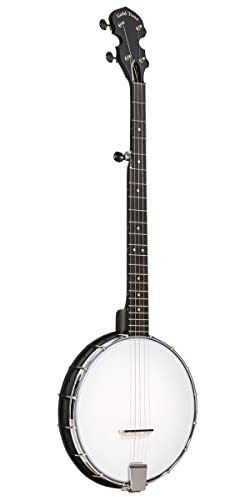
Gold Tone AC-1: 5-String Beginnner Banjo, Full Size with Gig-Bag, Bluegrass or Clawhammer
Included for 'Best Banjos for Beginners and Experienced Players' because the listing specifies Full Size with Gig-Bag and Bluegrass or Clawhammer, details this guide uses to compare options.
View on AmazonTheir tone is often warmer and less projecting than a bluegrass banjo. That is an advantage for home practice, acoustic folk groups, and players who want less volume in a small room. Look for a scoop above the highest frets if you expect to play over the end of the fingerboard, although a scoop is not essential for learning.
Resonator banjos
A resonator reflects sound toward the player and audience, while the flange and heavier pot construction help produce the cutting projection associated with three-finger bluegrass. Resonator banjos commonly weigh 8–13 pounds, particularly when fitted with a cast tone ring.
For a beginner interested in bluegrass, a resonator model is usually the more useful long-term purchase. It can still play folk or country music, but it may feel unnecessarily heavy and bright for quiet clawhammer playing. Removable resonators provide some flexibility, though the instrument will not automatically become a dedicated open-back banjo.
Electric, tenor, and six-string banjos
Electric banjos suit amplified stage work but are a specialized choice for a first instrument. Tenor banjos use four strings and are common in traditional jazz and Irish-style playing. Six-string banjos are tuned and played more like guitars. They can be suitable for guitarists, but they are not the right choice if your goal is standard five-string bluegrass or clawhammer technique.
Neck Width and Scale Length: Small Numbers With a Big Effect
Most five-string banjos have a nut width of roughly 1.18–1.30 inches. A narrower neck can make chord shapes easier for small hands, while a wider neck gives the fretting hand more room and reduces accidental contact between strings. Clawhammer players sometimes prefer a slightly wider neck because the right-hand technique and melody notes require room across the fingerboard.
Scale length is the vibrating distance from the nut to the bridge. Standard five-string banjos generally measure about 26–27 inches. Short-scale models may measure 23–25.5 inches. A shorter scale reduces the distance between frets and slightly lowers string tension at the same tuning, which can help children, smaller adults, and players with hand stiffness.
| Scale length | How it feels | Best match | Potential compromise |
|---|---|---|---|
| 23–25 inches | Compact reach and softer tension | Young players, travel, smaller hands | Less room for wide melodic stretches; altered feel compared with standard banjo lessons |
| 25.5–26 inches | Balanced reach and tension | Clawhammer, folk, general beginners | May feel slightly less powerful than a long-scale bluegrass banjo |
| 26.25–27 inches | Traditional spacing and firm response | Bluegrass, experienced players, standard tunings | More stretch and left-hand fatigue for some players |
Tonewoods, Rim Materials, and Tone Rings
Maple necks and rims tend to produce a clear, focused sound with strong note separation. Walnut often sits between maple and mahogany, offering warmth with enough definition for ensemble playing. Mahogany commonly produces a rounder, softer response. These descriptions are useful tendencies rather than guarantees: head tension, bridge choice, strings, setup, and construction can change the result substantially.
| Construction choice | Typical tonal tendency | Benefit | Trade-off |
|---|---|---|---|
| Maple neck or rim | Bright, direct, articulate | Strong note separation for fast bluegrass rolls | Can sound sharp in a very bright room |
| Walnut neck or rim | Balanced and moderately warm | Versatile for lead and rhythm playing | Often costs more than basic maple construction |
| Mahogany neck or rim | Warm, rounded, mellow | Comfortable for folk and old-time styles | May have less cutting projection in a loud band |
| Rolled brass tone ring | More response and brightness than a plain rim | Good middle ground for intermediate players | Not as powerful or complex as a heavy cast ring |
| Cast bronze tone ring | Strong projection and sustain | Useful for bluegrass performance | Adds weight and cost; excessive for quiet home playing |
Many inexpensive banjos use multi-ply laminated rims and composite or budget hardwood components. That is not automatically a problem. A well-made laminated rim can remain stable, and a beginner often benefits more from accurate fretwork and a proper setup than from an expensive wood upgrade.
Setup Quality Matters More Than a Decorative Feature
A low-priced banjo with a careful setup can be easier to play than a more expensive instrument shipped with poor adjustments. Before buying, check for a straight neck, clean fret ends, an evenly seated bridge, and tuners that turn smoothly without excessive backlash.
- Action: String height around the 12th fret often falls near 1/8 inch on a comfortable five-string setup, although playing style and personal preference vary.
- Neck relief: A small amount of forward relief is normal; excessive bowing makes fretting harder and can cause buzzing.
- Head tension: The head should be evenly tensioned around the rim, not visibly loose on one side.
- Nut slots: Slots that are too high make first-position chords unnecessarily difficult.
- Bridge position: The bridge should be placed for accurate intonation, with the 12th-fret harmonic and fretted note closely aligned.
- Fifth-string tuner: A geared tuner is generally easier to use and more stable than a basic friction tuner.
Budget approximately $75–$150 for a professional setup if the seller does not include one. This can cover truss-rod adjustment, head tension, bridge placement, nut work, and fret inspection. Ask what is included rather than assuming “playable” means fully adjusted.
Match the Banjo to Your Room and Routine
- Small apartment: Choose an open-back model or a resonator with a removable mute. In a 10-by-12-foot room, a bright resonator banjo can sound much louder than expected because hard walls reflect high frequencies.
- Frequent moving: Favor a banjo under 7 pounds with a padded case and reliable tuners. Allow at least 30 inches of clear doorway width when moving a banjo in its case; narrow turns and stair rails are more likely to cause damage than the instrument’s length.
- Children or pets: A padded stand is safer than leaving the banjo leaning against furniture. Keep the instrument away from radiators, heating vents, and windows. Rapid humidity changes can affect the wooden rim and neck.
- Back, neck, or shoulder discomfort: Compare total weight, not just the neck profile. A heavy tone-ring resonator can exceed 10 pounds, while an open-back may be roughly half that. A wide, supportive strap can distribute the load across the shoulder.
- Outdoor playing: Choose sealed hardware, a durable case, and a model that can tolerate frequent temperature changes. Never leave a banjo in a hot vehicle, even briefly.
Beginner, Intermediate, and Advanced Buying Advice
For beginners
Spend enough for stable tuning machines, a truss rod, a straight neck, and a setup. An entry-level open-back is ideal if you are undecided between folk and old-time music. Choose a resonator model if bluegrass is your clear goal. Avoid buying solely by the number of hooks, decorative inlays, or a shiny finish.
For intermediate players
Upgrade when your current banjo limits tuning stability, projection, fret access, or tonal control. A rolled-brass tone ring, better bridge, solid neck, and more precise fretwork can provide a noticeable improvement without requiring a professional instrument. This is also the stage to compare maple, walnut, and mahogany by listening to recordings or trying instruments in the intended musical setting.
For experienced players
Advanced players should prioritize the response they need: a powerful cast tone ring for bluegrass lead work, a lighter open-back rim for rhythmic old-time playing, or a custom neck profile for long performances. Premium banjos often cost $1,500–$5,000 or more, but the value is in consistency, setup potential, hardware quality, and suitability for your technique—not simply in ornamentation.
Final Buying Checklist
- Confirm that it is a five-string banjo if you want standard bluegrass or clawhammer instruction.
- Choose open-back for lighter, mellower old-time playing and resonator for louder bluegrass projection.
- Compare nut width and scale length with your hand size and playing goals.
- Inspect fretwork, neck relief, nut height, tuners, bridge position, and head tension.
- Include the cost of a setup, strap, padded case, spare strings, and a tuner in your budget.
- Pick the instrument you can hold comfortably for 30–45 minutes; weight and ergonomics become more important with every practice session.