Key takeaways
- Collapsed length: Check the shortest measurement, not just the longest. A pole that shrinks to 13 inches slides into a closet organizer or a narrow gap beside the fridge; one that bottoms out at three feet needs a dedicated corner you probably don’t have.
- Head shape: A U-shaped or sleeve-style head sandwiches the blade and cleans top and bottom together. Flat pad heads clean faster over wide surfaces but require two passes per blade and more wrist rotation overhead.
- Reach versus ceiling height: Standard 8-foot ceilings pair well with a 4- to 5-foot pole. Vaulted or 10-foot ceilings need the 6-foot models. Overbuying reach adds weight at full extension, which shows up fast in your forearms.
- Pole rigidity: Telescoping sections with locking twist collars hold angle better than friction-fit tubes. Flex at the tip means the head skates across dust instead of lifting it.
- Washable, swappable covers: Two or more machine-washable sleeves let you rotate mid-job instead of redistributing dust. Loaded microfiber stops collecting, and a saturated head is the main reason people think a duster “doesn’t work.”
What's inside
Ceiling fan blades collect dust in a way that feels almost personal. The airflow pulls particles up, the top surface holds them, and by the time you notice the gray fuzz along each edge, you’re already dreading the ladder. In a studio or a one-bedroom, that ladder is also the problem: there’s nowhere to stage it, nothing stable to lean it against, and often a bed or sofa directly beneath the fixture you need to reach. Balancing on a dining chair while twisting your shoulder over a blade is how people end up with drywall dents and bruised shins.
An extendable fan duster solves this by keeping both feet on the floor. The good ones use a sleeved microfiber head that wraps around a blade and grabs both surfaces in a single pass, then collapses down to something you can tuck behind a door or under a bed. This guide looks at six of the strongest options for 2026, covering pole reach, head design, storage footprint, and how well each one handles the other high-dust jobs in a small home — crown molding, blind slats, the tops of door frames, and the cobweb corner nobody can reach.
As an Amazon Associate we earn from qualifying purchases.



How to Choose a Ceiling Fan Cleaner (2026)
- Collapsed length: Check the shortest measurement, not just the longest. A pole that shrinks to 13 inches slides into a closet organizer or a narrow gap beside the fridge; one that bottoms out at three feet needs a dedicated corner you probably don’t have.
- Head shape: A U-shaped or sleeve-style head sandwiches the blade and cleans top and bottom together. Flat pad heads clean faster over wide surfaces but require two passes per blade and more wrist rotation overhead.
- Reach versus ceiling height: Standard 8-foot ceilings pair well with a 4- to 5-foot pole. Vaulted or 10-foot ceilings need the 6-foot models. Overbuying reach adds weight at full extension, which shows up fast in your forearms.
- Pole rigidity: Telescoping sections with locking twist collars hold angle better than friction-fit tubes. Flex at the tip means the head skates across dust instead of lifting it.
- Washable, swappable covers: Two or more machine-washable sleeves let you rotate mid-job instead of redistributing dust. Loaded microfiber stops collecting, and a saturated head is the main reason people think a duster “doesn’t work.”
The Best Ceiling Fan Cleaner (2026)s Reviewed
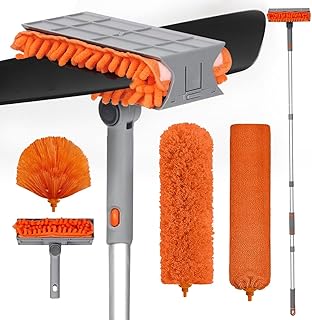
DRQ Ceiling Fan Cleaner Duster
The 13-to-48-inch range is the standout here, giving you a stubby handheld for bookshelf tops and a full-length pole for the fan without owning two tools. The removable head design makes swapping sleeves painless, which matters more than any other feature once you’re actually working overhead.
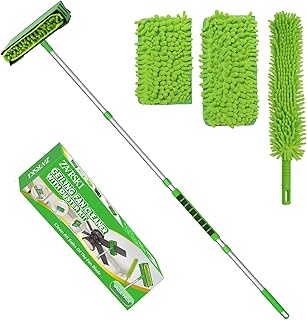
6 Ft Multi-Functional Fan Cleaner Kit
At 77 inches fully extended, this is the pick for lofted or vaulted ceilings where shorter poles leave you stretching. The kit format covers baseboards and blinds as well, so it earns its storage space in a home where every tool needs a second job.
72″ Chenille & Microfiber Duster Kit
The chenille head is the differentiator — the looser pile traps more before it sheds, which suits fans that haven’t been touched in a year. Pair it with the microfiber mop head for finishing passes on walls and molding.
6 Ft/72″ Extension Pole Duster with Reusable Pads
A straightforward, well-balanced option with pad-style heads that glide cleanly along flat runs like crown molding and door tops. The 72-inch reach handles nine-foot ceilings without a step stool, though the flat head means two passes per fan blade.
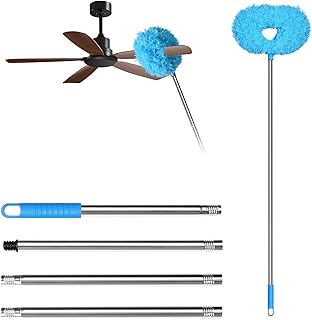
Reusable Microfiber Blade Cleaner (13–49.7″)
Nearly identical in range to the DRQ but with a slightly longer maximum extension, this one is a solid choice if your fan sits a few inches higher than average. The removable sleeve washes and dries quickly enough for same-day reuse.
Frequently Asked Questions
How often should I clean ceiling fan blades?
Every four to six weeks in most homes, and monthly if you run the fan year-round or live with pets. Small spaces concentrate dust, so waiting longer means the buildup starts flinging back into the room the moment you switch on.
Do I need to dampen the duster first?
Dry is better for routine dusting — microfiber holds particles electrostatically and moisture kills that effect. For caked-on kitchen grease near a galley setup, mist the sleeve lightly, work in short sections, and finish with a dry sleeve.
Can these dusters replace a step stool entirely?
For fan blades, molding, and cobwebs, yes. For light fixture glass, globe shades, or anything requiring two hands and visual inspection, you’ll still want a stable stool.
How do I wash the microfiber sleeves?
Machine wash cold with detergent, no fabric softener, and skip the dryer sheet. Softener coats the fibers and permanently reduces how much dust they pick up. Air dry or tumble low.
Final Thoughts
For most apartments and compact homes, the DRQ Ceiling Fan Cleaner Duster is the best overall balance of reach, storage footprint, and head design — 13 inches collapsed is genuinely easy to stow. If your ceilings run high, the 6 Ft Multi-Functional Kit gives you the extra reach without feeling unwieldy, and the 72″ Chenille & Microfiber Kit is the one to grab if you’re tackling a fan that’s been neglected for a season or more.