Key takeaways
- Measure first: Allow roughly 24 inches of table-edge space per person, then check that chairs can slide back without blocking a doorway, cabinet, or main walkway.
- Match seat height: Most dining tables pair well with seats about 17 to 19 inches high, leaving enough knee room beneath a standard 28- to 30-inch tabletop.
- Consider visual weight: Open backs, slim legs, and lighter colors help a small dining area feel less enclosed, while bulky arms can quickly reduce usable seating.
- Choose the right upholstery: Fabric adds softness and warmth, but busy households may prefer darker tones, removable cushions, or surfaces that are easy to spot-clean.
- Check everyday comfort: A supportive back, gently curved seat, and stable frame are more valuable than decorative detailing if the chairs will host long meals or remote-work sessions.
What's inside
Finding dining chairs for a compact home is rarely just a matter of choosing a style you like. The wrong set can crowd walkways, overwhelm a small table, or leave you with upholstery that is difficult to live with. Proportions, seat comfort, leg placement, and visual weight all matter more when every square foot has to work hard.
This guide compares practical dining chair options for apartments, breakfast nooks, and smaller dining rooms. The selections cover upholstered comfort, mid-century character, easy-care materials, and space-conscious silhouettes, with advice to help you match each chair to your table and daily routine.
As an Amazon Associate we earn from qualifying purchases.




How to Choose a/an Chairs For Dining Room (2026)
- Measure first: Allow roughly 24 inches of table-edge space per person, then check that chairs can slide back without blocking a doorway, cabinet, or main walkway.
- Match seat height: Most dining tables pair well with seats about 17 to 19 inches high, leaving enough knee room beneath a standard 28- to 30-inch tabletop.
- Consider visual weight: Open backs, slim legs, and lighter colors help a small dining area feel less enclosed, while bulky arms can quickly reduce usable seating.
- Choose the right upholstery: Fabric adds softness and warmth, but busy households may prefer darker tones, removable cushions, or surfaces that are easy to spot-clean.
- Check everyday comfort: A supportive back, gently curved seat, and stable frame are more valuable than decorative detailing if the chairs will host long meals or remote-work sessions.
The Best Chairs For Dining Room (2026)s Reviewed
COLAMY Upholstered Dining Chairs
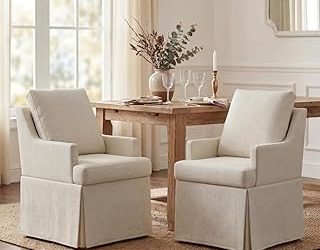
The COLAMY set of four is a sensible choice for a small dining room that needs softness without a heavy, traditional look. Its beige linen-style upholstery and high back create a calm backdrop for a round table, while the neutral finish is flexible enough for both modern and farmhouse interiors.
VKNOW Green Fabric Dining Chairs
For buyers who want color without overwhelming a compact room, the VKNOW chairs bring a muted green accent and mid-century-inspired shape. The upholstered design adds comfort, and the set format works well when you need coordinated seating for a kitchen table or multipurpose dining corner.
HNY Mid-Century Modern Dining Chairs
The HNY set of six is best suited to households that regularly seat a larger group or want matching chairs across a dining area and adjacent living space. Curved backrests and solid wood legs give these beige linen chairs a more substantial presence, so measure carefully before committing in a smaller room.
UVV Metal Kitchen Chairs
UVV combines a metal frame with beige fabric upholstery, creating a useful middle ground between industrial durability and residential comfort. The cleaner leg profile can help preserve sightlines in a tight layout, making this set especially practical for kitchens that also serve as dining and work zones.
VIRRMO Boucle Dining Chairs
The VIRRMO chairs add texture through their cream boucle-style upholstery and a contemporary mid-century shape. They are a strong decorative pick for a neutral dining room, although textured fabric deserves extra care in homes with pets, young children, or frequent spills.
Frequently Asked Questions
How much space should I leave between dining chairs?
Plan for approximately 24 inches of table edge per diner for comfortable elbow room. In a small space, you can use slightly less for occasional seating, but avoid arranging chairs so tightly that people must move several others to get up.
Are upholstered dining chairs practical for everyday use?
Yes, provided the fabric suits your household. Upholstered chairs are comfortable for long meals, but they should be vacuumed regularly and treated quickly after spills. Beige and cream fabrics look airy but typically show marks sooner than medium or darker shades.
Are armless chairs better for a small dining room?
Usually. Armless chairs tuck more fully beneath the table and make it easier to add or remove a seat when needed. They also keep the visual field open, which can make a compact room feel less crowded.
Should all dining chairs match?
Matching chairs create a tidy, space-efficient appearance, which is useful in small rooms. If you prefer a collected look, keep one element consistent—such as seat height, leg finish, or upholstery color—so the arrangement still feels intentional.
Final Thoughts
The COLAMY chairs are a balanced all-around option for a compact dining area, while VKNOW is the better choice when you want a controlled pop of color. For a more textured, design-led room, VIRRMO stands out; households needing six coordinated seats should look closely at the HNY set and confirm the dimensions before ordering.