Key takeaways
- Measure the inner pocket, not the room: Run a tape measure along the inside edge of your sectional’s longest arm and across the shorter leg. Your table should occupy roughly two-thirds of the shorter dimension, leaving clear passage where people actually enter the seating area.
- Match height to your seat cushion: Sectionals often sit lower than traditional sofas. Aim for a tabletop within an inch or two of cushion height — anything taller blocks sightlines across the room and makes the space feel boxed in.
- Prioritize vertical storage over footprint: In a tight room, a table with drawers and an interior cavity stores three times what an open-shelf design holds without adding a single inch to its outline. Hidden storage also keeps visual noise down, which matters enormously in small rooms.
- Consider a shape that follows the corner: Oval and square tables work better than long rectangles inside an L-shape, because they don’t leave one end stranded past the sofa’s short leg. Squares are especially efficient in U-shaped configurations.
- Test the reach from the far seat: Before committing, sit at the outermost cushion and extend your arm. If you can’t set down a glass without standing, the table is either too small or positioned too far into the corner. Extendable tops solve this elegantly.
What's inside
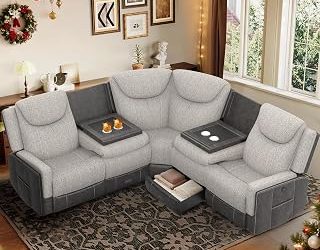
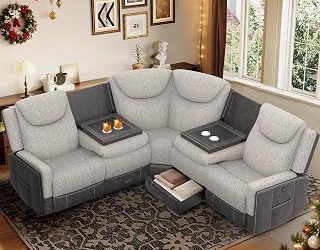
A sectional eats floor space in a way a standard sofa never does. That L-shape or U-shape wraps around the room, and the negative space it leaves behind is rarely a tidy rectangle — it’s usually a shallow, awkward pocket that a conventional 48-inch coffee table either swallows whole or floats in like a raft. The result is a living room where you either shuffle sideways to reach the far cushion, or you end up with a table so small it can’t hold two mugs and a laptop. Neither is a win when the room is already tight.
This guide approaches the problem from a small-space organization standpoint: the right table for a sectional does double or triple duty. It should absorb the clutter that a compact home has nowhere else to put — remotes, chargers, throw blankets, board games — while leaving at least 14 to 18 inches of walking clearance on every open side. Below are six tables built around lift tops, sliding surfaces, and hidden compartments, plus a practical checklist for measuring your own layout before you buy.
As an Amazon Associate we earn from qualifying purchases.


How to Choose a Coffee Table For Sectional (2026)
- Measure the inner pocket, not the room: Run a tape measure along the inside edge of your sectional’s longest arm and across the shorter leg. Your table should occupy roughly two-thirds of the shorter dimension, leaving clear passage where people actually enter the seating area.
- Match height to your seat cushion: Sectionals often sit lower than traditional sofas. Aim for a tabletop within an inch or two of cushion height — anything taller blocks sightlines across the room and makes the space feel boxed in.
- Prioritize vertical storage over footprint: In a tight room, a table with drawers and an interior cavity stores three times what an open-shelf design holds without adding a single inch to its outline. Hidden storage also keeps visual noise down, which matters enormously in small rooms.
- Consider a shape that follows the corner: Oval and square tables work better than long rectangles inside an L-shape, because they don’t leave one end stranded past the sofa’s short leg. Squares are especially efficient in U-shaped configurations.
- Test the reach from the far seat: Before committing, sit at the outermost cushion and extend your arm. If you can’t set down a glass without standing, the table is either too small or positioned too far into the corner. Extendable tops solve this elegantly.
The Best Coffee Table For Sectional (2026)s Reviewed
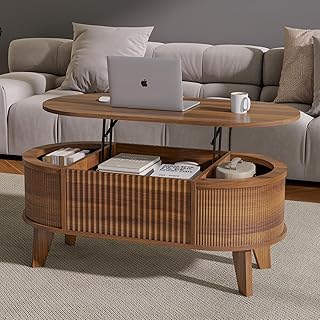
LYNCOHOME 43.3″ Fluted Lift Top Coffee Table
The oval footprint is the quiet advantage here — no sharp corners to catch a shin as you slide past the short leg of a sectional, and the curve reads softer in a room that already has a lot of straight lines. The lift top rises to a comfortable laptop height and the cavity underneath swallows an impressive amount of everyday clutter.
SEDETA 31.5″ Square Lift Top Coffee Table
At just under 32 inches square, this is the pick for genuinely small apartments where an L-shaped sectional leaves a narrow pocket. The adjustable interior shelves let you configure the compartment for what you actually store, which is a rare and welcome detail at this size.
47″ High-Glossy LED Coffee Table
The double-layer construction and two sliding drawers give you separated storage zones — chargers in one, remotes in the other — while the LED perimeter throws enough ambient light to skip a floor lamp in a cramped corner. Best suited to modern rooms where the high-gloss finish won’t feel out of place.
47.2″–81.8″ Extendable Coffee Table
This is the most adaptable option in the roundup: collapsed, it clears the walkway on a U-shaped sectional; extended to nearly seven feet, it reaches every seat for dinner or a project. The silent glide rails and floor-contact base mean it stays put during the transition rather than skating across the rug.
Tribesigns Extendable Coffee Table
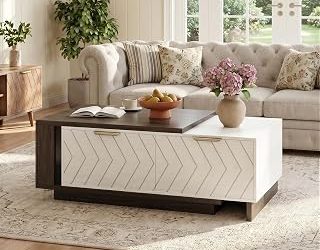
The walnut-and-oak two-tone treatment keeps this from looking like a purely functional piece, and the sliding tabletop reveals divided storage plus two drawers underneath. A strong choice when you want extendable flexibility without the glossy, contemporary look.
Frequently Asked Questions
How far should a coffee table sit from a sectional?
Between 14 and 18 inches from the cushion edge. Closer than 14 and legroom disappears; farther than 18 and you’ll lean uncomfortably to reach it. In small rooms, err toward 15 inches and prioritize clear walkways elsewhere.
Is a square or rectangular table better for a sectional?
Square generally wins for L-shaped and U-shaped sectionals because it mirrors the corner geometry and stays reachable from both legs. Rectangles suit long, single-facing sectionals or rooms where the table also separates two seating zones.
Are lift top tables practical in small living rooms?
Very. A lift top converts your coffee table into a desk or dining surface, which often eliminates the need for a separate piece of furniture entirely — the single biggest space saving available in a compact home.
Can one table serve as both storage and a coffee table without looking cluttered?
Yes, provided the storage is enclosed. Drawers and lift-top cavities hide contents completely, whereas open shelves display them. In a small room, closed storage keeps the visual field calm even when the table is fully loaded.
Final Thoughts
For most sectionals, the LYNCOHOME 43.3″ oval lift top strikes the best balance between generous storage and a footprint that won’t crowd a walkway. If your room is genuinely tight, the SEDETA 31.5″ square offers configurable storage in a compact profile, and for households that need one surface to handle both movie nights and dinner, the 47.2″–81.8″ extendable table is the most versatile piece here.