Key takeaways
- Blade size: A 10-inch saw is easier to store and handles most furniture components, while a 12-inch model offers more capacity for wide boards and heavier framing lumber.
- Sliding capacity: Sliding models cut wider stock but require extra clearance behind or beside the saw, so measure your bench and storage area before buying.
- Bevel range: Single-bevel saws are straightforward and compact; double-bevel models save time when making matching angled cuts on both sides of a project.
- Cut-line visibility: A shadow guide or LED system can be more useful than a laser because it remains visible across different blade kerfs and lighting conditions.
- Dust management: No miter saw captures every chip, but a usable dust port and collection bag help keep a small shop cleaner and improve cut-line visibility.
What's inside
Choosing a compound miter saw for a small workshop can be surprisingly difficult. The right model must deliver accurate cuts without consuming half your floor space, and features that look impressive on paper—sliding rails, shadow guides, tall fences, and large blades—can add weight, cost, and storage demands.
This guide focuses on practical furniture-making needs: cutting trim, framing stock, shelving parts, cabinet components, and other project materials with confidence. I’ve compared the most useful options by cutting capacity, portability, bevel design, visibility, and how easily each saw can fit into a compact workspace.
As an Amazon Associate we earn from qualifying purchases.



How to Choose a/an Compound Miter Saw (2026)
- Blade size: A 10-inch saw is easier to store and handles most furniture components, while a 12-inch model offers more capacity for wide boards and heavier framing lumber.
- Sliding capacity: Sliding models cut wider stock but require extra clearance behind or beside the saw, so measure your bench and storage area before buying.
- Bevel range: Single-bevel saws are straightforward and compact; double-bevel models save time when making matching angled cuts on both sides of a project.
- Cut-line visibility: A shadow guide or LED system can be more useful than a laser because it remains visible across different blade kerfs and lighting conditions.
- Dust management: No miter saw captures every chip, but a usable dust port and collection bag help keep a small shop cleaner and improve cut-line visibility.
The Best Compound Miter Saw (2026)s Reviewed
DEWALT DWS713 10-Inch Compound Miter Saw
The DWS713 is a sensible choice for furniture makers who want a dependable, compact saw without sliding rails. Its 10-inch blade and single-bevel design suit trim, shelving, small frames, and most everyday crosscutting tasks while keeping the footprint manageable.
DEWALT DWS715 12-Inch Compound Miter Saw
The DWS715 steps up to a 12-inch blade for users who regularly cut wider or thicker stock but do not need a sliding mechanism. It is a practical middle ground for a small workshop: more capacity than a 10-inch saw, with fewer space demands than a sliding compound model.
DEWALT DWS780 12-Inch Sliding Compound Miter Saw
The DWS780 is the feature-rich pick for demanding furniture and renovation work. Its double-bevel setup, sliding action, and XPS LED shadow system make repeated angled cuts easier to align, although its larger size calls for a sturdy stand and deliberate storage plan.
DEWALT DWS779 12-Inch Sliding Compound Miter Saw
The DWS779 offers the broad cutting range of a 12-inch sliding saw with double-bevel capability and a powerful 15-amp motor. It is well suited to wide boards and larger built-ins, but compact-shop owners should account for the clearance needed by its sliding rails.
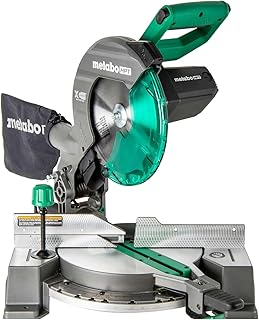
Metabo HPT C10FCG2 10-Inch Compound Miter Saw
The C10FCG2 is a lightweight, space-conscious option with a single bevel and Xact Cut shadow line. It fits well into a portable furniture setup where quick repositioning matters, while its 10-inch format keeps storage and bench requirements modest.
Frequently Asked Questions
Is a 10-inch or 12-inch miter saw better for furniture making?
A 10-inch saw is usually enough for shelves, trim, face frames, and many furniture parts. Choose a 12-inch model when you frequently work with wide stock, substantial posts, or larger built-in components.
Do I need a sliding compound miter saw?
Not necessarily. Sliding action is valuable for wider boards, but it adds weight and requires additional clearance. For a small workshop focused on narrow furniture components, a non-sliding saw may be easier to live with.
What is the advantage of a double-bevel saw?
A double-bevel saw tilts in both directions, so you can make opposing compound-angle cuts without flipping the workpiece. That convenience is especially helpful for crown molding, sloped parts, and repeat production work.
Can these saws replace a table saw?
No. A miter saw excels at accurate crosscuts and angled cuts, while a table saw is designed primarily for ripping and sizing boards along their length. Many furniture workshops benefit from having both, but a miter saw is the more compact starting point for crosscut-heavy projects.
Final Thoughts
The DEWALT DWS713 is the strongest compact choice for everyday furniture work, while the Metabo HPT C10FCG2 is appealing when portability and storage space matter most. For wider stock and more complex angled cuts, the DEWALT DWS780 delivers the most versatile feature set; choose the DWS779 if you want similar large-capacity performance with a simpler configuration.