Key takeaways
- Measure the usable footprint: Record the table area plus at least 30 to 36 inches of clearance for pulling out chairs and walking around it. In tight rooms, measure with doors, radiators, and cabinets open.
- Match the shape to the room: Round and oval tops improve circulation, while rectangular tables usually make better use of narrow walls. A drop-leaf design can offer both formats in one piece.
- Prioritize flexible seating: Extendable tops, benches, and folding or tuckable seating let the table stay compact for daily use but expand for visitors.
- Check the base design: Central pedestals and slim legs create more usable legroom. Avoid bulky corner supports if you plan to slide chairs or benches underneath.
- Consider daily maintenance: Look for a finish that suits your household, stable joinery, and a tabletop large enough for place settings without forcing dishes toward the edge.
What's inside
A small dining area has to do more than hold meals. It may also serve as a homework station, remote-work desk, craft surface, or gathering spot for guests. The wrong table can make a room feel blocked and crowded, while the right shape and storage-friendly design can preserve a surprisingly open floor plan.
This guide evaluates compact dining tables and space-conscious sets through a practical small-space lens: footprint, seating flexibility, clearance, everyday durability, and how easily each piece adapts when your needs change. The selections range from two-person expandable tables to larger designs suited to apartments that still need room for occasional entertaining.
As an Amazon Associate we earn from qualifying purchases.



How to Choose a/an Dining Room Table For Small Space (2026)
- Measure the usable footprint: Record the table area plus at least 30 to 36 inches of clearance for pulling out chairs and walking around it. In tight rooms, measure with doors, radiators, and cabinets open.
- Match the shape to the room: Round and oval tops improve circulation, while rectangular tables usually make better use of narrow walls. A drop-leaf design can offer both formats in one piece.
- Prioritize flexible seating: Extendable tops, benches, and folding or tuckable seating let the table stay compact for daily use but expand for visitors.
- Check the base design: Central pedestals and slim legs create more usable legroom. Avoid bulky corner supports if you plan to slide chairs or benches underneath.
- Consider daily maintenance: Look for a finish that suits your household, stable joinery, and a tabletop large enough for place settings without forcing dishes toward the edge.
The Best Dining Room Table For Small Space (2026)s Reviewed
HIPIHOM 70.9-Inch Dining Table Set
The HIPIHOM dining set is the strongest choice for households that need substantial seating without filling the room with individual chairs. Its two benches can tuck neatly beneath the table, helping clear walking paths when the meal is over, while the walnut finish and wood legs give it a warm, coordinated presence. At nearly 71 inches long, it is best for a larger apartment dining zone rather than a genuinely tiny breakfast nook.
Hinged Drop Leaf Dining Table
This hinged drop-leaf table is especially well suited to kitchens, studio apartments, and multipurpose rooms where every inch matters. Its 22- to 36-inch round configuration keeps the everyday footprint modest, then opens up when another diner or serving dish needs space. The dark brown finish is easy to blend with existing furniture, and the sturdy base should help it feel more substantial than many lightweight compact tables.
Gizoon Dining Table Set for 4
The Gizoon five-piece set delivers a complete dining solution for an apartment without requiring separate chair shopping. Its black wood-look top and upholstered chairs create a polished, contemporary arrangement, while four seats suit everyday meals for a small household. Because the chairs are designed as part of the set, check the combined width carefully before placing it in a narrow walkway or open-plan living area.
47.2- to 63-Inch Extendable Dining Table
This walnut rectangular table offers a useful middle ground between compact daily dining and occasional hosting. At 47.2 inches, it can fit a small kitchen or dining corner, while the removable extension leaf expands capacity for as many as eight guests. The extension is most useful when stored somewhere accessible; if it must be carried from a distant closet, everyday flexibility becomes less convenient.
Solid Wood Expandable Table for 2 to 6
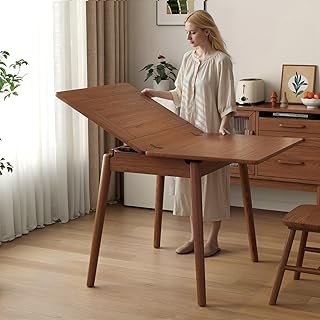
For buyers who want a smaller starting footprint with a more traditional material, this solid wood table is an appealing option. It expands from 23.6 to 47.2 inches, making it practical for two-person meals while retaining room for guests. Its simple design should work in a dining room, kitchen, or living area, although the compact dimensions mean six-person use will be better for shorter meals than extended dinner parties.
Frequently Asked Questions
What table shape is best for a very small dining room?
A round or drop-leaf table is usually the easiest to navigate in a tight room because it eliminates sharp corners and can be positioned flexibly. A narrow rectangular table may be better when the dining area sits against a wall or hallway.
How much space should I leave around a dining table?
Aim for roughly 30 to 36 inches between the table edge and the nearest wall, cabinet, or furniture. If the table is beside a major walkway, additional clearance will make the room more comfortable and reduce chair collisions.
Are benches better than chairs in a small space?
Often, yes. Benches can accommodate more people, slide fully under the tabletop, and avoid the visual bulk of multiple chair backs. They are less supportive for long meals, so a mixed arrangement may be preferable for frequent entertaining.
Is an extendable table worth it for apartment living?
It is worthwhile when you regularly host guests but want a smaller everyday footprint. Before buying, confirm the expanded dimensions and decide where the extension leaf will be stored so the feature remains convenient rather than merely occasional.
Final Thoughts
The Hinged Drop Leaf Dining Table is the most adaptable pick for truly limited floor space, while the Solid Wood Expandable Table offers a compact start with a more substantial feel. For households that need regular seating, the Gizoon Dining Table Set for 4 provides the best balance of completeness, scale, and apartment-friendly practicality.