Key takeaways
- Measure the working footprint: Record the table’s dimensions, then allow room to pull out chairs and walk behind seated diners. A table that technically fits may still make the room feel unusable.
- Match the shape to the room: Round tables improve circulation and eliminate sharp corners, while rectangular designs often make better use of narrow walls or dining alcoves.
- Prioritize adaptable capacity: Drop leaves, flip leaves, and extension panels let a table stay compact for daily use while accommodating guests when needed.
- Consider storage and mobility: Shelves can hold napkins, placemats, or serving pieces, while casters are useful when the table must move between meals and other activities.
- Check the full seating plan: Look beyond the tabletop. Tuck-under chairs, benches, or a matching two-chair set can save more space than a table with an especially small top.
What's inside
In a compact home, the dining table has to do more than provide a place to eat. It may also serve as a work surface, homework station, craft table, or temporary kitchen island—without blocking walkways when chairs are pulled out. The challenge is finding a design that fits everyday routines rather than merely fitting an empty floor plan.
This guide compares space-conscious dining tables and sets for apartments, breakfast nooks, and multipurpose rooms. I’m focusing on footprint, flexibility, seating capacity, storage, and how easily each design can adapt when you need more surface area. As an affiliate-supported guide, recommendations are based on practical small-space considerations rather than appearance alone.
As an Amazon Associate we earn from qualifying purchases.


How to Choose a/an Dining Table For Small Space (2026)
- Measure the working footprint: Record the table’s dimensions, then allow room to pull out chairs and walk behind seated diners. A table that technically fits may still make the room feel unusable.
- Match the shape to the room: Round tables improve circulation and eliminate sharp corners, while rectangular designs often make better use of narrow walls or dining alcoves.
- Prioritize adaptable capacity: Drop leaves, flip leaves, and extension panels let a table stay compact for daily use while accommodating guests when needed.
- Consider storage and mobility: Shelves can hold napkins, placemats, or serving pieces, while casters are useful when the table must move between meals and other activities.
- Check the full seating plan: Look beyond the tabletop. Tuck-under chairs, benches, or a matching two-chair set can save more space than a table with an especially small top.
The Best Dining Table For Small Space (2026)s Reviewed
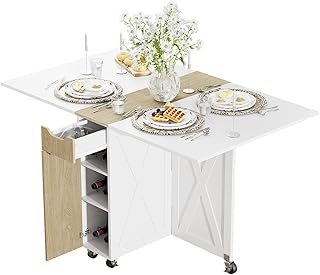
Folding Dining Table with Wheels
This white folding table is designed for rooms where flexibility matters most. Its six wheels make repositioning straightforward, and the folding format can work well as a dining surface, sewing table, or occasional workstation. It is a particularly practical choice for renters and multipurpose rooms, provided the folded and expanded dimensions suit your storage area.
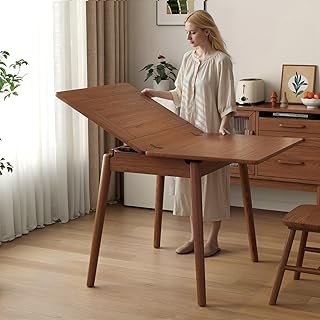
Expandable Solid Wood Table for 2–6
With an adjustable length of roughly 23.6 to 47.2 inches, this walnut solid-wood table offers a useful balance between everyday compactness and guest-ready capacity. Its classic rectangular profile fits kitchens and living areas efficiently, while the expandable design avoids dedicating a large footprint to seating you only use occasionally.
Round-to-Oval Extendable Dining Table
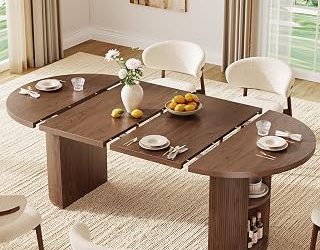
This table begins with a space-friendly round shape and expands into an oval when the extension leaf is added. That transition is valuable in smaller rooms: the round configuration supports easier movement daily, while the longer surface provides more elbow room for meals or entertaining. The oak finish and hidden storage details also give it a polished, purposeful feel.
AWQM Three-Piece Dining Set
For a compact breakfast nook or apartment dining corner, this brown three-piece set simplifies the buying process by pairing the table with two chairs. The coordinated footprint is its main advantage, especially where separate chairs might protrude into a walkway. It is best suited to couples, solo diners, or households that can add occasional seating when guests arrive.
42–58-Inch Extendable Round Table
This round table uses a built-in flip leaf to expand from approximately 42 to 58 inches, creating a generous range for daily meals and larger gatherings. A storage shelf and metal legs add practical utility, though buyers should measure carefully around the table’s expanded diameter and confirm that the shelf will not interfere with legroom or chair placement.
Frequently Asked Questions
What table shape is best for a very small dining area?
Round tables are often the easiest to navigate because they have no corners projecting into circulation paths. For a narrow room, however, a slim rectangular table may use wall space more efficiently, particularly when one side can sit against a wall between meals.
How much space should I leave around a dining table?
Aim for about 36 inches between the table edge and nearby walls, counters, or furniture where possible. This allows chairs to move and people to pass. If space is tight, prioritize the side used most frequently and use benches or tuck-away seating on the less accessible sides.
Are extendable tables worthwhile in an apartment?
Yes, when you regularly host guests but do not want a large everyday footprint. Before choosing one, measure the table at both its compact and expanded sizes, including the clearance needed for chairs. A clever extension is only useful if the room can support it comfortably.
Is a dining set better than buying a table alone?
A coordinated set can be the more efficient option when you need seating immediately and want chairs designed to fit beneath the tabletop. Buying separately offers more control over comfort, style, and seat height, but requires careful measurements to prevent oversized chairs from overwhelming the room.
Final Thoughts
The solid wood expandable table is a strong all-around pick for households that want a compact daily footprint with room for guests. For maximum flexibility, the folding wheeled table stands out, while the AWQM three-piece set is a sensible solution for a dedicated two-person nook. Choose the option that preserves clear walking space—not simply the one with the smallest listed dimensions.