Key takeaways
- Measure the full footprint: Record the table’s smallest and largest dimensions, then allow roughly 36 inches around the usable sides for pulling out chairs and walking comfortably. Measure with leaves fully extended, not just in the compact position.
- Match the shape to the room: Round and oval tables soften traffic flow and eliminate sharp corners, while rectangular designs work well against a wall or in a narrow dining area. Drop-leaf tables are especially useful when one side can sit close to cabinetry.
- Check the transformation: Look for smooth hinges, secure locks, and a leaf that stores neatly. A table that requires two people or a separate storage area to expand may be less convenient than its specifications suggest.
- Prioritize chair clearance: Compare the table’s leg placement with the chairs you already own. Pedestal or widely spaced legs generally offer more flexibility, while corner supports can interfere with knees and make seating feel cramped.
- Consider daily maintenance: A dining table should tolerate spills, heat from serving dishes, and frequent wiping. Solid wood can be refinished over time, while engineered surfaces may offer easier care and more consistent resistance to moisture.
What's inside
Choosing a dining table for a compact home is less about finding the smallest footprint and more about controlling how much space the table occupies throughout the day. A piece that looks practical online can still block a walkway, crowd a kitchen door, or leave chairs awkwardly wedged against a wall.
This guide focuses on the details that matter in apartments, breakfast nooks, open-plan kitchens, and multipurpose rooms: expandable surfaces, folding mechanisms, storage, mobility, seating comfort, and everyday durability. The selections below cover several layouts, from a two-person dining set to flexible tables that can serve six when guests arrive.
As an Amazon Associate we earn from qualifying purchases.



How to Choose a/an Dining Table For Small Spaces (2026)
- Measure the full footprint: Record the table’s smallest and largest dimensions, then allow roughly 36 inches around the usable sides for pulling out chairs and walking comfortably. Measure with leaves fully extended, not just in the compact position.
- Match the shape to the room: Round and oval tables soften traffic flow and eliminate sharp corners, while rectangular designs work well against a wall or in a narrow dining area. Drop-leaf tables are especially useful when one side can sit close to cabinetry.
- Check the transformation: Look for smooth hinges, secure locks, and a leaf that stores neatly. A table that requires two people or a separate storage area to expand may be less convenient than its specifications suggest.
- Prioritize chair clearance: Compare the table’s leg placement with the chairs you already own. Pedestal or widely spaced legs generally offer more flexibility, while corner supports can interfere with knees and make seating feel cramped.
- Consider daily maintenance: A dining table should tolerate spills, heat from serving dishes, and frequent wiping. Solid wood can be refinished over time, while engineered surfaces may offer easier care and more consistent resistance to moisture.
The Best Dining Table For Small Spaces (2026)s Reviewed
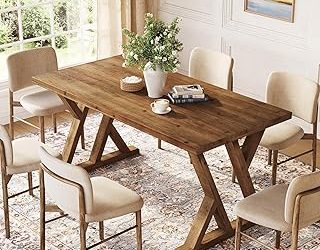
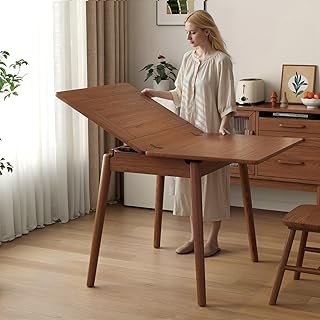
Solid Wood Expandable Table for Two to Six
This walnut-finished table is a strong all-purpose choice for households that need a compact everyday surface with occasional seating capacity. Its 23.6-inch-to-47.2-inch expansion range suits small kitchens and apartments, while the straightforward design can transition easily into a living-room dining area. Confirm the available clearance around the legs before pairing it with bulky chairs.
AWQM Three-Piece Dining Set
For a particularly tight footprint, this table-and-chairs set provides a coordinated solution without requiring a separate seating search. The compact two-person format is well suited to breakfast nooks, studios, and apartment kitchens, and the chairs can typically tuck close to the table when not in use. It is best for couples or solo diners rather than households that regularly host larger groups.
Round-to-Oval Extendable Wood Table
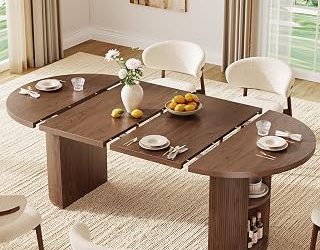
This design starts as a 35.4-inch round table and extends to a 47.2-inch oval, giving a small room a more generous surface without the visual bulk of a permanently large rectangle. Rounded edges improve circulation, especially in a room where people pass behind seated diners. Its hidden storage feature is an added advantage, although buyers should verify how the extension leaf operates and where it is stored.
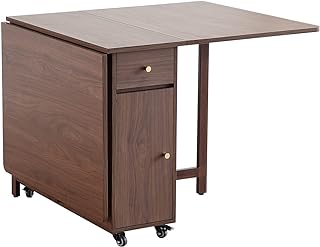
Drop-Leaf Folding Table with Storage and Wheels
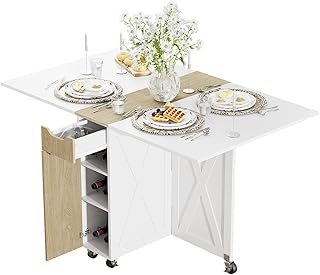
When flexibility is the main priority, this walnut table offers a practical combination of folding leaves, storage, and locking casters. It can function as a dining table, work surface, or occasional entertaining station, then move aside when the room needs to serve another purpose. The wheels are useful only when the floor is level, and the locking mechanism should be engaged before anyone leans on an extended leaf.
Round Extendable Table with Flip Leaf and Shelf
This 42-inch-to-58-inch table offers a useful middle ground between a compact round footprint and seating for four to six. The built-in flip leaf avoids the need to store a loose extension, while the lower shelf adds display or storage space in a small apartment. Its metal legs may appeal to shoppers seeking a more contemporary look, but check the shelf position if you prefer to stretch your legs beneath the table.
Frequently Asked Questions
What is the best table shape for a small dining area?
Round and oval tables are often the easiest to navigate because they have no sharp corners and encourage flexible seating. A narrow rectangular or drop-leaf table may be better when the dining area sits against a wall or beside a kitchen run.
How much space should be left around a dining table?
Aim for approximately 36 inches between the table edge and nearby walls, appliances, or furniture. You may need more behind frequently used chairs, while a seldom-used side can work with slightly less clearance if the layout remains safe and comfortable.
Are extendable tables worth buying for an apartment?
Yes, provided the extension mechanism is simple enough for regular use and the fully open table still fits the room. An extendable model is particularly valuable when you dine with one or two people most days but host friends or family occasionally.
Should I choose a table with wheels?
Wheels are helpful in multipurpose rooms where the table must be moved for cleaning, crafting, or entertaining. Choose locking casters and use them on a stable, reasonably smooth floor; mobility should not come at the expense of stability during meals.
Final Thoughts
The Solid Wood Expandable Table for Two to Six is the most versatile choice for many small homes, while the AWQM Three-Piece Dining Set makes the most sense when space and budget are both tightly limited. For maximum flexibility, consider the Drop-Leaf Folding Table with Storage and Wheels; for a softer, easier-to-navigate layout, the Round-to-Oval Extendable Wood Table is a compelling alternative.