Our Top Picks
 Liiwepo Queen Size Headboard Only-No Assembly RequiredQueen0.01 x 60 x 23 inches10 poundsCheck on Amazon
For most beginners, a wall-mounted upholstered panel headboard made from plywood, foam and fabric is the best DIY headboard, a reclaimed or planked wood headboard suits anyone with basic tools and a rustic look in mind, and a peel-and-stick or rail-mounted kit suits renters who need a no-drill result. The right project depends on your skill, tools, mattress size, wall type and whether you rent. This guide compares the most popular DIY headboard routes, lists the materials makers typically sell, and covers sizing, mounting and safety notes so the finished piece is secure.
DIY Headboard Options at a Glance
| Option | Best for | Typical materials | Limits |
|---|---|---|---|
| Upholstered panel headboard | Soft, hotel-style look; beginners with a staple gun | Plywood or MDF panel, high-density foam or batting, fabric, staples | Fabric can stain; needs a secure mounting method |
| Tufted headboard | Classic or glam style; patient crafters | Foam, buttons, upholstery thread, fabric | Time-consuming; button placement takes planning |
| Wood plank headboard | Rustic, farmhouse and modern wall accents | Pine, cedar or reclaimed boards, stain or paint, wood glue, screws | Heavy; needs studs or heavy-duty anchors |
| Pallet-style headboard | Budget projects with a casual look | Reclaimed pallet boards, sanding, sealant | Rough wood needs thorough sanding; some pallets may be chemically treated |
| Painted or mural wall headboard | Renters, minimal materials | Paint and painter’s tape | No physical headboard; no added support |
| Wall-mounted shelf or ledge headboard | Small rooms, no bed frame needed | Wood board with brackets or a French cleat | Needs careful stud placement |
| Ready-made DIY headboard kit or panels | Quick installs with consistent results | Peel-and-stick wall panels, foam or fabric panels with adhesive | Adhesive may mark walls; follow the maker’s guidance |
Choosing the Project Style
Upholstered panel
This is the most approachable choice. You cut a plywood panel to width, wrap it in foam or batting, stretch fabric tight and staple it to the back. Common instructional guides from home improvement outlets suggest wrapping the fabric around the edges and stapling it in alternating directions to avoid wrinkles. Fabric choice matters: tightly woven upholstery fabrics, performance velvet and linen blends hold shape better than thin cotton.

IFNOW Wall Mounted Headboard, Peel and Stick Panels, Dark Grey, Queen | 3D Soundproof Acoustic Padding, Reusable and Removable, Tufted fabric Bed Headboard, for bedroom (9 Panels, 10" x 24")
Chosen because it specifies Peel and Stick Panels and Dark Grey.
View on AmazonLiiwepo Queen Size Headboard Only-No Assembly Required, Beige | Easy to use no assembly required, Linen fabric and extra-thick foam for added comfort, Modern style headboard queen size
Chosen because it specifies Beige and Easy to use no assembly required.
View on Amazon
Tufted Headboard Queen Size, Solid Wood Adjustable Height Head Board, Beige
Chosen because it specifies Solid Wood Adjustable Height Head Board and Beige.
View on Amazon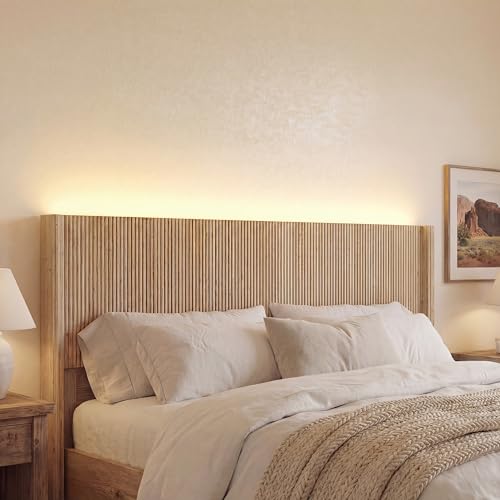
BONITURE Queen Size Headboard Only, Modern Fluted Wall-Mounted Head Board with Lighting, Boho Wood Bed headboard Stylish Bedroom Decor, Natural
Chosen because it specifies Modern Fluted Wall-Mounted Head Board with Lighting and Boho Wood Bed headboard Stylish Bedroom Decor.
View on AmazonTufted
Tufting adds depth but demands precision. Mark a grid before drilling holes, use a long upholstery needle and consider covered buttons for a finished look. If you are new to upholstery, a plain panel is a safer first project.
Wood plank
Wood headboards suit confident DIYers. Boards can be arranged vertically, horizontally or in a chevron pattern. Sand every surface, ease the edges, and finish with stain, paint or a clear coat. Pine is a common budget choice, cedar adds aroma and rot resistance, and reclaimed lumber brings character but needs inspection for nails and splinters.
Sizing the Headboard
Match the width to the bed or extend it slightly beyond the frame for a more generous look. The height depends on ceiling height and how much visible wall you want. Most DIY headboards stand somewhere between 12 and 30 inches above the mattress top, though taller panels create a more dramatic look.
| Mattress size | Mattress width (standard) | Common headboard width approach |
|---|---|---|
| Twin | About 38 inches | Match or add a few inches per side |
| Full | About 54 inches | Match or add a few inches per side |
| Queen | About 60 inches | Often 62 to 66 inches |
| King | About 76 inches | Often 78 to 84 inches; may use two panels |
| California king | About 72 inches | Often 74 to 80 inches |
Measure your own mattress and bed frame, because actual dimensions vary by maker. Remember to subtract the headboard thickness when planning clearance from the wall, and make sure nightstands and lamps still fit.
Materials and Tools Checklist
- Base panel: plywood is stronger and more stable than MDF; 0.5 to 0.75 inch thickness is typical for upholstered panels.
- Padding: high-density foam about 1 to 2 inches thick plus batting for a smooth finish.
- Fabric: upholstery-weight fabric, cut a few inches larger than the panel on every side.
- Fasteners: staple gun with staples sized to the panel thickness, screws, wall anchors and a stud finder.
- Safety gear: eye protection, dust mask for sanding or cutting wood and foam, and work gloves.
- Mounting hardware: French cleat, D-rings, or brackets rated for the weight of the finished piece.
Mounting, Weight and Safety
A headboard leans against heads and bodies, so a secure installation is essential. Locate wall studs with a stud finder and mount into studs wherever possible. A French cleat (two interlocking angled boards) is widely recommended by woodworking guides because it distributes weight along the wall and locks the panel in place. If studs do not line up with your planned position, use anchors rated for the headboard’s weight and follow the anchor maker’s instructions.
- Never rely on a single picture hook or small nail for a heavy panel.
- Check that the headboard cannot tip or shift if someone leans on it.
- If you are unsure about the wall behind the headboard, such as wiring or plumbing, consult a qualified electrician or contractor before drilling.
- For wood projects, sand and seal thoroughly, and use low-VOC finishes in a ventilated space.
- Avoid using treated or unknown pallet wood unless the stamp shows it was heat treated and not chemically treated; inspect for nails and stains.
- Keep fabric headboards away from candles, space heaters and other heat sources.
Renter-Friendly Options
If drilling is not allowed, look at freestanding options such as leaning panels, adhesive fabric panels, painted wall designs or a headboard that attaches to the bed frame rather than the wall. Many bed frames have pre-drilled holes for a standard headboard bracket. Use the frame maker’s guidance for compatible hardware and weight limits. Adhesive products should be checked against the maker’s instructions for your wall paint and surface.
Budget Tiers
| Tier | What to expect | Trade-offs |
|---|---|---|
| Budget | Plywood, standard foam and basic fabric; reclaimed boards | More labor, more finishing work |
| Mid-range | High-density foam, upholstery fabric, hardware like French cleats, stain kits | Reliable result with a quality look |
| Premium | Solid hardwoods, tufting kits with covered buttons, performance fabrics | Higher material cost and more skill needed |
Pick X If You Want…
| Pick this | If you want… |
|---|---|
| Upholstered panel | A soft, polished look with a simple method |
| Tufted panel | Traditional detail and are willing to take your time |
| Wood plank design | A rustic or modern accent wall with basic tools |
| Peel-and-stick or adhesive panels | A renter-friendly refresh with minimal tools |
| Painted headboard shape | A zero-hardware option that costs very little |
Alternatives to Building Your Own
- Ready-made upholstered headboards: sold by furniture makers with bed-frame mounting included.
- Bed frames with built-in headboards: platform beds in wood, metal or fabric.
- Folding screens or room dividers: placed behind the bed as a movable backdrop.
- Wall art or a large mirror: hung centrally above the bed for visual impact, secured with rated hardware.
A Simple Upholstered Panel Method
Many how-to guides describe the same basic sequence. First, cut the plywood to your chosen width and height and sand the edges. Second, lay foam on the front and trim it flush; add a layer of batting that wraps slightly around the edges. Third, place the fabric face down on a clean floor, set the panel on top, and staple the fabric to the back starting at the center of each side and working outward, pulling it taut but not so tight that it distorts the pattern. Fourth, fold the corners like a gift wrap and staple them neatly. Finally, attach a French cleat or the bed-frame brackets to the back and lift it into place with a helper.
Set aside a full afternoon and work on a clean surface. Test the fabric stretch on a scrap first, and choose a fabric with a pattern that is easy to align if you are new to upholstery. Plain solids are more forgiving than stripes. Wear gloves when stapling, and keep fingers away from the staple path.
Frequently Asked Questions
What is the easiest DIY headboard for a beginner?
An upholstered panel is usually the easiest. You cut a plywood board, wrap it in foam and fabric, staple the back and mount it with a French cleat or bed-frame brackets.
How high should a DIY headboard be?
Many people choose a height between 12 and 30 inches above the mattress. Taller panels look more dramatic, while shorter ones suit low ceilings and small rooms.
Do I need to attach a headboard to studs?
Studs provide the strongest hold, so mount into them whenever possible. If studs do not fall where you need them, use anchors rated for the weight and follow the anchor maker’s guidance.
What fabric is best for a headboard?
Choose upholstery-weight fabric such as velvet, linen blends or performance fabrics. They stretch smoothly, resist sagging and handle regular contact better than thin cotton.
Can I make a headboard without drilling into the wall?
Yes. Attach it to the bed frame with brackets, use a freestanding leaning panel or paint a headboard design directly on the wall. Check your lease and the bed frame guidance first.
Is pallet wood safe for a headboard?
Only if the wood is known to be heat treated and free of chemical treatment, and it has been thoroughly cleaned and sanded. If you are unsure of its origin, choose new lumber instead.
More from Amazon
Programs that pair well with the guide above. Offers and eligibility are set by Amazon and may change.
Collect the home and kitchen items you want in one registry that guests can shop from.
Create a wedding registrySet up recurring deliveries of everyday items on eligible products. Terms and savings are set by Amazon.
Explore Subscribe & SaveFree shipping on eligible items, Prime Video and more. Eligible new members can start with a free trial.
Start a Prime free trialAudiobooks and podcasts to listen to on the go. Eligible new members can start with a free trial.
Try Audible freeAs an Amazon Associate we earn from qualifying purchases.