Key takeaways
- Measure the failure, not the bed: Note where the sag actually is — perimeter, hip zone, or the whole middle. Perimeter collapse needs rail cushions; a broad dip needs a full board; a single crater needs a curved insert.
- Match foam density, not thickness: A 2-inch 50D high-density panel outperforms a thicker soft one. Low-density foam compresses under repeated sitting within weeks.
- Check your usable edges: If the bed is pushed against a wall to save floor space, you only need support on the one or two sides you actually use. Buying for all four wastes money and room.
- Protect under-bed storage: Under-mattress supports sit above the slats, so they will not steal the bin space beneath. Frame-mounted risers can, so verify clearance before ordering.
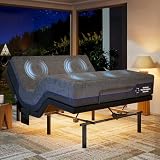
- Decide if you need height or firmness: Firmness stops you sinking; a wedge adds incline so your torso is already partly upright, which makes standing up far less work for stiff hips and knees.
The best overall pick for shoring up a collapsing bed edge is the Strobel Organic 2-Piece Vinyl Upholstered Rail Cushions, with the 60″ x 24″ x 2″ Sagging Mattress Support Bed Board as the runner-up. The first rebuilds a firm, sit-on perimeter; the second restores the whole surface underneath for a fraction of the cost.
In a small apartment, your bed is rarely just a bed. It is the sofa, the desk chair, the laundry-folding table, and the spot where you pull on your shoes. That means you sit on the perimeter dozens of times a day — and the perimeter is the first part of any mattress to give out. Once the edge sags, you slide off it, you have to hoist yourself up to stand, and the mattress starts to feel two inches narrower than it is. Replacing the whole bed is often impossible in a studio, so this guide covers the edge-support layers, rail cushions, foam boards, and wedges that fix the problem in place, plus how to choose between them.
Our top picks




As an Amazon Associate we earn from qualifying purchases at no extra cost to you.
Quick Comparison
| Product | Best For | Standout Feature | Rating |
|---|---|---|---|
| Strobel Organic Vinyl Upholstered Rail Cushions | Sitting on the edge daily | Firm two-piece perimeter rail | See card above |
| 60″ x 24″ x 2″ Sagging Mattress Support Board | Budget full-surface fix | 50D high-density foam panel | See card above |
| Hombys Under Mattress Support (3 pieces) | Deep, uneven sagging | Stackable, layerable foam pieces | See card above |
| meiqidi Curved Sagging Mattress Support Board | One collapsed spot | Curved profile for targeted lift | See card above |
| Lazyzizi 5-Inch Twin Mattress Wedge | Easier sit-up and stand-up | Adjustable under-mattress incline | See card above |
How to Choose an Edge Support Mattress Solution for Sitting and Getting Out of Bed
- Measure the failure, not the bed: Note where the sag actually is — perimeter, hip zone, or the whole middle. Perimeter collapse needs rail cushions; a broad dip needs a full board; a single crater needs a curved insert.
- Match foam density, not thickness: A 2-inch 50D high-density panel outperforms a thicker soft one. Low-density foam compresses under repeated sitting within weeks.
- Check your usable edges: If the bed is pushed against a wall to save floor space, you only need support on the one or two sides you actually use. Buying for all four wastes money and room.
- Protect under-bed storage: Under-mattress supports sit above the slats, so they will not steal the bin space beneath. Frame-mounted risers can, so verify clearance before ordering.
- Decide if you need height or firmness: Firmness stops you sinking; a wedge adds incline so your torso is already partly upright, which makes standing up far less work for stiff hips and knees.
The Best Edge Support Mattress Solutions for Sitting and Getting Out of Bed, Reviewed
Best Overall: Strobel Organic 2-Piece Vinyl Upholstered Rail Cushions
These upholstered rails create a genuinely firm border you can sit on without rolling off, which is exactly what a studio-dweller using the bed as a couch needs. The wipeable black vinyl also shrugs off scuffs from bags, shoes, and pets in a room where everything touches everything.
Best Budget: 60″ x 24″ x 2″ Sagging Mattress Support Bed Board
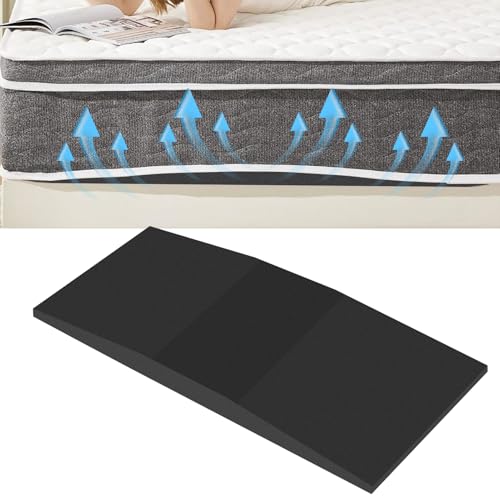
A single 50D high-density foam panel that levels a dipping queen or full surface for less than a takeout dinner. Best for renters who need the mattress usable for another year or two, not a permanent rebuild.
Best Premium: Hombys Under Mattress Support, 3 Foam Pieces
Three layerable high-density pieces let you build support to different heights across the bed, so a deep hip crater and a mild edge dip can both be corrected at once. Ideal for heavier sleepers or couples whose mattress has worn unevenly on each side.
Best for Targeted Sag Repair: meiqidi Curved Sagging Mattress Support Board
The curved 47″ x 25″ profile concentrates lift where the mattress has actually failed instead of flattening the whole surface. Choose it when one spot — usually the sitting edge or the hip zone — is doing all the sinking.
Best for Easier Standing Up: Lazyzizi 5-Inch Twin Mattress Wedge
Sliding under the mattress rather than on top of it, this adjustable wedge raises your head and torso so you rise from a partly upright position. It suits anyone with reflux, sinus congestion, or back and neck pain who dreads the morning push-up out of bed.
Frequently Asked Questions
Can a support board really fix a sagging mattress edge?
It can restore firmness and stop the sink for a mattress with worn foam, but it cannot repair broken coils or a delaminated core. If the mattress crunches or the sag returns within days, the mattress itself is done.
Will these solutions work with under-bed storage?
Yes. Foam boards, rail cushions, and under-mattress wedges all sit between mattress and slats, leaving your bins and drawers untouched — a real advantage over swapping in a bulkier frame.
What is the difference between a wedge and a mattress elevator?
Functionally very little. A wedge like the Lazyzizi and an elevator like the Avana Mattress Elevator 5-Inch both create a gentle whole-mattress incline; pick based on size availability and how firm you want the rise.
Do I need edge support on every side of the bed?
Only on the sides you use. In tight bedrooms with one open approach, supporting a single edge is cheaper, easier to install, and just as effective.
Final Thoughts
For a bed that doubles as seating, the Strobel Organic Rail Cushions are the most direct fix for a soft perimeter. If the whole surface has dipped, start with the 60″ x 24″ x 2″ support board on a budget or step up to the layerable Hombys Under Mattress Support for uneven, deeper sag — and add the Lazyzizi wedge if getting upright is the harder part of your morning.