Key takeaways
- Coverage: Measure the active zones first—parking bay, workbench area, entry path, and storage aisle—rather than automatically flooring the entire garage.
- Surface conditions: Choose absorbent mats for vehicle leaks, open drainage tiles for wet areas, and solid tiles where tools and small parts need a stable surface.
- Load rating: Confirm that interlocking tiles can support your vehicle, jack stands, shelving, and rolling equipment without flexing or separating.
- Installation: Modular systems are useful when you rent, reorganize often, or need to replace only a damaged section. A snug, clean subfloor improves stability.
- Maintenance: Look for oil-resistant, stain-resistant, or washable materials, and leave access around floor drains, garage doors, and utility equipment.
What's inside
A garage floor has to do more than look tidy. It may need to handle dripping oil, winter salt, wet tires, rolling tool chests, muddy boots, and the occasional dropped wrench—often while sharing limited space with bikes, bins, and storage cabinets. The wrong flooring can trap moisture, curl at the edges, or make it harder to reclaim usable floor area.
This guide compares practical garage flooring ideas for 2026, with an emphasis on small-space organization, easy installation, cleanup, and flexible coverage. You’ll find options for full-vehicle parking areas, modular work zones, drainage-heavy spaces, and garages that need a temporary but dependable surface.
As an Amazon Associate we earn from qualifying purchases.



How to Choose a/an Garage Flooring Ideas (2026)
- Coverage: Measure the active zones first—parking bay, workbench area, entry path, and storage aisle—rather than automatically flooring the entire garage.
- Surface conditions: Choose absorbent mats for vehicle leaks, open drainage tiles for wet areas, and solid tiles where tools and small parts need a stable surface.
- Load rating: Confirm that interlocking tiles can support your vehicle, jack stands, shelving, and rolling equipment without flexing or separating.
- Installation: Modular systems are useful when you rent, reorganize often, or need to replace only a damaged section. A snug, clean subfloor improves stability.
- Maintenance: Look for oil-resistant, stain-resistant, or washable materials, and leave access around floor drains, garage doors, and utility equipment.
The Best Garage Flooring Ideas (2026)s Reviewed
Garage Mats Oversize Parking Mat
This oversized 8.8-by-22-foot mat creates a defined parking surface without the permanence of a full tile installation. Its absorbent, waterproof construction is especially practical for a small garage where oil or water needs to stay contained instead of spreading beneath storage shelves.
Garage Floor Tiles Interlocking Modular Plastic Tile
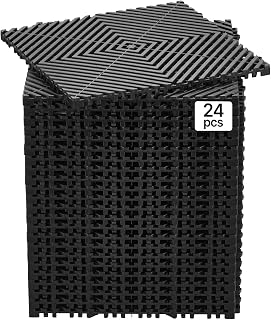
The 48-pack of 12-inch tiles is a strong choice for building a custom floor plan around fixed cabinets, freezers, or workbenches. Its high load capacity and oil- and stain-resistant surface suit garages that see regular vehicle traffic, while the interlocking format makes future expansion straightforward.
VEVOR Interlocking Garage Floor Tiles
These red polypropylene tiles add visual definition to a work zone and use a double-sided textured design for traction. They are a sensible pick when you want to separate a workshop corner from the parking area, although the bright color may show dirt sooner than a darker neutral finish.
VEVOR Interlocking Drainage Mat
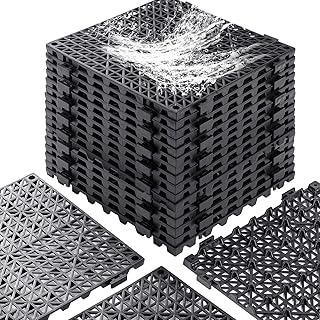
VEVOR’s 24-piece drainage system is designed for places where water, snow, or rinse-off is the main concern. The open structure helps keep standing moisture away from the walking surface, making it useful near a garage entry, utility sink, garden storage area, or damp basement section.
Jocoevol 60-Piece Interlocking Tile
With 60 modular pieces, Jocoevol offers generous coverage for creating a dedicated path or a broad garage work area. Its self-draining polypropylene design is well suited to wet footwear and outdoor equipment, while the snap-together layout lets you build around posts and other obstacles.
Frequently Asked Questions
What is the best garage flooring for a parked car?
A large parking mat is often the simplest solution, particularly if your priority is containing oil, water, and road grime beneath the vehicle. Interlocking tiles are better when you also want a finished walking surface or plan to cover the entire garage over time.
Are interlocking garage tiles difficult to install?
Most modular tiles require no adhesive and connect by hand, making them accessible for a weekend project. Sweep and inspect the concrete first, then begin at a straight edge; an uneven or heavily cracked subfloor can make seams more noticeable.
Do drainage tiles need a floor drain?
Not always. Drainage tiles can keep water from pooling directly underfoot, but they do not remove moisture by themselves. If there is no drain or slope, you will still need to sweep, vacuum, or lift sections occasionally to dry the area underneath.
Can garage flooring go over cracked concrete?
Minor, stable cracks are commonly manageable, but active movement, major height differences, and loose concrete should be repaired first. Tiles may bridge small imperfections, while a thin mat usually follows the shape of the floor more closely.
Final Thoughts
For straightforward vehicle protection, the Garage Mats Oversize Parking Mat is the most focused solution. Choose the Garage Floor Tiles Interlocking Modular Plastic Tile for adaptable full-zone coverage, or the VEVOR Interlocking Drainage Mat when wet conditions and easy cleanup matter most.