Key takeaways
- Measure the usable area: Record the clear floor dimensions, then account for shelving, appliances, workbenches, and door swings before choosing a roll width. A slightly smaller mat can be easier to manage than one that must be trimmed around every obstacle.
- Match material to the workload: PVC is practical for general protection and straightforward cleaning, while rubber is better suited to heavier traffic, rolling equipment, and areas where a softer, more resilient surface is helpful.
- Check thickness and texture: Thicker flooring generally offers better cushioning and durability, but it can also be heavier and harder to cut. Diamond-plate textures add grip and help disguise light dirt between cleanings.
- Plan for moisture: A waterproof surface is useful beneath vehicles, but trapped water still needs an escape route. Periodically lift or shift a roll to inspect the concrete, especially in damp climates.
- Consider installation and storage: Tape, edge restraint, and accurate trimming help prevent movement. If you regularly rearrange your garage, choose a format that can be rolled up or replaced in sections without dismantling the room.
What's inside
A garage floor has to do more than look tidy. It absorbs road salt, oil drips, grit, water, dropped tools, and the repeated pressure of tires—often while serving as a workshop, storage zone, or exercise area. The wrong covering can curl at the edges, trap moisture, slide underfoot, or become difficult to move when you need to reorganize.
This guide compares garage flooring rolls and one interlocking tile option with a small-space organization mindset. We look at coverage, thickness, traction, cleanup, installation, and how easily each choice can be removed or repositioned when your garage layout changes.
As an Amazon Associate we earn from qualifying purchases.



How to Choose a/an Garage Flooring Rolls (2026)
- Measure the usable area: Record the clear floor dimensions, then account for shelving, appliances, workbenches, and door swings before choosing a roll width. A slightly smaller mat can be easier to manage than one that must be trimmed around every obstacle.
- Match material to the workload: PVC is practical for general protection and straightforward cleaning, while rubber is better suited to heavier traffic, rolling equipment, and areas where a softer, more resilient surface is helpful.
- Check thickness and texture: Thicker flooring generally offers better cushioning and durability, but it can also be heavier and harder to cut. Diamond-plate textures add grip and help disguise light dirt between cleanings.
- Plan for moisture: A waterproof surface is useful beneath vehicles, but trapped water still needs an escape route. Periodically lift or shift a roll to inspect the concrete, especially in damp climates.
- Consider installation and storage: Tape, edge restraint, and accurate trimming help prevent movement. If you regularly rearrange your garage, choose a format that can be rolled up or replaced in sections without dismantling the room.
The Best Garage Flooring Rolls (2026)s Reviewed
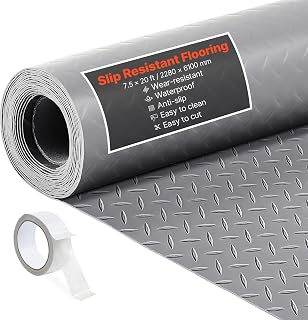
VEVOR 7.5 x 20-Foot PVC Diamond-Plate Roll
This silver-gray VEVOR roll is a strong all-purpose choice for homeowners who want broad coverage beneath a vehicle or along a multipurpose garage work zone. Its 2.2 mm PVC construction keeps the mat relatively manageable, while the diamond-plate surface provides everyday traction and the included double-sided tape helps control shifting.
7.8 x 18-Foot Thickened Rubber Garage Mat
Designed for mid-size SUVs and sports cars, this 2.8 mm roll covers 140.4 square feet and offers a useful balance between generous width and practical handling. It makes sense when the priority is a defined parking pad that catches drips and road grime without covering every inch of the garage.
VEVOR 12 x 12-Inch Interlocking Garage Tiles
Although not a roll, this 50-pack of red polypropylene tiles deserves attention for garages that need flexible zoning. The interlocking design lets you build a workbench platform, exercise corner, or repair area in sections, making it especially useful in small spaces where a permanent wall-to-wall covering would limit future layouts.
VEVOR 4 x 20-Foot, 3 mm Rubber Roll
The narrower 4-foot format is easier to place in a single parking lane, beneath a workbench, or through a high-traffic walkway. At 3 mm thick, this black rubber roll is the more substantial option for wear resistance and water protection, while its waterproof, non-slip surface is well suited to demanding garage routines.
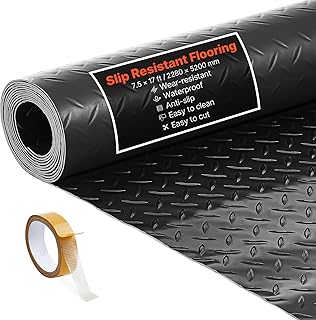
VEVOR 7.5 x 17-Foot PVC Garage Mat
This black 2.2 mm PVC roll offers a useful middle ground for garages that need substantial coverage but not the full length of a 20-foot mat. The double-sided tape support, cleanable diamond-plate finish, and broad footprint make it a sensible choice for a parking area that also doubles as a storage or hobby zone.
Frequently Asked Questions
Are garage flooring rolls better than tiles?
Rolls create a continuous surface with fewer seams, so they are often simpler beneath a parked car and faster to clean. Tiles are more adaptable for irregular layouts and localized repairs, making them attractive when you want to organize the garage into distinct zones.
Can these mats go directly on concrete?
They are generally intended for a clean, dry, reasonably level concrete surface. Sweep away grit, address sharp cracks or raised edges, and allow any damp slab to dry before installation so moisture and debris do not become trapped underneath.
How do I stop a garage mat from moving?
Accurate sizing, a flat installation, and the recommended double-sided tape or edge restraint can reduce movement. Let a rolled mat relax after unboxing, and avoid placing it over loose dust, which can undermine adhesion.
How should garage flooring be cleaned?
Start with sweeping or vacuuming, then use a mild detergent diluted in water and a non-abrasive brush or mop. Remove oil and chemical spills promptly, and avoid harsh solvents unless the flooring manufacturer specifically approves them.
Final Thoughts
For broad, everyday coverage, the VEVOR 7.5 x 20-foot PVC roll is the most versatile pick. Choose the 3 mm rubber roll for heavier use or the interlocking VEVOR tiles when flexible, room-within-a-room organization matters more than a seamless surface.