Key takeaways
- The best garment bags are breathable, zippered bags with reinforced seams and enough gusset depth for the clothing you actually store: choose fabric garment bags for suits and dresses, waterproof-coated bags for short trips or damp conditions, and structured folding…
The best garment bags are breathable, zippered bags with reinforced seams and enough gusset depth for the clothing you actually store: choose fabric garment bags for suits and dresses, waterproof-coated bags for short trips or damp conditions, and structured folding bags when wrinkle control and airline portability matter most.
Choose by Situation First
| Your situation | Best garment-bag type | Specifications to prioritize |
|---|---|---|
| Long-term closet storage | Breathable cotton or nonwoven fabric bag | 40–48 inch length, 2–4 inch gusset, metal or coil zipper, clear label window |
| Business travel by car or train | Folding travel garment bag | 45–52 inch unfolded length, 5–8 inch gusset, compression straps, reinforced handles |
| Air travel with formal clothing | Structured carry-on garment bag | Folded depth under your airline’s limit, padded hanger bar, wrinkle-resistant interior, trolley sleeve |
| Wet weather or temporary outdoor transport | Water-resistant or waterproof-coated bag | Coated polyester, covered zipper, sealed or bound seams, separate shoe compartment |
| Bulky coats and multiple outfits | Deep-gusset storage or rolling garment bag | 8–12 inch depth, 20–30 lb practical load, strong wheel housing and base panel |
Breathable Versus Waterproof Fabrics
For clothing stored in a dry indoor closet, breathability is usually more important than waterproofing. Cotton canvas, cotton-polyester blends, and breathable nonwoven polypropylene allow some air exchange, reducing the risk of trapped condensation around wool, silk, leather trim, or garments put away before they are completely dry.
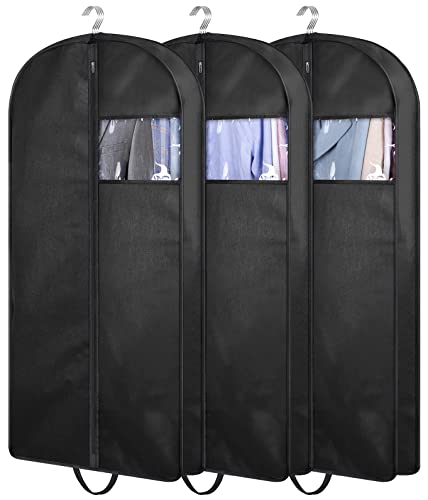
KIMBORA 43" Suit Bags for Closet Storage and Travel, Gusseted Hanging Garment Bags for Men Suit Cover With Handles for Clothes, Coats, Jackets, Shirts(3 Packs)
Included for 'Best Garment Bags for Protecting Clothes in Storage and Travel' because the listing specifies Coats and Jackets, details this guide uses to compare options.
View on Amazon
BALEINE Garment Bags for Travel, Water Resistant Carry on Suit Bag
Included for 'Best Garment Bags for Protecting Clothes in Storage and Travel' because the listing specifies Water Resistant Carry on Suit Bag, details this guide uses to compare options.
View on Amazon
MISSLO 10" Gusseted All Clear Garment Bags for Hanging Clothes 3 Packs 40" Suit Bags for Closet Storage Hanging Clothes Storage Suit Cover for Shirts, Coats, Dresses
Included for 'Best Garment Bags for Protecting Clothes in Storage and Travel' because the listing specifies Coats and Dresses, details this guide uses to compare options.
View on Amazon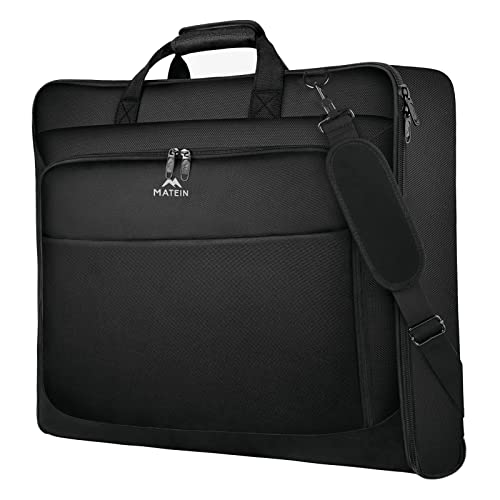
MATEIN Garment Bag for Travel, Large Carry on Garment Bags for Business
Included for 'Best Garment Bags for Protecting Clothes in Storage and Travel' because the listing specifies Large Carry on Garment Bags for Business, details this guide uses to compare options.
View on AmazonWaterproof and water-resistant bags are useful when rain, splashes, or a damp car trunk is the main concern. Coated polyester and nylon shed water effectively, but a fully sealed plastic bag can trap humidity during long storage. That makes it a poor choice for seasonal storage unless the clothing is completely dry and the storage area is climate controlled.
| Fabric or construction | Strengths | Limitations | Best use |
|---|---|---|---|
| Cotton canvas | Breathable, substantial, gentle against fabrics | Heavier; can absorb moisture; not waterproof | Closet storage for suits, dresses, and coats |
| Nonwoven polypropylene | Lightweight, inexpensive, breathable enough for routine storage | Can tear at seams or hanger openings when overloaded | Seasonal clothing and everyday wardrobe organization |
| Nylon or polyester | Durable, light, suitable for travel | Some versions retain heat and moisture; quality varies widely | Folding and rolling travel bags |
| Coated polyester or nylon | Good rain and splash resistance; easy to wipe clean | Less breathable; coating can crack or peel over time | Short trips and wet-weather transport |
| Clear vinyl or plastic | Excellent visibility and water protection | Can trap humidity and become brittle; usually unsuitable for long-term storage | Brief transport or highly damp environments |
What Makes a Garment Bag Durable?
Zipper quality
The zipper is commonly the first component to fail. Look for a zipper that runs around two or three sides rather than a short opening at the top. A wide opening makes it easier to load a suit without bending the shoulders. Coil zippers are flexible and work well on folding bags; molded-tooth zippers offer a more substantial feel but can catch if the bag is overfilled.
Check whether the zipper tape is stitched into a reinforced seam. A zipper with two rows of stitching is preferable to one attached through a thin folded edge. On water-resistant bags, a zipper flap helps more than a decorative waterproof claim: water can still enter through needle holes and unsealed seams.
Gusset depth
Gusset depth determines whether clothing hangs naturally or gets compressed against the front panel. A flat 1–2 inch bag is adequate for one suit or a few shirts. A 3–5 inch gusset accommodates a jacket, trousers, and a lightweight dress without excessive pressure. For winter coats or several coordinated outfits, look for 8 inches or more, but remember that extra depth increases closet space and packed weight.
As a practical limit, a standard 24-inch-wide closet section often handles one or two slim garment bags comfortably. A 12-inch-deep wardrobe can usually accept a 4–6 inch gusset while leaving room for the hanger and neighboring clothes. Wider bags may force garments against the door, causing creasing at the shoulders.
Hanger capacity and support
Do not judge capacity only by the number of hangers a manufacturer lists. A bag that technically holds six hangers may become difficult to zip if those hangers carry structured jackets. For everyday suits, allow roughly 2–3 inches of hanging width per suit jacket. A 6-inch gusset may therefore hold two substantial suits or four lighter outfits, not six winter garments.
The hanger opening should be reinforced with fabric, webbing, or a rigid collar. If several garments hang from one narrow loop, the loop bears the full load. For a loaded bag, keep the practical weight near 15–20 pounds unless the product has a rigid frame and reinforced carry points. Overloading causes zipper strain, distorted shoulders, and handle failure during lifting.
Folding Design: Storage Convenience Versus Wrinkles
A folding garment bag is useful when a full-length bag is difficult to store or when clothing must move between a closet and a vehicle. The most reliable designs fold at the waist or center and include compression straps that stop hangers from swinging. A fold line should not land across the most visible part of a jacket or dress if wrinkle control is a priority.
For travel, compare the folded dimensions with your intended luggage space. A bag measuring 50 inches long when open may fold to approximately 25 inches, but its folded thickness can reach 6–10 inches once two suits and shoes are inside. A soft bag can fit beneath a bed, but a rigidly framed model may not. Measure the storage space rather than assuming “foldable” means flat.
Travel bags with a shoulder strap are convenient for short distances, while a trolley sleeve keeps the bag stable on rolling luggage. If you regularly walk through stations or airports, wheels and a reinforced base can reduce strain, but they also add weight and create hard points that may catch on car trunks or narrow closet doors.
Measurements That Matter at Home
| Measurement | Useful target | Why it matters |
|---|---|---|
| Bag length | 40–48 inches for most suits and dresses; 50–55 inches for long formalwear | Prevents hems from folding against the bottom |
| Bag width | 22–24 inches | Fits common closet rods while protecting jacket shoulders |
| Gusset | 3–6 inches for general use; 8–12 inches for coats | Controls compression and total wardrobe capacity |
| Clearance above the floor | At least 2 inches for hanging bags; 4 inches in dusty or damp areas | Helps keep hems clean and reduces contact with floor moisture |
| Folded depth | Preferably under 8 inches for shelves or under-bed storage | Determines whether the packed bag fits where you plan to keep it |
How to Pack a Garment Bag Without Damaging Clothes
-
Clean and fully dry each garment before storage. Body oils, food residue, and moisture become harder to remove after months in a closed bag.
-
Use shaped, non-slip hangers for jackets and dresses. Avoid thin wire hangers, which can leave shoulder points and concentrate weight on the hanger opening.
-
Fasten buttons and zippers, then place trousers over the hanger bar or use a trouser hanger. This keeps garments from sliding into a heap at the bottom.
-
Leave a little air space. If the zipper needs force to close, the bag is overfilled; remove an item or choose a deeper gusset.
-
Place shoes in a separate washable compartment or shoe pouch. Hard soles can mark fabric, while loose shoe storage adds unnecessary pressure to the clothing.
-
Hang the bag from a strong closet rod, not a lightweight tension rod unless the total load is modest. For long-term storage, inspect the bag every few months for moisture, pests, or seam stress.
Our Practical Buying Recommendation
For most homes, the best garment bags are not the most heavily padded or completely sealed models. Choose a breathable 40–48 inch bag with a 3–6 inch gusset, reinforced hanger opening, full-length zipper, and enough width for the number of garments you intend to carry. Add a water-resistant folding bag for travel if you regularly face rain or crowded transport.
If you store winter coats, formal gowns, or several coordinated outfits, prioritize gusset depth and load support over compactness. If you live in a small apartment, measure the closet rod, shelf, and under-bed clearance first. A correctly sized, breathable bag will protect clothing more effectively than a larger bag that is compressed against a wall, overloaded, or left in a humid corner.