Key takeaways
- Room Size: Leave roughly 36 inches between the table edge and nearby walls or furniture when possible; in a tight room, a narrower rectangular table can improve circulation.
- Wood Type: Acacia, birch, and other hardwoods offer useful durability, while bamboo is technically a fast-growing grass but can provide a similarly warm, wood-like surface.
- Tabletop Thickness: A thicker top creates a substantial look and handles refinishing better, but it can add visual and physical weight to a small dining space.
- Seating Layout: Check leg placement before buying. Corner or crossed legs may look stylish but can reduce usable knee room compared with a simple trestle or straight-leg design.
- Finish and Care: Choose a sealed, ready-to-use surface for low-maintenance dining. Unfinished tops offer customization but require sanding, sealing, and ongoing protection before use.
What's inside
Choosing the best hardwood for a dining table is rarely as simple as picking the most attractive finish. In a compact dining area, the table must fit the room without blocking walkways, provide enough elbow room for everyday meals, and withstand everything from homework to hot serving dishes. Material, thickness, leg placement, and maintenance all affect whether a table feels practical or oversized.
This guide compares solid-wood dining tables and tabletop options with small-space living in mind. We look at footprint, seating capacity, visual weight, construction, finish, and flexibility so you can choose a hardwood table that suits both your room and your routine.
As an Amazon Associate we earn from qualifying purchases.




How to Choose a/an Hardwood For Dining Table (2026)
- Room Size: Leave roughly 36 inches between the table edge and nearby walls or furniture when possible; in a tight room, a narrower rectangular table can improve circulation.
- Wood Type: Acacia, birch, and other hardwoods offer useful durability, while bamboo is technically a fast-growing grass but can provide a similarly warm, wood-like surface.
- Tabletop Thickness: A thicker top creates a substantial look and handles refinishing better, but it can add visual and physical weight to a small dining space.
- Seating Layout: Check leg placement before buying. Corner or crossed legs may look stylish but can reduce usable knee room compared with a simple trestle or straight-leg design.
- Finish and Care: Choose a sealed, ready-to-use surface for low-maintenance dining. Unfinished tops offer customization but require sanding, sealing, and ongoing protection before use.
The Best Hardwood For Dining Table (2026)s Reviewed
BAKEVE Bamboo Dining Table
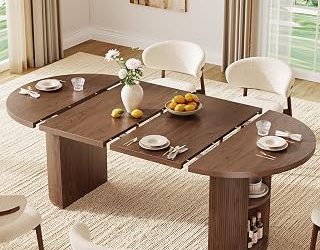
The BAKEVE Bamboo Dining Table is a smart fit for apartments and smaller dining rooms, with a 47.2-inch length suited to four to six people without dominating the floor plan. Its walnut-colored finish and clean rectangular profile can work as a dining table, kitchen table, or compact multipurpose desk. Bamboo is not hardwood botanically, but its solid construction and FSC-certified sourcing make this a practical alternative for shoppers prioritizing a warm wood appearance and a lighter visual footprint.
Howizz Acacia Wood Tabletop
The Howizz 55 x 28-inch Acacia Tabletop is best for shoppers who want to create a custom dining surface around an existing base or a space-saving set of legs. Its dark walnut stain gives a finished look, while the 0.7-inch thickness keeps the top relatively manageable for DIY installations. Measure carefully before pairing it with a base: the tabletop’s proportions work particularly well in a narrow dining nook, breakfast area, or convertible work-and-dining zone.
Butcher Block Birch Tabletop
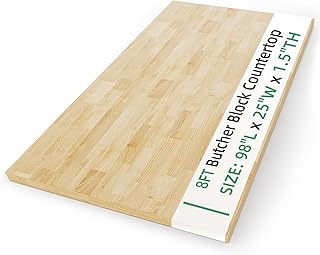
This 98 x 25-inch Birch Butcher Block Tabletop offers generous length with a notably narrow depth, making it useful where a conventional 36- to 40-inch-wide dining table would restrict movement. The unfinished surface is a project rather than a ready-to-eat-on table, so it needs proper sanding and a food-safe or furniture-appropriate finish before installation. For confident DIYers, it provides unusual flexibility for a built-in banquette table, kitchen island, or slim dining counter.
Pemberly Row Solid Acacia Dining Table
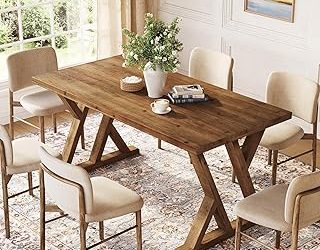
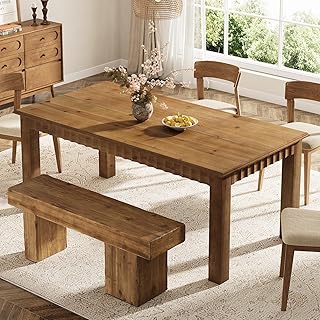
The Pemberly Row Solid Acacia Dining Table brings a larger, more substantial presence with its 79 x 40-inch surface and seating for up to six. Kiln-dried acacia and crossed legs give it a strong modern-rustic character, though the generous depth requires a room with comfortable clearance on all sides. It is a good choice for households that want a durable centerpiece and have enough space to avoid making the dining area feel cramped.
Plank+Beam Classic 72-Inch Dining Table
The Plank+Beam Classic 72-Inch Dining Table balances traditional farmhouse styling with a size that remains manageable in many family dining rooms. Its pecan wirebrush finish adds texture without relying on ornate detailing, and the solid-wood construction gives the table visual permanence. Consider it when you need seating for regular family meals but prefer a straightforward silhouette and relatively simple assembly over a bulky statement piece.
Frequently Asked Questions
What is the best hardwood for a dining table?
There is no single best choice for every home. Acacia is an appealing all-around option for durability and distinctive grain, while birch offers a lighter, more uniform surface and bamboo can be a practical sustainable alternative.
How much space should I leave around a dining table?
Aim for about 36 inches of clearance from the tabletop edge to walls, cabinets, or other furniture. If space is limited, prioritize the side used most often and consider a bench that can tuck completely beneath the table.
Is an unfinished tabletop suitable for dining?
Not immediately. An unfinished top must be sanded and sealed with a durable finish before dining use. Sealing protects the wood from spills, stains, and moisture while making routine cleaning much easier.
What is a good alternative to a six-person dining table?
A 63-Inch Solid Wood Dining Table for 6 with heavy-duty legs can provide family-size seating in a more compact length than some larger designs. For especially narrow rooms, a custom tabletop such as the Howizz or Birch option may provide better control over width and leg placement.
Final Thoughts
For most compact homes, the BAKEVE Bamboo Dining Table is the easiest everyday fit, while the Howizz Acacia Tabletop offers the most flexibility for a tailored small-space setup. If you have room for a larger statement piece, the Pemberly Row Solid Acacia Dining Table delivers substantial seating and a distinctive modern look.