Key takeaways
- Tank size: An 8-gallon tank is easier to store and suits inflation and intermittent nailing; 20 to 33 gallons provide more breathing room for longer tasks and fewer refill cycles.
- Air delivery: Compare CFM at 90 PSI rather than maximum PSI alone. Higher delivered CFM is more useful for sustained tool operation and faster recovery.
- Noise: Ultra-quiet models are worthwhile in attached garages or homes where sound travels indoors. Check the stated decibel rating, but remember that placement and floor vibration also affect perceived noise.
- Footprint and mobility: Vertical tanks preserve valuable floor space, while wheels and handles make it easier to pull the compressor out only when needed.
- Maintenance: Oil-free compressors simplify ownership, but every tank still needs regular condensate draining. Leave room around the unit for ventilation and access to controls.
What's inside
A garage compressor can earn its floor space quickly—until a noisy, underpowered model trips the breaker, takes too long to refill, or leaves hoses and accessories scattered across an already crowded work area. The right tank size and footprint matter just as much as headline pressure, especially when your garage also stores tools, seasonal furniture, and household supplies.
This guide compares the best home garage air compressors for 2026, with attention to noise, vertical storage, portability, recovery, and realistic DIY workloads. Whether you need occasional tire inflation, finish nailing, woodworking, or light spray painting, these picks help match compressor capacity to the way you actually use your garage.
As an Amazon Associate we earn from qualifying purchases.


How to Choose a Home Garage Air Compressor (2026)
- Tank size: An 8-gallon tank is easier to store and suits inflation and intermittent nailing; 20 to 33 gallons provide more breathing room for longer tasks and fewer refill cycles.
- Air delivery: Compare CFM at 90 PSI rather than maximum PSI alone. Higher delivered CFM is more useful for sustained tool operation and faster recovery.
- Noise: Ultra-quiet models are worthwhile in attached garages or homes where sound travels indoors. Check the stated decibel rating, but remember that placement and floor vibration also affect perceived noise.
- Footprint and mobility: Vertical tanks preserve valuable floor space, while wheels and handles make it easier to pull the compressor out only when needed.
- Maintenance: Oil-free compressors simplify ownership, but every tank still needs regular condensate draining. Leave room around the unit for ventilation and access to controls.
The Best Home Garage Air Compressors (2026) Reviewed
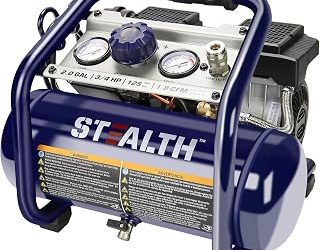
Stealth 20-Gallon Ultra Quiet Air Compressor
The Stealth 20-gallon model is a strong all-around choice for a home garage that needs useful capacity without excessive operating noise. Its vertical design helps conserve floor space, while the 150 PSI maximum and approximately 5 CFM at 90 PSI give it flexibility for nailers, inflation, and selected light-duty painting tasks.
CRAFTSMAN 33-Gallon Air Compressor
For homeowners who regularly use air tools, the CRAFTSMAN 33-gallon compressor offers the largest reserve among these leading options. Its tall tank is easier to place against a wall than a horizontal unit, although its size makes it best suited to a dedicated workshop corner rather than a garage that must remain highly flexible.
Klutch 29-Gallon Air Compressor
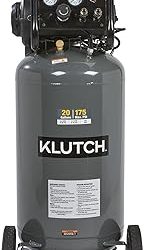
The Klutch 29-gallon compressor balances substantial capacity with a practical vertical footprint. Its 2.5 HP motor, 175 PSI maximum, and 5.1 CFM at 90 PSI make it a capable pick for frequent nailing, inflation, and compatible painting work, while large wheels simplify repositioning during a garage reorganization.
Craftsman 20-Gallon Oil-Free Air Compressor
This 20-gallon Craftsman is a sensible middle-ground option for DIYers who want more reserve than a compact tank without moving up to a full-size workshop machine. Dual quick couplers are convenient when two hoses or accessories need to stay ready, and the oil-free design keeps routine upkeep straightforward.
8-Gallon Ultra Quiet Air Compressor
The 8-gallon Ultra Quiet compressor is well suited to compact garages and occasional projects where storage efficiency matters most. Its 1.5 HP motor and 4.52 CFM rating can handle inflation, brad or finish nailing, and intermittent repair work, while the smaller tank is easier to tuck beneath a workbench when not in use.
Frequently Asked Questions
What size air compressor is best for a home garage?
For general household use, 8 to 20 gallons is usually the most practical range. Choose closer to 8 gallons for tires and intermittent nailing, or 20 gallons and above when you expect longer tool sessions and want fewer pauses for recovery.
Is a higher PSI always better?
No. Maximum PSI indicates the pressure the tank can store, but CFM at 90 PSI better reflects how effectively the compressor can run many pneumatic tools. Match both figures to the requirements of your preferred nailer, inflator, or spray gun.
Are oil-free compressors good for garage use?
Yes, particularly for homeowners who prefer minimal maintenance. They generally do not require oil changes, though they may be louder or have different durability characteristics than larger oil-lubricated workshop compressors.
Where should I store an air compressor?
Place it on a stable, level surface with ventilation around the motor and enough clearance to drain the tank safely. A wall-side position or a designated rolling-tool zone works well; avoid blocking walkways, electrical panels, or vehicle doors.
Final Thoughts
The Stealth 20-gallon compressor is the best balance of capacity, quiet operation, and garage-friendly storage for many households. Choose the CRAFTSMAN 33-gallon for heavier, more frequent work, or the 8-gallon Ultra Quiet model when a compact footprint and easy stowing are the priorities.