Key takeaways
- Measure the vent, not just the base: Manufacturers list the cabinet footprint, but most units need 4 to 6 inches of clearance at the rear or side exhaust. Add that to your measurement before you decide it fits.
- Match ice type to how you actually drink: Bullet and cube ice is faster and better for coolers and long chills. Nugget or pebble ice chews well and cools drinks quickly, but it melts faster and the machines are larger.
- Check top clearance for refilling: Machines with a top-fill reservoir need overhead room to pour. If your target spot sits under an upper cabinet with 14 inches of headroom, prioritize front-access tanks or side-loading designs.
- Decibels matter more in one room than three: In a studio or open-plan layout, a compressor cycling at 45 dB reads as constant background noise. Look for units rated near 40 dB if the kitchen shares walls with a bed or desk.
- Consider going undercounter instead of bigger: If you regularly need more than 40 lbs a day, a freestanding undercounter unit removes the appliance from your work surface entirely. It’s a bigger install, but the counter comes back.
What's inside
Counter space in a small kitchen is currency. Every appliance you bring home has to earn its footprint, and ice makers are notorious for looking compact online and then swallowing an entire stretch of counter once they arrive. The other trap is airflow: these machines vent heat, so shoving one into a tight corner between the toaster and the wall means slower cycles and a compressor working harder than it should.
This guide looks at ice makers through a square-footage lens. I’ve weighed cabinet clearance, vent placement, water tank refill access, noise in open-plan layouts, and whether a machine can live in a cabinet, on a bar cart, or under a counter instead of hogging prep space. Below are six models worth considering in 2026, from a 26 lb countertop cube maker to a 100 lb undercounter unit for anyone ready to reclaim the counter entirely.
As an Amazon Associate we earn from qualifying purchases.


How to Choose a/an Ice Maker (2026)
- Measure the vent, not just the base: Manufacturers list the cabinet footprint, but most units need 4 to 6 inches of clearance at the rear or side exhaust. Add that to your measurement before you decide it fits.
- Match ice type to how you actually drink: Bullet and cube ice is faster and better for coolers and long chills. Nugget or pebble ice chews well and cools drinks quickly, but it melts faster and the machines are larger.
- Check top clearance for refilling: Machines with a top-fill reservoir need overhead room to pour. If your target spot sits under an upper cabinet with 14 inches of headroom, prioritize front-access tanks or side-loading designs.
- Decibels matter more in one room than three: In a studio or open-plan layout, a compressor cycling at 45 dB reads as constant background noise. Look for units rated near 40 dB if the kitchen shares walls with a bed or desk.
- Consider going undercounter instead of bigger: If you regularly need more than 40 lbs a day, a freestanding undercounter unit removes the appliance from your work surface entirely. It’s a bigger install, but the counter comes back.
The Best Ice Maker (2026)s Reviewed
EUHOMY Countertop Ice Maker with Handle (26 lbs)
The built-in handle sounds like a small thing until you live in a galley kitchen, where the ability to lift a unit off the counter and store it in a pantry between uses is the whole point. It produces nine bullet cubes in about six minutes and auto-cleans, making it the most genuinely portable pick here for apartments, RVs, and rentals.
GoveeLife Smart Nugget Ice Maker Pro
At roughly 40 dB with its NoiseGuard system, this is the nugget maker I’d put in a studio apartment or a kitchen that opens onto a bedroom. Dual water tanks cut refill frequency, and app control lets you start a batch before guests arrive without standing over it.
EUHOMY Nugget Ice Maker Countertop (44 lbs)
This is the volume option for households that go through soft, chewable ice daily. It’s the largest countertop unit on this list, so measure carefully, but 44 lbs in 24 hours means you’re not rationing between refills during a party.
Frigidaire 26 Lbs Portable Compact Maker
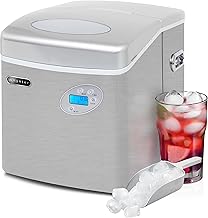
A tidy stainless body that reads as intentional rather than as a plastic gadget parked on the counter, which matters in kitchens where the appliance is always visible. Output is modest, but the finish and compact profile make it the easiest to integrate visually.
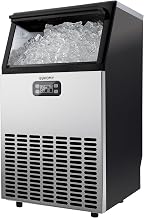
EUHOMY Commercial Undercounter Ice Maker (100 lbs)
The counter-clearing solution. It produces 100 lbs a day with 33 lbs of onboard storage, and because it’s freestanding and undercounter, it disappears into a bar area, kitchen island, or utility nook instead of competing for prep space.
Frequently Asked Questions
Can I put an ice maker inside a cabinet?
Only if the cabinet is ventilated and you leave the door open during operation. Countertop units exhaust warm air and will overheat or slow dramatically in a sealed space. A cabinet with the back panel removed and airflow at the top can work for storage between uses.
Do these need a water line?
The countertop models here are all reservoir-fed, so you pour water in manually. The undercounter commercial unit connects to a water supply and a drain, which is worth factoring into installation cost.
Why does nugget ice melt so fast in my glass?
Nugget ice is compacted flakes with air pockets, so it has far more surface area than a solid cube. That’s what makes it chewable and quick-chilling, and also why it disappears faster. Keep a cube maker if you need ice to last in a cooler.
How much noise should I expect?
Most countertop units land between 45 and 55 dB, comparable to a quiet dishwasher, with a distinct clatter when ice drops into the basket. Only the GoveeLife model here is engineered specifically for low-noise operation.
Final Thoughts
For most small kitchens, the EUHOMY Countertop Ice Maker with Handle is the smartest buy because it can be stored away when you don’t need it. If you want nugget ice without the constant hum, the GoveeLife Smart Nugget Ice Maker Pro is the quietest option here, and anyone with the plumbing access should look at the EUHOMY Commercial Undercounter unit to get the counter back for good.