Key takeaways
- Heating area: Match the output and design to your layout. A portable 1,500-watt unit can suit a small seating nook, while larger or open spaces may need a higher-output hardwired model.
- Mounting style: Wall, ceiling, hanging, tripod, and freestanding designs solve different space problems. For tight patios, an elevated mount preserves valuable floor area and keeps walkways clear.
- Power requirements: Confirm whether the heater uses a standard outlet or requires a 240-volt hardwired connection. High-output units may need professional installation and a dedicated circuit.
- Weather protection: Look for outdoor-rated construction and suitable water resistance, but do not treat an outdoor rating as permission to leave every heater fully exposed to rain or snow.
- Controls and safety: Remote controls, timers, app operation, tip-over protection, and adjustable heat settings make daily use easier. Maintain the recommended clearance from furniture, fabrics, walls, and overhead surfaces.
What's inside
Choosing an infrared patio heater is rarely as simple as picking the highest wattage. In a compact outdoor area, a bulky stand can obstruct circulation, while an undersized heater may warm only the person sitting directly in front of it. Mounting height, power availability, weather exposure, controls, and the shape of your seating area all influence whether a heater feels genuinely useful.
This guide compares infrared patio heaters for balconies, covered patios, porches, garages, and larger entertaining spaces. The selections include portable, wall-mounted, ceiling-mounted, and hardwired models, with attention to footprint, installation demands, control options, and practical heat coverage. Always check local electrical requirements and the manufacturer’s clearance guidance before installation.
As an Amazon Associate we earn from qualifying purchases.


How to Choose an Infrared Patio Heater (2026)
- Heating area: Match the output and design to your layout. A portable 1,500-watt unit can suit a small seating nook, while larger or open spaces may need a higher-output hardwired model.
- Mounting style: Wall, ceiling, hanging, tripod, and freestanding designs solve different space problems. For tight patios, an elevated mount preserves valuable floor area and keeps walkways clear.
- Power requirements: Confirm whether the heater uses a standard outlet or requires a 240-volt hardwired connection. High-output units may need professional installation and a dedicated circuit.
- Weather protection: Look for outdoor-rated construction and suitable water resistance, but do not treat an outdoor rating as permission to leave every heater fully exposed to rain or snow.
- Controls and safety: Remote controls, timers, app operation, tip-over protection, and adjustable heat settings make daily use easier. Maintain the recommended clearance from furniture, fabrics, walls, and overhead surfaces.
The Best Infrared Patio Heaters (2026) Reviewed
DR. INFRARED HEATER Portable Infrared Heater
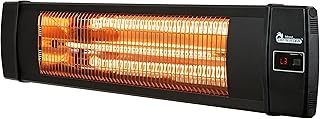
This portable DR. INFRARED HEATER is a practical choice when flexibility matters more than permanent installation. Its indoor-and-outdoor positioning and included remote make it convenient for moving between a covered patio, garage, or workshop, though shoppers should note that this version does not include a thermostat.
Paraheeter Outdoor Electric Infrared Patio Heater
The Paraheeter offers useful versatility for small-space organization: it can be used with a wall mount or portable tripod setup rather than consuming permanent floor space. A remote, waterproof construction, and 1,500-watt output make it a sensible option for a backyard seating zone or garage that serves multiple purposes.
ThermoMate 4500W Carbon Fiber Patio Heater
With 4,500 watts of carbon-fiber infrared heating, the ThermoMate is aimed at larger covered porches, decks, and garages where a compact plug-in heater may fall short. Its 24-hour timer is helpful for routine use, but the 240-volt hardwired design makes this a planning-and-installation project rather than a casual weekend plug-in purchase.
Bromic Tungsten Smart Heat 6000W
The Bromic Tungsten Smart Heat is the serious, architectural option in this group, pairing dual-element infrared heating with a 6,000-watt output. Its black finish can integrate neatly into a coordinated outdoor room, but the 220–240-volt electrical requirement and substantial capacity make it best suited to professionally planned installations.
Electric Infrared Patio Heater with Speaker and Mood Lights
This 43-inch aluminum heater adds entertainment features that can be appealing in a compact gathering area: a built-in speaker and 16-color mood lighting. Its 1,500-watt output, timer, and IP65 water-resistant design suit covered patios and indoor-outdoor rooms, especially when ambiance is nearly as important as supplemental warmth.
Frequently Asked Questions
Are infrared patio heaters efficient?
Infrared heaters warm people and nearby surfaces directly instead of primarily heating the surrounding air. That can feel efficient in breezy outdoor settings, but actual energy use depends on wattage, operating time, wind, temperature, and how well the space is sheltered.
Can an infrared patio heater be used indoors?
Only use a model indoors when the manufacturer explicitly permits indoor operation. Follow ventilation, clearance, electrical, and placement instructions, and never use an outdoor-only heater inside an enclosed room.
Should I choose a portable or mounted heater?
Choose portable when you rearrange furniture, rent your home, or need heat in several locations. Choose wall or ceiling mounting when floor space is limited and you want a consistent heating position with fewer cords and obstacles.
What size infrared heater do I need?
Start with the manufacturer’s stated coverage rather than wattage alone. A sheltered, compact seating area needs less output than an exposed deck, and multiple strategically placed heaters can provide more even comfort than one oversized unit.
Final Thoughts
For flexible small-space use, the Paraheeter is a strong all-around choice, while the DR. INFRARED HEATER suits buyers who want portable simplicity. For a larger, designed-in installation, the ThermoMate offers more output, and the Bromic Tungsten Smart Heat is the premium high-capacity option when electrical planning and professional installation are appropriate.