Our Top Picks
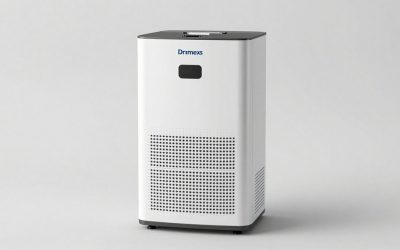
 Kesnos 150 Pint Dehumidifier for Basement with DrainDrain Hose11.73 x 15.47 x 24.57 inches38.14 PoundsCheck on Amazon
 80 Pints Energy Star Dehumidifier for Basement withDrain Hose10.71 x 13.86 x 19.65 inches30.6 poundsCheck on Amazon
 120 Pint Energy Star Dehumidifier for Basement withDrain Hose13.86 x 19.65 x 10.71 inches36.82 PoundsCheck on Amazon
 Kesnos 155 Pints Commercial Dehumidifier with Pump &7500 Sq. Ft with Pump13.58 x 16.06 x 26.18 inches80.67 PoundsCheck on Amazon
 Kesnos 216 Pints Commercial Dehumidifier with Pump &18.5 x 15.16 x 31.5 Inches90.9 poundsCheck on Amazon
Reading a Kesnos listing is mostly a matter of decoding. The titles are dense: a pint rating, a square footage, a humidity range, a tank size and a compressor type, all packed into one line. Across the eight listings below, the balanced pick for a damp basement is the 120 pint Energy Star model rated for 6,500 square feet, with a 1.06 gallon tank, a drain hose and a front humidity display. The small 36 dB unit is the budget route for bedrooms, and the 216 pint commercial model is the premium step for very wet, large spaces.
The range here is wide, from a 2,500 square foot home unit to a 216 pint commercial machine, and the right choice depends less on the brand than on three numbers: pints, tank size and how the water leaves. This guide decodes each title, adds the arithmetic a listing leaves out, and says where each model falls short.
The eight Kesnos listings at a glance
Kesnos 150 Pint Dehumidifier for Basement with Drain Hose, 7,500 Sq. Ft. | Ideal for Commercial and Industrial Large Room, 30-80% RH Humidity Control, 2.11-Gal Water Tank, Rotary Compressor
One of the moisture-control product options compared in this guide.
View on Amazon80 Pints Energy Star Dehumidifier for Basement with Drain Hose, 6000 Sq. Ft | Ideal for Home, Bedroom, Bathroom, 30-80% RH Humidity Control, Front Humidity Display, 1.06-Gal Water Tank, Rotary Compressor
One of the moisture-control product options compared in this guide.
View on Amazon
Kesnos 2,500 Sq. Ft. Energy Star Dehumidifier for Basement with Drain Hose | Ultra Quiet 36 dB, 0.39-Gallon Water Tank, 4 Pre-Set Modes, Auto Defrost, Timer, Ideal for Home, Bedroom, Bathroom, etc.
One of the moisture-control product options compared in this guide.
View on Amazon120 Pint Energy Star Dehumidifier for Basement with Drain Hose, 6500 Sq. Ft | 30-80% RH Humidity Control, Ideal for Home, Bedroom, Bathroom, Front Humidity Display, 1.06-Gal Water Tank, Rotary Compressor
One of the moisture-control product options compared in this guide.
View on AmazonKesnos 155 Pints Commercial Dehumidifier with Pump & Drain Hose for Up to 7,500 Sq. Ft. – Industrial Dehumidifier for Basement, Job Site and Large Spaces, 24-Hour Timer, 5 Year Coverage
One of the moisture-control product options compared in this guide.
View on AmazonKesnos 216 Pints Commercial Dehumidifier with Pump & 24-Hour Timer
One of the moisture-control product options compared in this guide.
View on Amazon
Kesnos 120 Pints Energy Star Dehumidifier for Home w/Front Humidity Display | Rotary Compressor, 1.06 Gal Water Tank with Drain Hose, 6,500 Sq. Ft. Dehumidifier for Basement, Bedroom, Bathroom, etc.
One of the moisture-control product options compared in this guide.
View on AmazonKesnos 80 Pints Energy Star Dehumidifier for Basement & Home, 6,000 Sq. Ft. | 30-80% RH Humidity Control, Front Humidity Display, 1.06-Gal Water Tank with Drain Hose, Ideal for Bedroom, Bathroom, etc.
One of the moisture-control product options compared in this guide.
View on Amazon| Model (as listed) | Key spec from the title | Price tier | Best for |
|---|---|---|---|
| Kesnos 2,500 Sq. Ft. Energy Star, 36 dB | 0.39 gal tank, 4 pre-set modes, auto defrost, timer, drain hose | Budget | Bedrooms, bathrooms, small damp rooms |
| 80 Pints Energy Star, 6000 Sq. Ft. | Rotary compressor, 1.06 gal tank, front display, drain hose | Budget | Moderately damp basements and homes |
| Kesnos 80 Pints Energy Star, 6,000 Sq. Ft. | 1.06 gal tank with drain hose, front display, 30-80% RH | Budget | Same use; compare against the listing above |
| 120 Pint Energy Star, 6500 Sq. Ft. | Rotary compressor, 1.06 gal tank, front display, drain hose | Mid-range | Damp or larger basements |
| Kesnos 120 Pints Energy Star for Home | Rotary compressor, 1.06 gal tank with drain hose, 6,500 sq ft | Mid-range | Same use; compare against the listing above |
| Kesnos 150 Pint, 7,500 Sq. Ft. | Rotary compressor, 2.11 gal tank, drain hose, 30-80% RH | Mid-range | Large, very damp spaces without a pump |
| Kesnos 155 Pints Commercial | Pump and drain hose, 7,500 sq ft, 24-hour timer, 5 year coverage | Premium | Job sites and big basements needing a pump |
| Kesnos 216 Pints Commercial | Pump, 24-hour timer | Premium | The dampest, largest spaces |
Price tier is relative to this set: the three lowest-priced listings are Budget, the next three Mid-range, and the two highest Premium. Specs come from the titles only; where a title is silent the block says “check the listing.”
How to read a Kesnos title
Every phrase in these titles answers a question. Knowing which question saves you from buying on the biggest number.
| Phrase in the title | What it tells you | What it leaves open |
|---|---|---|
| “150 Pint,” “80 Pints,” “120 Pint” | Daily water removal at the maker’s rating conditions | The temperature and humidity of those conditions; real output in a cool basement is lower |
| “7,500 Sq. Ft.” | A coverage claim | How damp the space can be; coverage assumes lightly damp rooms |
| “30-80% RH” | The adjustable humidity range | How accurate the sensor is; it is a setting range, not a guarantee |
| “1.06-Gal Water Tank” | Capacity of the removable tank, about 8.5 pints | Whether the tank is easy to carry when full |
| “Rotary Compressor” | A refrigerant-type unit, not desiccant | Noise, efficiency and lifespan |
| “Energy Star” | A certification claim by the seller | The exact efficiency figure; check the certified listing |
| “with Pump” | Water can be pushed through a hose to a drain | Maximum lift and run distance |
The same-title pairs are the other thing to watch for. Two 80 pint listings and two 120 pint listings read almost alike, which is why we treat them as separate entries and tell you what to compare.
Home-sized Kesnos units
These three suit bedrooms, bathrooms, living areas and ordinary damp basements. They share a design logic: a front display for reading humidity at a glance, a drain hose, and a tank that is small enough to be convenient but too small to rely on.
Kesnos 2,500 Sq. Ft. Energy Star Dehumidifier, 36 dB, 0.39-Gallon Tank
This is the lowest-priced listing in the set, in the Budget tier, and the only one whose title leans on quietness: 36 dB, four pre-set modes, auto defrost and a timer, with a drain hose and Energy Star named.
It does not give a pint rating, which is the big gap. A coverage of 2,500 square feet suggests a small-to-mid unit, but the title does not say how many pints it removes, so open the listing and find the figure and the rating conditions before ordering. Without it, you cannot compare this unit to the rest.
The 0.39 gallon tank deserves attention. That is about 3.1 pints. Even at a modest hypothetical rate of one pint an hour, the tank fills in around three hours. In practice, that means the hose is not an accessory but a requirement for anything except a spot-drying job. A tank this small is clearly designed to hand water to a drain.
Auto defrost is useful for cooler rooms, where coil frost can reduce output. The four pre-set modes suggest simple operation, though the title does not name them. The 36 dB figure is unusually low for a dehumidifier, and how it was measured is not stated, so read it as a manufacturer claim. Estimated power draw for a small compressor unit is roughly 200 to 350 W while running.
Pros
- Lowest price in the set and a stated 36 dB for bedroom use.
- Auto defrost, timer and pre-set modes in the title.
- Energy Star named, plus a drain hose.
Cons
- No pint rating in the title, so capacity cannot be compared.
- 0.39 gallon tank fills quickly and effectively requires the hose.
- 2,500 sq ft coverage is a ceiling for lightly damp spaces.
Who it’s for: a bedroom or bathroom owner who values low noise and will confirm the pint rating on the listing.
80 Pints Energy Star Dehumidifier for Basement with Drain Hose, 6000 Sq. Ft.
This listing leaves the brand name out of its title, though the product data attributes it to Kesnos, so confirm the brand on the page. It names 80 pints, Energy Star, a drain hose, 6,000 square feet, 30 to 80 percent RH control, a front humidity display, a 1.06 gallon tank and a rotary compressor. It is in the Budget tier, the cheaper of two 80 pint listings.
The capacity-to-coverage ratio is 80 pints for 6,000 square feet, about 13 pints per 1,000 square feet. That is the lowest ratio among the larger Kesnos units, which means it is best suited to lightly to moderately damp spaces. A finished basement with a musty smell in July is a good match; a basement with seepage after rain is not.
The tank is the practical constraint. 1.06 gallons is about 8.5 pints. At the best-case rating, 80 pints a day is 3.3 pints an hour, so the tank fills in about 2.5 hours. In a cool basement the real rate is lower and the interval longer, but the point stands: without the hose, you will be emptying it daily or more.
The front humidity display is a small but valuable detail. You can read the room without opening an app or taking the unit apart. Estimated power draw for an 80 pint class compressor unit is about 450 to 650 W while running; check the nameplate.
Pros
- Rotary compressor and a 30 to 80 percent RH range are both stated.
- Front humidity display and a drain hose.
- Budget tier for an 80 pint, 6,000 sq ft listing.
Cons
- Brand missing from the title text, so verify on the page.
- Capacity-to-coverage ratio is modest for a wet basement.
- Noise level and pump support are not stated.
Who it’s for: a household with a lightly to moderately damp basement that will run the unit on a hose.
Kesnos 80 Pints Energy Star Dehumidifier for Basement and Home, 6,000 Sq. Ft.
The second 80 pint listing is the near-twin of the previous one: 80 pints, Energy Star, 6,000 square feet, 30 to 80 percent RH, a front humidity display and a 1.06 gallon tank with a drain hose. Its title adds “Basement & Home” and names Kesnos; it drops the phrase “Rotary Compressor.” It is in the Budget tier, priced above the other 80 pint listing.
The temptation is to read meaning into the price gap or the missing phrase. Resist it. A missing phrase in a title is not proof that a feature is absent, and a higher price is not proof of a better machine. The honest comparison is a short checklist: model numbers on each page, the manual or spec link, the stated compressor type, the warranty or return terms, and the seller. If those match, the cheaper listing is the better value; if they differ, the difference is the story.
On performance, everything from the first 80 pint block applies: about 13 pints per 1,000 square feet, a tank that fills in roughly 2.5 hours at the best-case rate, and an estimated 450 to 650 W while running. The humidity range of 30 to 80 percent leaves room to hold 50 percent in summer and drop lower for a specific job, such as drying out a space after a leak.
Think of this listing as a check on the first one. Having two similar entries is useful when you are trying to confirm that a price is in line; it is not a reason to pay more without a reason you can name.
Pros
- Brand is named in the title; front display and drain hose included.
- Same capacity profile as the lower-priced 80 pint listing.
- Title says basement and home use, with a 30 to 80 percent RH range.
Cons
- Compressor type is not stated in the title.
- Priced above a near-identical listing without an explanation in the title.
- Noise, pump support and the rating conditions are not stated.
Who it’s for: a buyer who prefers a title that names the brand and basement use, and who has confirmed the model matches the cheaper listing.
The two 120 pint listings
Stepping up to 120 pints is the most sensible upgrade for a basement that is more than lightly damp. The two listings below share a tank, a coverage figure and a compressor type, and differ in price tier by a clear margin.
120 Pint Energy Star Dehumidifier for Basement with Drain Hose, 6500 Sq. Ft.
This is the pick of the set for most basements. The title states 120 pints, Energy Star, a drain hose, 6,500 square feet, 30 to 80 percent RH control, a front humidity display, a 1.06 gallon tank and a rotary compressor. It sits in the Mid-range tier, the lower-priced of the two 120 pint listings.
The ratio is the reason. 120 pints for 6,500 square feet is about 18.5 pints per 1,000 square feet, noticeably higher than the 80 pint units, which gives it room for a basement that is damp rather than just stuffy. As a rule-of-thumb estimate, that makes it suitable for a space with a persistent musty smell, occasional damp patches on the wall and a laundry load drying nearby.
The tank math cuts the other way. At the best-case rate, 120 pints a day is 5 pints an hour, and a 1.06 gallon tank holds about 8.5 pints, so it fills in roughly 1.7 hours. In a cool basement with a lower real rate, perhaps 2.5 to 3.5 hours. That is exactly why the drain hose is the central feature: without it, this unit will shut off while you are at work.
Estimated power draw for a 120 pint class compressor unit is in the range of 650 to 900 W while running; check the nameplate for the real figure and check the circuit it will share.
Pros
- 18.5 pints per 1,000 sq ft gives headroom for a damp basement.
- Rotary compressor, front display, 30 to 80 percent RH and a drain hose all stated.
- Mid-range tier, with a lower price than the other 120 pint listing.
Cons
- 1.06 gallon tank fills in under two hours at the best-case rate.
- Higher power draw than the 80 pint units; plan for the circuit.
- No pump named, so the drain must sit below the unit.
Who it’s for: the owner of a damp basement of 1,500 square feet or more who will run a hose to a floor drain.
Kesnos 120 Pints Energy Star Dehumidifier for Home w/ Front Humidity Display
This second 120 pint listing mirrors the first: 120 pints, Energy Star, a rotary compressor, a front humidity display, a 1.06 gallon tank with a drain hose, and 6,500 square feet. The title adds “for Home” and uses “Basement, Bedroom, Bathroom, etc.” as use cases. It is also in the Mid-range tier, but priced well above the first 120 pint listing.
The title offers no reason for the gap, so the same rules as the 80 pint pair apply. Compare the model number, the manual, the listed accessories and the return terms. If they are the same machine, take the cheaper one. If this listing includes something the other does not, such as a different drain accessory or a longer hose, that is a concrete reason to pay more, and it should be on the page.
A word on “for Home” and the bedroom use case. A 120 pint compressor unit moves a lot of air and will make noticeable noise; the title does not give a decibel figure. For a bedroom, the 36 dB small unit is a better fit on paper. This model belongs in a living area, a basement or a laundry room.
Performance estimates match the first 120 pint block: about 18.5 pints per 1,000 square feet, a tank that fills in roughly 1.7 hours at the best-case rate, and an estimated 650 to 900 W while running.
Pros
- Same capacity and tank profile as the lower-priced 120 pint listing.
- Brand named, with a front humidity display and a drain hose.
- Suits large basements and living areas.
Cons
- Priced well above a near-identical listing, with no reason stated.
- Noise level not stated; likely too loud for a bedroom.
- No pump named.
Who it’s for: a buyer who has compared the two 120 pint pages and found a concrete reason, like included accessories, to prefer this one.
Large-space and commercial Kesnos units
The last three listings move into industrial territory, with titles that talk about job sites and commercial use. They have a place in a very wet basement, a flooded-and-dried space or a large garage. For a normal home, they are more machine than you need, and they bring more noise and a bigger power bill.
Kesnos 150 Pint Dehumidifier for Basement with Drain Hose, 7,500 Sq. Ft.
The 150 pint listing is the largest model with a user-emptied tank. The title states 150 pints, a drain hose, 7,500 square feet, “ideal for commercial and industrial large room,” 30 to 80 percent RH control, a 2.11 gallon tank and a rotary compressor. It is Mid-range in this set, priced between the two 120 pint listings and far below the pumped commercial models.
The tank is the standout: 2.11 gallons is about 17 pints, double the 1.06 gallon tanks. At the best-case rate of 6.25 pints an hour, it fills in about 2.7 hours, which is longer than the 120 pint unit despite the higher capacity. It is still a short interval, so the hose remains the plan.
The ratio is 20 pints per 1,000 square feet, the highest among the units with a stated coverage except the 155 pint model. That suggests it is suited to a space that is persistently damp, such as a basement with a high water table, or a large open area after a water event.
It has no pump named. If your drain is above the unit, you need either a separate condensate pump or one of the pumped models below. Estimated power draw for a 150 pint class compressor unit is roughly 800 to 1,100 W while running, so check the circuit; that is high for a shared 15 A outlet.
Pros
- Large 2.11 gallon tank, double the 1.06 gallon units.
- 20 pints per 1,000 sq ft gives real headroom in a wet space.
- Mid-range price for a 150 pint listing, with a rotary compressor stated.
Cons
- High power draw; check the circuit before you plug it in.
- No pump named, so it needs a drain below the unit.
- Commercial wording suggests a bigger, noisier machine than a home unit.
Who it’s for: a household with a large, very damp basement that has a floor drain and wants the headroom of 150 pints.
Kesnos 155 Pints Commercial Dehumidifier with Pump and Drain Hose, 7,500 Sq. Ft.
The 155 pint model is the first pumped Kesnos in the set and sits in the Premium tier. The title states a pump, a drain hose, 7,500 square feet, “industrial dehumidifier for basement, job site and large spaces,” a 24-hour timer and “5 Year Coverage.”
The pump changes the equation. Where the 150 pint unit needs a drain below it, this model can push water through a hose to a sink, a tub or a drain above the unit. That matters in a basement where the floor drain is far away or the only drain is up a flight of stairs. The pump’s maximum lift and run distance are not in the title, so check the manual.
“5 Year Coverage” is a title statement, and the terms are on the listing, not in the title. Read what it covers, who services it and whether it applies to commercial or residential use before counting on it.
The ratio is about 20.7 pints per 1,000 square feet, the highest with a stated coverage. The 24-hour timer lets you run the unit on a schedule, which is useful for time-of-use electricity rates. Estimated power draw for a 155 pint class pumped unit is around 800 to 1,200 W while running. It is a heavy, industrial-styled machine, so check weight and dimensions for stairs.
Pros
- Pump plus drain hose named, so the drain can sit above the unit.
- Highest stated pints-per-area ratio, about 20.7 per 1,000 sq ft.
- 24-hour timer and a stated 5-year coverage (read the terms).
Cons
- Premium-tier price, well above the Mid-range units in this set.
- Commercial design: likely louder and bulkier than home units.
- Pump lift, noise and weight are not stated in the title.
Who it’s for: a basement or job-site owner who needs 7,500 square feet of coverage and a pump to reach a distant drain.
Kesnos 216 Pints Commercial Dehumidifier with Pump and 24-Hour Timer
This is the largest and most expensive listing in the set, in the Premium tier. The title is short: 216 pints, commercial, a pump and a 24-hour timer. No coverage figure, tank size, drain hose, humidity range or compressor type is stated.
The gap is a to-do list. Open the listing and answer the basics: What is the coverage? What is the humidity range? What are the dimensions, weight and noise? What operating temperature range does it support? Is the compressor a rotary type? None of these is in the title, and for a machine this size they matter.
The capacity arithmetic is the one thing the title does give. 216 pints a day is 9 pints an hour at the best-case rate, which is more than a typical bucket could hold in an hour. That is why the pump is the defining feature: this class of machine is meant to drain continuously. In a cool space, the real rate is lower, but the point holds.
This is a unit for spaces where a 155 pint model would run constantly: a large basement after a flood, a big crawlspace or a commercial storage room. In an ordinary home it is oversized; it will remove the moisture quickly, then cycle off, but you will have paid for capacity you do not use. Estimated power draw is in the neighborhood of 1,200 to 1,600 W while running.
Pros
- Highest capacity in the set, 216 pints a day at the best-case rate.
- Pump and 24-hour timer named in the title.
- Suits severe moisture and large commercial areas.
Cons
- Most expensive listing, and likely oversized for a typical home.
- Title omits coverage, humidity range, tank, noise and size.
- High power draw; check the circuit and the cost of running it.
Who it’s for: an owner of a very large or severely wet space who has confirmed the missing specs on the listing.
How we picked these
This page was written by the Editorial team from published specifications, manufacturer documentation and buyer reviews. Nobody on the team used or measured these units. Every model detail comes from the wording of a listing title, and every calculation, such as pints per 1,000 square feet or tank-fill time, is an estimate with its inputs shown.
The brief was to cover the Kesnos models currently listed, not to pick a favorite brand. We grouped them by use (home, twin listings, commercial), and flagged the places where titles are thin. We did not describe brand history, warranty terms or reliability, because the titles support none of them; the one coverage statement (“5 Year Coverage”) is quoted as title text and sent back to the listing for terms. For a wider look at what a brand name does and does not tell you, our guide to dehumidifier brands covers the question across the category.
Tank-fill time: why the drain hose matters for every model
A dehumidifier is only as convenient as its drain. The table below uses each title’s own numbers to estimate how fast a tank fills. The rate column is the best case, the daily rating divided by 24. In a cool basement, the real rate is often lower, so treat the times as minimums.
| Model class | Tank (from title) | Tank in pints | Best-case rate | Estimated time to fill |
|---|---|---|---|---|
| Small 36 dB unit | 0.39 gal | about 3.1 | Not stated (1 pint/hr assumed) | about 3 hours |
| 80 pint units | 1.06 gal | about 8.5 | 3.3 pints/hr | about 2.5 hours |
| 120 pint units | 1.06 gal | about 8.5 | 5.0 pints/hr | about 1.7 hours |
| 150 pint unit | 2.11 gal | about 16.9 | 6.25 pints/hr | about 2.7 hours |
| 155 and 216 pint units | Pump (tank not stated) | n/a | 6.5 and 9.0 pints/hr | Drains continuously via pump |
A gallon is 8 pints, which is how the tank sizes convert. The conclusion is blunt: no tank in this set lasts a full day at anything like its rating. Unless you plan to empty a tank two or three times a day, plan a hose or a pump.
If your drain is below the unit, a gravity hose is enough and costs nothing to run. If it is above, choose a pumped model or add a separate condensate pump. A hose run should slope down continuously; any dip holds water and can cause a backup.
Square feet versus pints: what the ratios imply
Coverage figures in titles are generous because they assume lightly damp rooms. Dividing pints by coverage gives a more honest comparison of how hard each unit is rated to work per area.
| Model class | Pints | Stated coverage | Pints per 1,000 sq ft |
|---|---|---|---|
| 80 pint units | 80 | 6,000 sq ft | about 13 |
| 120 pint units | 120 | 6,500 sq ft | about 18.5 |
| 150 pint unit | 150 | 7,500 sq ft | 20 |
| 155 pint commercial | 155 | 7,500 sq ft | about 20.7 |
| Small 36 dB unit | not stated | 2,500 sq ft | not available |
Use the ratio to match the unit to the room’s condition. As a rough planning estimate, around 12 to 15 pints per 1,000 square feet suits a lightly damp space, 17 to 20 suits a moderately to very damp one, and anything wetter calls for professional drying equipment or the commercial class. A worked case: a 1,000 square foot basement with a persistent musty smell and a damp wall is in the 17 to 20 range, so a 120 pint unit has margin, while an 80 pint unit is borderline.
If your space is smaller than the title’s coverage, which is likely, the extra capacity does not hurt; it shortens run time. But there is a cost in noise, price and electricity. The point of the ratio is to avoid both the unit that never reaches the target and the one that is far bigger than the job.
When an air conditioner’s dry mode is not enough
Some shoppers wonder whether an air conditioner can do the job instead. It can remove moisture while cooling, and in a hot, humid room it can help. But it holds a temperature target, not a humidity target, and in a cool basement it has little to cool. The question is covered in depth in our guides to an air conditioner with a dehumidifier function and to a portable air conditioner dehumidifier, which explain how dry modes work and where they fall short.
If you do want both jobs from one purchase, the AC and dehumidifier combo comparison sets out the trade-offs by budget. For the damp-but-cool spaces most of the Kesnos units here are aimed at, a dedicated dehumidifier with a humidistat is usually the more direct tool.
Four ways to misread a big-capacity listing
Treating the biggest pint number as the goal. A 216 pint machine in a 600 square foot room is not better, only louder and costlier. Pick the ratio your room needs, not the maximum.
Ignoring the circuit. The larger units draw several hundred watts more than the small ones, and a shared 15 A circuit with a space heater can trip. Check the nameplate amps before you plug in.
Paying more for a near-duplicate. Two pairs of listings read alike. Without a documented difference, take the lower price.
Skipping the drain plan. Every tank in the set fills in a few hours at the best-case rate. Decide on a gravity hose or a pump before you buy.
Verdict
The 120 pint Energy Star listing rated for 6,500 square feet is the all-round pick for a damp basement: enough ratio to handle real moisture, a front display and a hose. The small 36 dB unit is the budget pick for a bedroom, once you confirm its pint rating. For very wet or large spaces, the 155 pint commercial model is the one to consider if you need a pump, and the 216 pint unit is the premium step for severe cases. Whatever you choose, decide on the drain first and compare the near-twin listings before you pay for either.
Frequently asked questions
Which Kesnos dehumidifier is best for a basement?
For a typical damp basement, the 120 pint Energy Star listing with a 6,500 sq ft rating, a 1.06 gallon tank and a drain hose is the balanced choice in this group. If the space is very wet or larger, the 150 pint model with a 2.11 gallon tank is the step up. Whichever you pick, plan to use the drain hose, because a 1.06 gallon tank can fill in under two hours at a high rate.
What does a rotary compressor mean in a dehumidifier?
It names the type of compressor that circulates the refrigerant. Several listings here state it, and it tells you the units are the refrigerant-and-coil type, not desiccant models. It does not by itself tell you how loud a unit is, how efficient it is or how long it lasts, so look at the stated decibel figure, the Energy Star status and the pint rating for those answers.
Are the Kesnos commercial models suitable for a house?
They can work in a large basement or a wet garage, but the 155 and 216 pint listings are sized and described for job sites and large spaces. Expect more size, more power draw and more noise than a home unit. They make sense when a home space is very wet or large and a pump is needed. For a bedroom or a normal basement, a home-sized unit is a better fit.
Why do some Kesnos listings look almost identical?
The two 80 pint listings and the two 120 pint listings carry near-identical titles with different prices. The titles do not explain the difference, and it could be a model revision, bundled parts or seller terms. Compare the model numbers, manuals and return terms on each page, and do not assume the cheaper or the dearer one is better without that comparison.
How big a tank do I need if I use a drain hose?
With a working gravity or pump drain, tank size matters little, because the water leaves as it forms. The tank becomes the backup that catches water when the hose is disconnected or blocked. If you plan to empty by hand, larger is better: a 0.39 gallon tank holds about 3 pints and fills quickly, while the 2.11 gallon tank holds about 17 pints.