Key takeaways
- Tooth count matched to the job: 24–40 teeth rip fast and rough, 60 teeth is the sweet spot for furniture crosscuts, and 80–120 teeth give near-finish edges on hardwood, veneered ply, and trim. If you only keep one blade in a small shop, make it 60T.
- Arbor size: Nearly every 10-inch miter saw uses a 5/8-inch (16mm) arbor. Confirm it before ordering — a blade you cannot mount is the most frustrating storage problem there is.
- Carbide quality over sticker count: Thick, well-brazed carbide teeth stay sharp through hundreds of cuts and can be resharpened. A cheap high-tooth blade dulls into a burner fast, which means more heat, more scorch marks, and more sanding.
- Kerf and saw power: Thin-kerf blades remove less material and load smaller motors less, which matters if you run a compact 15-amp saw on a shared apartment circuit. Full-kerf blades track straighter on heavy stock.
- Multipacks vs. one great blade: Two or three blades in a set cover more tasks for less money, but each one needs a slot. Flat blade sleeves or a wall-mounted holder keep them safe without eating bench space — do not stack bare blades in a drawer.
What's inside
When your shop is a corner of a one-car garage or a folding bench that lives behind the door, every cut has to count. There is no second station for cleanup passes, no room for a dedicated sander, and no patience for a blade that leaves a fuzzy edge on the shelf you planned to finish tonight. Most people building furniture in tight quarters discover the same thing: the blade that shipped with the saw is a framing blade, and it is quietly costing them an hour of sanding per project plus a pile of dust they have nowhere to put.
This guide looks at 10-inch miter saw blades through that lens — cut quality per pass, how much sanding you avoid, and whether a blade earns the drawer space it occupies. Below you will find our picks, a short buying framework, and honest notes on where each blade fits, whether you are crosscutting poplar for a floating nightstand or breaking down plywood for built-in cubbies.
As an Amazon Associate we earn from qualifying purchases.




How to Choose a Miter Saw Blade 10 Inch (2026)
- Tooth count matched to the job: 24–40 teeth rip fast and rough, 60 teeth is the sweet spot for furniture crosscuts, and 80–120 teeth give near-finish edges on hardwood, veneered ply, and trim. If you only keep one blade in a small shop, make it 60T.
- Arbor size: Nearly every 10-inch miter saw uses a 5/8-inch (16mm) arbor. Confirm it before ordering — a blade you cannot mount is the most frustrating storage problem there is.
- Carbide quality over sticker count: Thick, well-brazed carbide teeth stay sharp through hundreds of cuts and can be resharpened. A cheap high-tooth blade dulls into a burner fast, which means more heat, more scorch marks, and more sanding.
- Kerf and saw power: Thin-kerf blades remove less material and load smaller motors less, which matters if you run a compact 15-amp saw on a shared apartment circuit. Full-kerf blades track straighter on heavy stock.
- Multipacks vs. one great blade: Two or three blades in a set cover more tasks for less money, but each one needs a slot. Flat blade sleeves or a wall-mounted holder keep them safe without eating bench space — do not stack bare blades in a drawer.
The Best Miter Saw Blade 10 Inch (2026)s Reviewed
Makita B-66977 10″ 80T Max Efficiency
This is the blade to buy if you want glue-ready crosscuts with almost no tearout on hardwood and veneered panels. The thin kerf and aggressive engineering let it slice cleanly without bogging a mid-size saw, and the carbide holds an edge long enough to justify the premium over budget options.
WEN BL1080 10-Inch 80-Tooth
A genuinely strong value in ultra-fine-finish blades, the BL1080 leaves trim, face frames, and painted moldings smooth enough to skip anything coarser than 220 grit. It runs quieter than most bargain blades, which is worth noting if your shop shares a wall with a bedroom.
WEN BL1060 10-Inch 60-Tooth
If you keep exactly one blade mounted, this is the pragmatic choice — quick enough for 2x stock, clean enough for furniture-grade crosscuts. It is the blade we recommend most often to people building their first bed frame or bookcase in limited space.
120-Tooth Fine-Finish Woodworking Blade
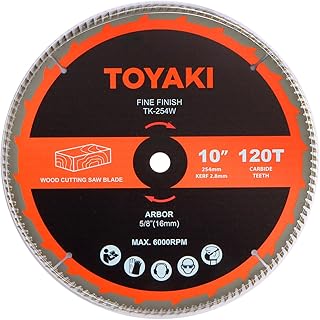
The highest tooth count here, best reserved for delicate work: melamine shelving, thin veneer, and narrow trim where any chipping shows. Feed slowly and let the blade work, since forcing this many teeth through thick hardwood builds heat quickly.
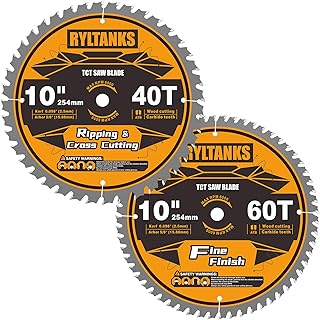
32T / 60T / 80T 3-Pack
The most space-efficient way to cover framing, general furniture, and finish cuts without buying three premium blades. Cut quality trails the Makita, but for a hobby shop that swaps between rough storage builds and visible pieces, the flexibility is hard to argue with.
Frequently Asked Questions
Will a 10-inch blade fit my 12-inch miter saw?
No. Use only the diameter your saw is rated for. Undersized blades reduce cut capacity and can sit dangerously in the guard and blade-guard geometry.
How many teeth do I need for plywood?
Sixty teeth handles most cabinet plywood well; 80 teeth or more is better for veneered or melamine-faced sheets where the top face must stay crisp. Scoring the cut line with a knife first helps either way.
How do I know when a blade is dull?
Watch for burn marks, increased feed pressure, a rougher edge than the blade used to leave, and more noise. Quality carbide blades can be professionally sharpened several times, which is usually cheaper than replacing them.
Where should I store extra blades in a small shop?
Keep each blade in its original sleeve or a cheap plastic blade case, then hang them vertically on a French cleat or pegboard hook. Vertical storage protects the carbide and reclaims drawer space you probably need for clamps.
Final Thoughts
For the cleanest cuts and the least sanding, the Makita B-66977 is the blade worth saving for. The WEN BL1060 is the smartest single-blade choice for most compact furniture shops, and the 32T/60T/80T 3-pack covers the widest range of work while asking for very little room on the wall.