Key takeaways
- Tooth count: For trim, aim for 80 teeth or more on a 10-inch blade and 90 or more on a 12-inch. Higher counts remove less material per tooth, which is exactly what produces a burnished edge on casing and crown. Below 60 teeth, you’re back in framing territory.
- Grind geometry: ATB (alternate top bevel) teeth act like tiny knives and excel at severing wood fibers cleanly, making them the default for hardwood and painted trim. TCG (triple chip grind) blades handle aluminum extrusion, PVC, and composite trim without grabbing, which matters if your projects mix materials.
- Arbor and diameter: Match your saw exactly. Most 10-inch blades use a 5/8-inch (16mm) arbor; most 12-inch blades use a 1-inch arbor. Fitting the wrong size with a bushing invites runout, and runout ruins finish cuts before the teeth ever get a chance.
- Plate thickness and kerf: Thin-kerf blades demand less power and waste less material, which is a genuine advantage on short returns and small offcuts. Just confirm the plate has anti-vibration slots or laser-cut expansion gullets so it stays flat under load.
- Carbide quality: Micrograin carbide tips take a keener edge and survive more sharpenings. If you’re only storing one or two blades in a small shop, spend here rather than buying three cheap blades you’ll retire in a season.
What's inside
Anyone who has fitted baseboard into a 400-square-foot studio knows the math is unforgiving. Small rooms have more corners per square foot than large ones, which means more miters, more scarf joints, and more places where a hair of tearout announces itself from across the room. When you’re building a floating shelf run into an alcove or wrapping quarter-round around a closet system, the joint sits at eye level and there’s no sprawling furniture arrangement to distract from it. The blade that came bundled with your saw was engineered to rip framing lumber quickly, not to leave a glass-smooth edge on primed pine or prefinished MDF, and the difference shows up as fuzzy edges, blown-out veneer, and caulk lines thick enough to notice.
This guide focuses on fine-finish blades for trim carpentry, judged by the criteria that matter when material is expensive and storage is tight: tooth count and geometry, cut quality on both raw and prefinished stock, arbor and diameter compatibility, and whether the blade holds an edge long enough to justify keeping just one or two on hand. Below are the blades worth owning, plus the specifications to check before you buy.
As an Amazon Associate we earn from qualifying purchases.



How to Choose a Miter Saw Blade For Trim (2026)
- Tooth count: For trim, aim for 80 teeth or more on a 10-inch blade and 90 or more on a 12-inch. Higher counts remove less material per tooth, which is exactly what produces a burnished edge on casing and crown. Below 60 teeth, you’re back in framing territory.
- Grind geometry: ATB (alternate top bevel) teeth act like tiny knives and excel at severing wood fibers cleanly, making them the default for hardwood and painted trim. TCG (triple chip grind) blades handle aluminum extrusion, PVC, and composite trim without grabbing, which matters if your projects mix materials.
- Arbor and diameter: Match your saw exactly. Most 10-inch blades use a 5/8-inch (16mm) arbor; most 12-inch blades use a 1-inch arbor. Fitting the wrong size with a bushing invites runout, and runout ruins finish cuts before the teeth ever get a chance.
- Plate thickness and kerf: Thin-kerf blades demand less power and waste less material, which is a genuine advantage on short returns and small offcuts. Just confirm the plate has anti-vibration slots or laser-cut expansion gullets so it stays flat under load.
- Carbide quality: Micrograin carbide tips take a keener edge and survive more sharpenings. If you’re only storing one or two blades in a small shop, spend here rather than buying three cheap blades you’ll retire in a season.
The Best Miter Saw Blade For Trim (2026)s Reviewed
DEWALT 12-Inch 100-Tooth Fine Finish Blade (DWA112100)
The most dependable choice for anyone running a 12-inch slider on crown, casing, and stair parts, with tooth geometry that leaves prefinished oak needing nothing more than a light scuff. The tips hold up impressively well through long punch lists, and the plate stays quiet at full depth of cut.
WEN BL1080 10-Inch 80-Tooth Blade
An honest value blade for the 10-inch crowd, and a sensible fit for shelving projects and closet build-outs where you’re cutting a lot of poplar and pine. Cut quality on painted trim is genuinely good; expect to swap it sooner than a premium blade if you cut hardwood every weekend.
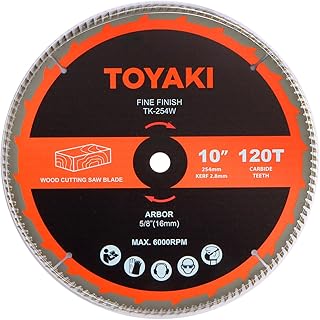
10-Inch 120-Tooth Fine-Finish Blade (5/8-Inch Arbor)
The extra 40 teeth over a standard finish blade pay off on thin, delicate stock, including shoe molding, screen bead, and veneered panel edges that splinter under coarser blades. Feed slowly and keep the cut clear of dust so the small gullets don’t load up.
10-Inch TCG 120-Tooth Aluminum-Working Blade
If your small-space projects involve aluminum closet track, PVC trim, or acrylic panel work, the triple-chip grind is the right tool: it shears these materials without the chatter and chipping that ATB teeth produce. It’s a specialist blade, and worth the drawer space if you build hybrid storage systems.
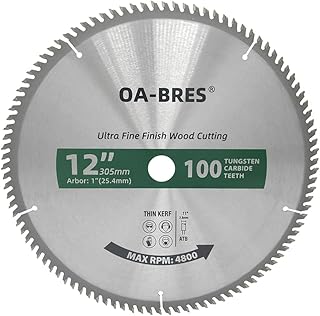
12-Inch 100-Tooth ATB TCT Blade (1-Inch Arbor)
A strong alternative for 12-inch saws when you’d rather not pay premium pricing, offering the same 100-tooth ATB configuration and clean crosscuts on softwood and moderate hardwood. Verify your arbor is 1 inch before ordering.
Frequently Asked Questions
Does a higher tooth count always mean a better trim cut?
Up to a point. Beyond about 100 teeth, gullets get shallow and can pack with dust, which causes burning rather than a cleaner edge. Match tooth count to material thickness: more teeth for thin molding, fewer for thick hardwood stock.
Can I use a fine-finish blade on MDF and prefinished trim?
Yes, and it’s where these blades earn their keep. MDF and factory-finished trim chip badly under coarse teeth. Add a zero-clearance auxiliary fence or backer board for the cleanest possible exit edge.
How long should a finish blade last?
For homeowner-level use, a quality carbide blade will cut cleanly through several full rooms of trim before it dulls. Cutting MDF, engineered flooring, or anything with adhesive shortens that considerably.
Is sharpening worth it?
On premium 100-tooth blades, yes: professional sharpening typically costs a fraction of replacement and restores most of the original cut quality. Budget blades with thin carbide are usually cheaper to replace.
Final Thoughts
For 12-inch saws, the DEWALT DWA112100 remains the blade to beat on trim, delivering finish-ready cuts with the durability to justify its price. On a 10-inch saw, the WEN BL1080 covers the majority of interior trim and shelving work at a very reasonable cost, while the 120-tooth fine-finish option is the one to reach for when you’re cutting delicate small-profile molding where a single chipped edge means a wasted length.