Key takeaways
- Width: 15–18 inches per person is comfortable for everyday coats and backpacks. A 12-inch bay can work for children or lighter seasonal use, but it may feel crowded with bulky outerwear.
- Depth: 14–18 inches accommodates most hanging coats without projecting excessively into the room. Depth beyond 20 inches may reduce walking clearance.
- Height: 60–72 inches provides useful vertical storage. Taller units need especially careful anchoring and may be difficult to move through a doorway.
- Backpacks and sports bags: Allow roughly 12–16 inches of vertical height below the hooks. Large equipment bags may need a wider bottom compartment or a separate open cubby.
- Weight: Look for a bench rated for at least 250 pounds for one-person use, or about 400–500 pounds for a two-person seat. Storage shelves should have a stated capacity; thin shelves can bow under books, boots, and bags.
The best mudroom lockers are the ones that give every person a defined drop zone while fitting your wall, traffic pattern, and storage needs; for most families, a 15–18-inch-wide locker per person with a seat, two or more hooks, ventilated shoe storage, and secure wall anchoring is the most practical starting point.
Best mudroom locker layouts by household
| Situation | Best locker choice | Why it works | Watch for |
|---|---|---|---|
| Small apartment or condo | Two- or three-bay vertical unit, 12–15 inches wide per bay | Uses wall height without consuming much floor space | Allow at least 30–36 inches of clear walking space in front |
| Families with young children | Low bench locker with open cubbies and child-height hooks | Children can put away shoes, coats, and backpacks independently | Secure the unit to wall studs; avoid unsecured tall furniture |
| Kids, pets, and wet weather | Moisture-resistant locker with removable trays and open ventilation | Handles muddy footwear and damp coats more easily | Closed compartments need airflow to prevent trapped moisture and odors |
| Renters | Shorter freestanding locker or modular bench-and-cubby system | Can be moved when you relocate and may require fewer wall modifications | Even freestanding tall units should be stabilized where possible |
| Back or knee discomfort | 18–20-inch-high seat with easy-access shoe drawers or open shelves | Provides a stable sitting height for putting on footwear | Check the seat’s weight capacity and avoid very low benches |
| High-traffic family entryway | Full-width locker wall with individual bays and a dedicated shoe zone | Separates coats, bags, shoes, and sports equipment | Plan door swing, hallway clearance, and a drop zone near the entrance |
How much capacity does each locker need?
A locker that looks spacious in a photograph can become cramped once it holds a winter coat, school bag, and shoes. Measure the items your household actually uses rather than choosing by the outside dimensions alone.

Merax Farmhouse Hall Tree with Bench and Shoe Storage, 59" Entryway Bench with Coat Rack, 3-in-1 Hall Tree with Top Compartments and 8 Hooks for Hallway, Living Room, Green
Included for 'Best Mudroom Lockers for Organized Family Entryways' because the listing specifies 59" Entryway Bench with Coat Rack and Living Room, details this guide uses to compare options.
View on Amazon
Wodeer Hall Tree with Bench and Shoe Storage, 53" Farmhouse 4-in-1 Mudroom Storage Organizer with Coat Rack, 6 Hooks, 12 Shoe Cubbies, Adjustable Shelf, for Entryway, Hallway, Living Room, White
Included for 'Best Mudroom Lockers for Organized Family Entryways' because the listing specifies 6 Hooks and 12 Shoe Cubbies, details this guide uses to compare options.
View on Amazon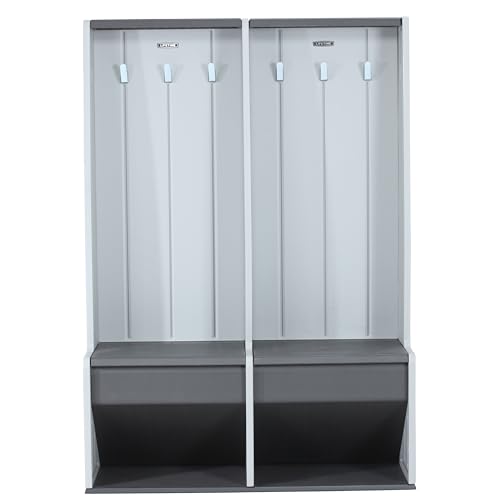
LIFETIME Storage Locker, Freestanding Cabinet with Benches & Shoe Cubbies, Organizer with Metal Hooks, UV‑Protected Weather‑Resistant
Included for 'Best Mudroom Lockers for Organized Family Entryways' because the listing specifies Freestanding Cabinet with Benches & Shoe Cubbies and Organizer with Metal Hooks, details this guide uses to compare options.
View on Amazon
hoopoocolor 59" Farmhouse Hall Tree with Bench 8 Hooks, Shoe Storage Cabinet Mudroom Storage Locker, Entryway Bench with Coat Rack and Open Compartments, 76.7" Tall Drop Zone Organizer (Black)
Included for 'Best Mudroom Lockers for Organized Family Entryways' because the listing specifies Shoe Storage Cabinet Mudroom Storage Locker and Entryway Bench with Coat Rack and Open Compartments, details this guide uses to compare options.
View on Amazon- Width: 15–18 inches per person is comfortable for everyday coats and backpacks. A 12-inch bay can work for children or lighter seasonal use, but it may feel crowded with bulky outerwear.
- Depth: 14–18 inches accommodates most hanging coats without projecting excessively into the room. Depth beyond 20 inches may reduce walking clearance.
- Height: 60–72 inches provides useful vertical storage. Taller units need especially careful anchoring and may be difficult to move through a doorway.
- Backpacks and sports bags: Allow roughly 12–16 inches of vertical height below the hooks. Large equipment bags may need a wider bottom compartment or a separate open cubby.
- Weight: Look for a bench rated for at least 250 pounds for one-person use, or about 400–500 pounds for a two-person seat. Storage shelves should have a stated capacity; thin shelves can bow under books, boots, and bags.
For a 10-by-12-foot entry or multipurpose room, a 72-inch-wide locker wall can work well if it is placed along the 12-foot wall and leaves a 36-inch passage. In a narrower hallway, a unit 16–18 inches deep is usually safer than a deep cabinet with doors that open into the route.
Open cubbies, doors, or a combination?
Open lockers
Open cubbies are the fastest option for busy families. Children can see where their belongings go, and wet shoes receive more air circulation. The trade-off is visual clutter and more exposure to dust. Open units work particularly well when each bay has a labeled basket or one matching storage bin.
Lockers with doors
Doors conceal coats and bags, which can make an entryway look calmer. They also protect contents from household pets and reduce visible clutter. However, doors require clearance, hinges can loosen, and closed compartments are less forgiving of damp shoes or rain-soaked clothing. Choose doors with ventilation slots or use them for dry items rather than wet gear.
Hybrid locker walls
A hybrid arrangement usually offers the best balance: hooks and an open upper section for daily coats, a seat with open shoe storage below, and one or two closed cabinets for hats, gloves, cleaning supplies, or seasonal accessories. This layout keeps high-use items accessible without making the whole entryway look untidy.
Features that matter more than appearance
- Individual compartments: Separate bays reduce arguments and prevent one person’s coats from taking over the entire unit. Dividers should be fixed or securely joined rather than loose panels that shift during use.
- Hooks: Two hooks per person are a useful minimum—one for a coat and one for a bag, hat, leash, or scarf. Hooks should be firmly attached to a structural rail, not only to thin decorative backing.
- Ventilation: Slatted backs, perforated doors, open sides, or air gaps behind shelves help damp footwear dry. Ventilation cannot replace a removable drip tray or regular cleaning.
- Shoe storage: Slanted shelves display shoes but may let dirt fall forward. Flat shelves are easier to clean. Allow around 8 inches of height for everyday shoes and 12–15 inches for boots.
- Seat height: About 18 inches is a familiar chair height and suits most adults. A 14–16-inch seat may suit small children but can be uncomfortable for adults who need to bend deeply.
- Cleanable surfaces: Laminated or sealed surfaces wipe down more easily than unfinished wood. Removable mats and trays are valuable in climates with rain, snow, or mud.
- Rounded edges: Slightly softened bench and shelf edges are preferable in a tight hallway, especially where children pass carrying bags.
Material and construction trade-offs
| Material | Advantages | Limitations | Best use |
|---|---|---|---|
| Solid wood | Repairable, substantial, and visually warm; can support repeated daily use | Usually heavier and more expensive; can expand or contract with moisture | Permanent family entryways and long-term furniture |
| Engineered wood with laminate or veneer | Consistent dimensions, easier cleaning, and often lower cost; commonly available in modular sizes | Exposed edges can swell if water reaches damaged finishes; fasteners need careful assembly | Most households seeking practical value and a coordinated look |
| Metal | Strong, slim, and resistant to many scuffs; good airflow when perforated | Can feel industrial, transmit noise, and become cold to the touch | Utility rooms, sports storage, and very high-use areas |
| Fabric seat cushion | More comfortable for changing shoes and softens a hard locker wall | Can absorb mud, pet hair, and moisture | Dry entryways; choose removable, washable covers |
| Vinyl or performance upholstery | Wipes clean more easily than many woven fabrics | May feel less breathable and can crack with poor-quality finishes | Homes with pets, children, or frequent wet-weather use |
Measure the room before choosing a locker
Start with the available wall width, then measure baseboards, outlets, vents, door casings, and trim. A locker should not block an electrical receptacle that you use regularly or interfere with a nearby door.
- Keep approximately 30 inches of clear passage as a practical minimum; 36 inches is more comfortable for a busy family route.
- If locker doors open toward the walkway, add their open depth to the clearance calculation.
- Leave space beside the unit for door handles, light switches, and a person carrying a laundry basket or backpack.
- Check the diagonal measurement of the tallest cabinet against your doorway and stairwell width. A cabinet that is 72 inches tall may require more than a 30-inch doorway to rotate into place.
- For narrow rooms, choose a shallow locker with hooks and vertical cubbies rather than a deep bench cabinet. For wider rooms, a U-shaped arrangement can create separate zones for coats, shoes, and household storage.
Assembly, moving, and anchoring realities
Large mudroom lockers are often delivered in several cartons. A tall engineered-wood unit may weigh roughly 100–200 pounds before contents, while a solid-wood or metal locker wall can be heavier. Plan for two adults to carry and assemble it, and protect floors while positioning the pieces.
Inspect the parts before joining them. The components most likely to cause problems are misaligned cam fittings, stripped particleboard edges, loose hooks, and seat panels that are not fully supported underneath. Tighten fasteners after the first few weeks of use, because repeated pulling on hooks and sitting on the bench can reveal small amounts of movement.
Anchoring is important for any tall or top-heavy locker, especially one with open shelves that children may climb. Fasten the unit to wall studs when possible, using the manufacturer’s supplied anti-tip hardware or an appropriately rated alternative. If the wall is masonry or plaster, use fixings designed for that surface rather than assuming a standard screw is sufficient. A renter-friendly unit may still be anchored with permission; avoiding wall damage is not more important than preventing a tip-over.
Which locker is the best choice for your entryway?
Choose a compact vertical unit if floor space is limited, a low open-bay locker if children need independence, and a ventilated hybrid if your household deals with wet shoes and heavy daily traffic. For a long-term family installation, prioritize strong seat support, individual compartments, two hooks per person, removable shoe trays, and wall anchoring over decorative extras. The best mudroom lockers make the correct storage action obvious: coat on the hook, bag in the bay, shoes on the shelf, and nothing left in the walking path.