Key takeaways
- System type: A hard-mounted onboard kit suits air bags, air horns, and frequent use, while a portable inflator is easier to store and move between vehicles.
- Pressure and airflow: PSI indicates maximum pressure; CFM and duty cycle better describe how quickly the compressor can fill tires or support repeated jobs.
- Tank capacity: A tank provides a useful air reserve, but it also takes up room. Check whether your truck bed, underbody, or trailer has a protected mounting location.
- Power and controls: Confirm the voltage, wiring requirements, fuse protection, and whether you prefer a wired switch, remote, or app-based control.
- Vehicle fit: Verify hose connections, mounting dimensions, weather exposure, and compatibility with your tire sizes, air-suspension hardware, or accessories.
What's inside
Choosing an onboard air compressor is less about chasing the biggest pressure number and more about finding a system that fits your vehicle, storage layout, and real working routine. A bulky tank can consume valuable cargo space, while an undersized compressor may struggle with repeated tire inflation or air-suspension adjustments.
This guide compares practical options for trucks, trailers, vans, RVs, and roadside use, with an emphasis on installation flexibility, duty cycle, controls, portability, and space-conscious storage. Some links may be affiliate links, which means this site may earn a commission at no extra cost to you.
As an Amazon Associate we earn from qualifying purchases.



How to Choose an Onboard Air Compressor (2026)
- System type: A hard-mounted onboard kit suits air bags, air horns, and frequent use, while a portable inflator is easier to store and move between vehicles.
- Pressure and airflow: PSI indicates maximum pressure; CFM and duty cycle better describe how quickly the compressor can fill tires or support repeated jobs.
- Tank capacity: A tank provides a useful air reserve, but it also takes up room. Check whether your truck bed, underbody, or trailer has a protected mounting location.
- Power and controls: Confirm the voltage, wiring requirements, fuse protection, and whether you prefer a wired switch, remote, or app-based control.
- Vehicle fit: Verify hose connections, mounting dimensions, weather exposure, and compatibility with your tire sizes, air-suspension hardware, or accessories.
The Best Onboard Air Compressor (2026)s Reviewed
RETRUE Onboard Air Compressor System
The RETRUE system is a sensible starting point for truck owners installing or maintaining air-bag suspension. Its universal positioning and broad compatibility with Ford, Chevrolet, GMC, and Dodge applications make it appealing when you need a dedicated setup rather than a loose portable pump. Plan the mounting location carefully, especially if you want to keep bed storage clear and protect the compressor from road spray.
Medium Duty 150 PSI Onboard Air System
This medium-duty kit combines a 150 PSI compressor with a 2.5-gallon tank, giving it more reserve than a tankless inflator. That makes it a better match for air horns, suspension adjustments, and repeated bursts of compressed air. The tank does require thoughtful placement, but a well-planned underbody or trailer installation can keep the equipment from crowding everyday cargo.
maXpeedingrods 120 PSI Onboard Air System
The maXpeedingrods system stands out for its wireless app and remote-control options, which can make monitoring and operation easier when the compressor is mounted out of immediate reach. It is well suited to pickups, vans, trailers, and similar vehicles where a clean installation matters. Before buying, confirm that the intended mounting area has adequate ventilation and that the electrical run can support the compressor reliably.
OlarHike 12000mAh Heavy-Duty Tire Inflator
For drivers who value flexibility over a permanent installation, this OlarHike inflator is a practical alternative to a traditional onboard system. Its cordless battery and 12V dual-power design reduce dependence on a fixed mounting point, while the digital gauge makes pressure checks easier. It is particularly convenient for a garage shelf, truck-side compartment, or emergency kit, though frequent heavy use will still require sensible battery management.
ETENWOLF VORTEX S6 Tire Inflator
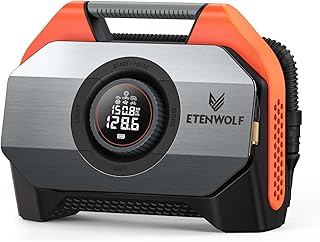
The ETENWOLF VORTEX S6 is designed for demanding portable use, with a large battery, dual-cylinder construction, and a 100% duty-cycle claim. That combination makes it attractive for larger vehicles and repeated inflation jobs when you do not want to install a permanent compressor. Its bright LED backlight is useful after dark, and the cordless format keeps hoses and power leads from becoming another storage problem.
Frequently Asked Questions
Is an onboard air compressor worth installing?
It can be worthwhile if you regularly adjust air-bag suspension, operate air horns, inflate large tires, or service multiple vehicles. A permanent system is less compelling for occasional use, when a capable portable inflator may deliver similar convenience with less installation work.
What size compressor do I need for truck tires?
Look beyond maximum PSI. Larger truck tires benefit from stronger airflow and a suitable duty cycle, particularly when inflating several tires in succession. A portable heavy-duty unit can work well for roadside maintenance, while a tank-equipped system is better for repeated tasks.
Can an onboard compressor run air tools?
Some can, but many compact vehicle systems are intended for tires, air suspension, or horns rather than continuous air-tool operation. Check the compressor’s airflow, tank size, duty cycle, and manufacturer guidance before connecting an impact wrench or other demanding tool.
Where should I mount an onboard air compressor?
Choose a dry, protected location with airflow and enough clearance for service access. Common options include the engine bay, a frame area, a tool compartment, or a protected section of the truck bed. Keep wiring secured, use the correct fuse, and avoid locations exposed to standing water or excessive heat.
Final Thoughts
The RETRUE system is a strong fit for air-bag suspension projects, while the Medium Duty 150 PSI kit is the more capable choice when a tank and air-horn support matter. For flexible, space-conscious storage, the OlarHike 12000mAh and ETENWOLF VORTEX S6 portable compressors offer useful alternatives without committing your vehicle to a permanent installation.