Key takeaways
- Choosing the best outdoor gazebo for wind comes down to one number read in context: the manufacturer wind rating and the exact anchoring it assumes. A rating without its anchoring condition tells you very little, so the two figures always…
Choosing the best outdoor gazebo for wind comes down to one number read in context: the manufacturer wind rating and the exact anchoring it assumes. A rating without its anchoring condition tells you very little, so the two figures always travel together and should be read as one spec.
How to Choose a Gazebo for Wind
Rank a gazebo by its stated wind rating under a defined anchoring method, not by vague phrases like heavy-duty or a hardtop roof. The figures here range from a manufacturer-stated 50 to 100 mph, and each one assumes the structure is properly secured, so read the condition alongside the number before you compare any two models.
Wind Rating in mph
The wind rating in mph is the spec that defines this category. Backyard Discovery lists the Barrington 12-by-12 at 100 mph when properly anchored, ELEVATE Outdoors lists the Solora 10-by-14 at 83 mph anchored to concrete, and Kozyard lists the Alexander 10-by-12 at 60 mph, all manufacturer-stated.
Match the rating to your site rather than chasing the highest number. A sheltered backyard rarely sees the gusts an exposed hilltop or coastal lot does, so a 60 mph rating may be plenty in one yard and marginal in another. Check your local wind history before deciding which figure you actually need.
A higher stated rating raises the ceiling on what the frame can take, but it does not make the gazebo a storm shelter. Ratings are test limits under ideal setup, so treat the mph figure as a planning input and still take the canopy down ahead of severe weather the manufacturer warns against in the manual.
Why Anchoring Changes the Rating
Every rating here is tied to a specific anchoring method, which is the single most important condition to read. The Solora’s 83 mph figure assumes anchoring to concrete, and the Barrington and Alexander figures assume the unit is properly anchored per the instructions, not simply standing on the lawn.
Anchoring differs by surface, so a gazebo bolted into a concrete pad behaves very differently from one staked into soft soil or weighted on a deck. Confirm that your installation surface matches the one the rating assumes, because the published number does not apply if the anchoring falls short of the maker’s spec.
Skipping proper anchoring is the most common reason a rated gazebo fails in wind well below its number. Budget the hardware and labor for a correct install up front, since retrofitting anchors into a finished patio later tends to cost more and may still not reach the condition the rating was measured under.
Roof and Frame Construction
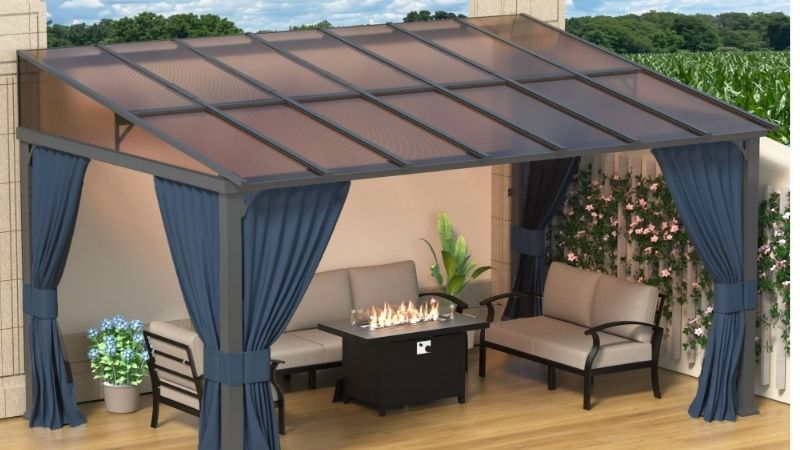
Roof and frame construction shapes how a gazebo handles sustained load, and the builds here differ. The Barrington and Alexander are steel-framed hardtops, the Solora is a high-wind-oriented design, and the Sunjoy Crown is a hardtop rated to a manufacturer-stated 50 mph test limit for lighter exposure.
A vented hardtop lets wind pass rather than catching it like a sail, which helps in gusty sites, while frame gauge and connection quality decide how the structure holds together. Judge the build by the maker’s materials and the rating together, since a hardtop alone does not prove real wind performance.
Powder-coated steel resists rust where the coating stays intact but can corrode at chips or welds over seasons, and aluminum resists rust differently rather than never corroding. Expect to touch up coating and retighten hardware periodically, because fasteners that loosen quietly lower the wind resistance the rating assumed.
Snow Load and Year-Round Exposure
If the gazebo stays up through winter, snow load matters as much as wind. Backyard Discovery lists the Barrington at a 7,500 lb snow load and Kozyard lists the Alexander at 2,500 lb, both manufacturer-stated figures that tell you how much accumulated snow the roof is designed to carry.
Match snow load to your climate and your willingness to clear the roof. A 2,500 lb figure may suit a mild region but leave little margin where heavy wet snow piles up, so a colder site points toward the higher-rated roof or a plan to brush snow off before it accumulates past the limit.
Year-round exposure also ages fabric, hardware, and coatings faster than seasonal use. Plan for cover care, off-season storage of soft components where the manual allows, and periodic hardware checks, because a structure left fully exposed for years drifts away from the condition its wind rating was based on.
Best Outdoor Gazebos for Wind
Each pick below lists its manufacturer-stated wind rating with the anchoring condition it assumes, plus the build and size, so you can match a real number to your own site. Prices move with the season, so check the current price at the retailer before you buy any of these for your yard.
| Product | Best For | Key Spec | Watch Out For |
|---|---|---|---|
| Backyard Discovery Barrington 12×12 | Best overall | 100 mph properly anchored; 7,500 lb snow load | Rating assumes correct anchoring |
| ELEVATE Outdoors Solora 10×14 | Best high-wind value | 83 mph anchored to concrete | Needs a concrete anchor point |
| Kozyard Alexander 10×12 | Best metal value | 60 mph properly anchored; 2,500 lb snow | Lower rating for exposed sites |
| Sunjoy Crown 11×13 | Budget hardtop | 50 mph manufacturer test limit | Lightest wind spec here |
Backyard Discovery Barrington – Best Overall
The Barrington 12-by-12 leads this best outdoor gazebo for wind shortlist on the spec that matters, carrying a manufacturer-stated 100 mph wind rating when properly anchored and a 7,500 lb snow load. That pairing suits exposed yards and colder climates where both gusts and winter accumulation are real concerns.
Its steel hardtop frame and generous 12-by-12 footprint give usable shade for a full seating set, and the high snow figure means it can stay up through winter in many regions. Confirm your anchoring surface matches the instructions, because the 100 mph number holds only when the unit is secured as specified.
The trade-offs are size and setup: a 12-by-12 steel structure is a two-person assembly that needs solid anchoring, and the hardware demands periodic retightening. Check the current price at the retailer, and budget for anchors suited to your surface so the rated performance is something you actually achieve.
ELEVATE Outdoors Solora – Best High-Wind Value
The Solora 10-by-14 is built with wind in mind, carrying a manufacturer-stated 83 mph rating when anchored to concrete. The larger 10-by-14 footprint suits longer seating or dining layouts, making it a strong value for shoppers who have or can pour a concrete pad to meet the rated condition.
That concrete-anchored figure is honest about what it needs, which is a plus: you know exactly what the rating assumes. On a prepared pad it offers high wind resistance for the size, and the elongated shape covers more furniture than a square gazebo of similar frontage would at the same cost.
The catch is right there in the spec: without a concrete anchor point, the 83 mph figure does not apply, so a lawn-only site is a poor match. Verify your surface first, check the current price at the retailer, and factor in pad cost and curing time if you do not already have a suitable concrete surface.
Kozyard Alexander – Best Metal Value
The Kozyard Alexander 10-by-12 is the value metal pick, with a manufacturer-stated 60 mph wind rating when properly anchored and a 2,500 lb snow load. That rating suits sheltered or moderate yards and buyers who want a steel hardtop without stepping up to the highest wind figure here.
The 10-by-12 size fits a standard patio set, and the steel frame with a vented hardtop handles typical breezy days when anchored correctly. For an average suburban backyard that does not see extreme gusts, a 60 mph rating is often a practical match rather than a compromise you have to accept.
The lower wind and snow figures are the limits to respect: an exposed, coastal, or heavy-snow site asks for more margin than this model offers. Clear snow before it nears the 2,500 lb figure, check the current price at the retailer, and keep anchors tight so the rating stays meaningful.
Sunjoy Crown – Budget Hardtop
The Sunjoy Crown 11-by-13 is the budget hardtop entry, with a manufacturer-stated 50 mph test limit. That is the lightest wind spec in this group, which makes it a reasonable choice for sheltered yards and milder climates where strong gusts are uncommon and the gazebo comes down for storms.
The 11-by-13 footprint gives decent coverage for the class, and a hardtop roof handles sun and light rain well. For a protected patio, it delivers the look and shade of a hardtop gazebo at a lower entry point, provided you treat the 50 mph figure as the ceiling it is and take it down before storms.
The clear limitation is wind headroom: with the lowest rating here, it is the first model to take down ahead of a windy forecast. Confirm it matches your exposure, check the current price at the retailer, and plan to secure or disassemble it when the manufacturer’s severe-weather guidance applies.
Wind-Rating Mistakes
Most gazebo failures in wind trace back to misreading the rating rather than the gazebo being weak. These four mistakes, from ignoring the anchoring condition to treating a rating as a storm guarantee, are the ones to avoid when you compare the options and plan a wind-ready setup for your site.
Anchored Versus Unanchored
The most common error is reading the wind number while ignoring the anchoring it assumes. Every rating here, from the Barrington’s 100 mph to the Sunjoy’s 50 mph, is stated for a properly secured unit, so an unanchored gazebo can fail far below its printed figure in a routine gust that a correctly secured one shrugs off.
This matters most on decks and soft ground, where the right anchor differs from the concrete or hardware the rating assumes. Confirm the anchoring method the maker specifies for your surface, because matching that exact condition is what turns the published number into performance you can rely on in your yard.
If you cannot anchor as specified, treat the rating as inapplicable rather than optimistic. The fix is to install correct anchors or choose a site that allows them, not to hope the structure holds; an under-anchored gazebo is the single biggest reason a rated unit comes apart in wind.
Gust Versus Sustained Wording
Ratings can describe different things, so read the wording rather than assuming. Some figures reflect a manufacturer test limit, like the Sunjoy Crown’s stated 50 mph, while others state the anchored condition plainly, like the Solora’s 83 mph on concrete; they are not all measured the same way.
Because the test basis can vary between brands, avoid treating two numbers as directly comparable without checking how each was stated. A figure measured one way is not automatically weaker or stronger than one measured another, so weigh the condition and method, not just the digits, when the wording differs.
When a listing is vague about gust versus sustained wind, lean on the clearly stated specs instead. The models here that pair a number with an explicit anchoring condition give you more to plan around than a bare maximum, and that clarity is worth favoring in a wind-exposed purchase you expect to keep for years.
Weight Does Not Equal Rating
A heavier gazebo is not automatically a windier-rated one, so do not substitute mass for the wind spec. Frame weight contributes to stability, but the rating also depends on anchoring, roof venting, and connection design, which is why a lighter vented hardtop can hold a condition a heavier closed roof does not.
Use the stated wind rating as the decision figure and treat weight as a secondary signal. The Barrington earns its 100 mph figure through its frame and 7,500 lb snow-rated roof working with correct anchoring, not through bulk alone, and that combination is what you are really comparing between models.
Judging by heft also misleads on handling: a heavier unit is harder to take down before a storm, which can tempt owners to leave it up past safe conditions. Favor the model whose rating and anchoring match your site, and keep a realistic plan for lowering it when the weather turns against the rating you bought.
Severe-Weather Limits
Even the highest-rated gazebo here is not a hurricane or blizzard shelter, and treating it as one is a costly mistake. The 100 mph, 83 mph, 60 mph, and 50 mph figures are manufacturer test limits under good setup, not promises for named storms or sustained extreme events, which no backyard gazebo is built for.
Follow the manual’s severe-weather guidance, which typically calls for removing the canopy or securing and vacating the structure ahead of major wind or heavy snow. A gazebo rated for year-round snow still needs the roof cleared before accumulation nears its stated load, so monitor conditions rather than assuming the number covers you.
Build a simple weather plan around your pick: know the forecast threshold at which you will take it down, keep the hardware accessible, and store soft components as the manual allows. That habit protects both the structure and anyone near it when conditions exceed what any rating was meant to handle.
Final Thoughts
The best outdoor gazebo for wind is the one whose manufacturer wind rating, anchoring condition, and snow load match your actual site, not the one with the biggest headline number. Compare the Barrington, Solora, Alexander, and Sunjoy Crown on rating plus anchoring, confirm your surface allows a correct install, and check the current price first.