Key takeaways
- Moisture source: Start near the room producing the most humidity, such as a basement, bathroom, laundry area, or poorly ventilated bedroom.
- Air clearance: Leave open space around the intake and exhaust sides. Avoid pushing the unit tightly against walls, curtains, cabinets, or sofas.
- Room layout: A central, unobstructed position usually distributes dry air better, while a doorway can work well when one unit serves two connected spaces.
- Drainage: Place the appliance near a sink, floor drain, or suitable hose route if you want continuous drainage instead of frequent tank emptying.
- Noise and safety: Keep bedroom units on a stable, level surface away from walkways, heating appliances, children, and areas where spills could reach electrical connections.
What's inside
Choosing a dehumidifier is only half the battle. In a compact home, placing it too close to a wall, hiding it behind furniture, or setting it in the wrong room can restrict airflow and make the machine work harder than necessary. The best location depends on moisture sources, clearance, drainage, noise, and how air moves through your floor plan.
This guide approaches placement from a small-space organization perspective. It covers where to position different types of dehumidifiers, how much room to leave around them, and which models make sense for bedrooms, bathrooms, closets, basements, RVs, and larger open areas.
As an Amazon Associate we earn from qualifying purchases.


How to Choose a/an Place To Put Dehumidifier (2026)
- Moisture source: Start near the room producing the most humidity, such as a basement, bathroom, laundry area, or poorly ventilated bedroom.
- Air clearance: Leave open space around the intake and exhaust sides. Avoid pushing the unit tightly against walls, curtains, cabinets, or sofas.
- Room layout: A central, unobstructed position usually distributes dry air better, while a doorway can work well when one unit serves two connected spaces.
- Drainage: Place the appliance near a sink, floor drain, or suitable hose route if you want continuous drainage instead of frequent tank emptying.
- Noise and safety: Keep bedroom units on a stable, level surface away from walkways, heating appliances, children, and areas where spills could reach electrical connections.
The Best Place To Put Dehumidifier (2026)s Reviewed
95-Ounce Home Dehumidifier with Ambient Light
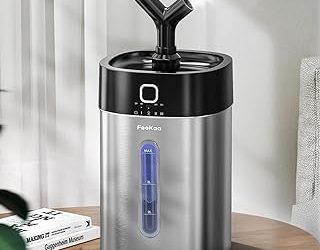
This 95OZ Dehumidifier for Home 1000 sq ft is a practical choice for a bedroom, living room, or compact basement corner. Its quiet operation, automatic shutoff, and seven-color ambient light suit spaces where the appliance remains visible, though it should sit in an open area rather than inside a bookcase or beneath a console.
ToLife 1000-Square-Foot Dehumidifier
The ToLife Dehumidifier combines a 95-ounce tank with sleep mode and portable sizing, making it easy to move between a bathroom, bedroom, and basement. For a small home, place it just outside a bathroom door or near the dampest wall, allowing clear airflow while keeping it out of the main walking route.
35-Ounce Bedroom and RV Dehumidifier
This 35 OZ Dehumidifier for Bedroom RV is better suited to closets, small bedrooms, bathrooms, and other areas up to about 280 square feet. Its compact footprint makes it especially useful where floor space is limited; place it on a firm, level surface with the exhaust unobstructed and the tank easy to remove.
4500-Square-Foot Compressor Dehumidifier
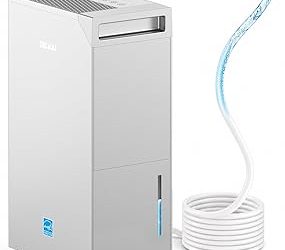
For a larger basement, office, or connected lower level, this 4500 Sq. Ft Dehumidifier offers compressor-based moisture removal, intelligent humidity control, and a drain hose. Position it near a floor drain or sump area, leaving a clear perimeter so the unit can pull damp air from the room without being boxed in by storage bins.
Waykar 80-Pint 5000-Square-Foot Dehumidifier
The Waykar 80 Pints 5000 Sq. Ft 2025 Energy Star Dehumidifier is the strongest fit for whole-basement or broad open-area coverage. Its continuous-drainage support, auto-defrost, humidity control, and 90-degree auto swing are most useful when the unit is placed centrally or near a stairwell, with the hose routed safely and without creating a trip hazard.
Frequently Asked Questions
Where is the best place to put a dehumidifier?
Put it near the main source of moisture while preserving airflow on every side. In a basement, that may be near the center of the room or close to a damp exterior wall; in a bathroom, place it outside the splash zone with the door open after showers.
Can I put a dehumidifier against a wall?
It is better to leave a gap around the intake and exhaust vents. Check the manufacturer’s clearance guidance, but generally avoid tight corners, curtains, furniture fronts, and enclosed shelving that can restrict circulation.
Should a dehumidifier be placed high or on the floor?
Most portable units are designed for a level floor. Elevating a model can improve access to a drain hose, but only use a sturdy, stable platform that can support vibration and prevent tipping.
Can one dehumidifier dry multiple rooms?
It can help in connected rooms when doors remain open and air can circulate, but coverage is less predictable than using separate units. A fan, open doorway, and central placement can improve distribution in compact layouts.
Final Thoughts
For bedrooms, bathrooms, and small homes, the ToLife 1000-square-foot model and the compact 35-ounce unit are sensible placement-friendly picks. For serious basement moisture, the Waykar 80-pint model offers the most useful combination of capacity, control, and continuous drainage support.