Key takeaways
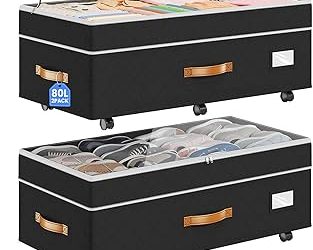
- Measure the vertical, not just the horizontal: A 14-inch frame gives you roughly 12 inches of usable under-bed clearance — enough for flat-lid bins, rolling drawers, or a suitcase. Below 10 inches, that zone becomes decorative. Add your mattress thickness to the frame height and check that the total still lets you sit down comfortably with feet flat.
- Count the slats and measure the gaps: Slats spaced more than 3 inches apart will let a foam mattress sag between them and can void your mattress warranty. More slats, closer together, means no box spring is genuinely needed rather than just advertised.
- Audit the joints for noise: Squeaks come from metal-on-metal contact at bolted connections. Look for frames with welded corners, interlocking joinery, or rubber/felt padding at contact points. In a studio, one squeaky frame is a roommate problem even when you live alone.
- Match the headboard to your wall reality: Upholstered and slatted headboards read softer and warmer, but they add 3 to 5 inches of depth. If your bed sits under a window or against a radiator, a headboard-free platform frees that margin.
- Check the assembly honestly: Tool-free and foldable designs matter enormously if you move often or have no room to lay parts out. Solid wood frames are quieter and more durable but heavier to maneuver through narrow hallways and up stairs.
What's inside
In a 400-square-foot apartment, a bed frame isn’t just furniture — it’s the largest single claim on your floor plan. Yet most shoppers pick one the way they pick a phone charger: whatever ships fastest. Then the reality arrives. The frame squeaks every time you shift. The clearance underneath is 6 inches, which fits nothing but dust. The headboard eats four inches you didn’t budget for. And the box spring you were told you needed turns a manageable bed into a fortress.
This guide approaches bed frames the way a small-space designer does: as storage infrastructure that happens to hold a mattress. I’ve prioritized under-bed clearance, noise-free joinery, assembly that one person can finish alone, and footprints that don’t dominate a room. Below are six frames worth your floor space, plus a buying framework you can apply to anything you find elsewhere.
As an Amazon Associate we earn from qualifying purchases.


How to Choose a Places To Buy A Bed Frame (2026)
- Measure the vertical, not just the horizontal: A 14-inch frame gives you roughly 12 inches of usable under-bed clearance — enough for flat-lid bins, rolling drawers, or a suitcase. Below 10 inches, that zone becomes decorative. Add your mattress thickness to the frame height and check that the total still lets you sit down comfortably with feet flat.
- Count the slats and measure the gaps: Slats spaced more than 3 inches apart will let a foam mattress sag between them and can void your mattress warranty. More slats, closer together, means no box spring is genuinely needed rather than just advertised.
- Audit the joints for noise: Squeaks come from metal-on-metal contact at bolted connections. Look for frames with welded corners, interlocking joinery, or rubber/felt padding at contact points. In a studio, one squeaky frame is a roommate problem even when you live alone.
- Match the headboard to your wall reality: Upholstered and slatted headboards read softer and warmer, but they add 3 to 5 inches of depth. If your bed sits under a window or against a radiator, a headboard-free platform frees that margin.
- Check the assembly honestly: Tool-free and foldable designs matter enormously if you move often or have no room to lay parts out. Solid wood frames are quieter and more durable but heavier to maneuver through narrow hallways and up stairs.
The Best Places To Buy A Bed Frame (2026)s Reviewed
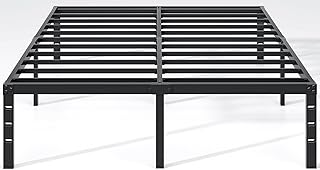
NEW JETO Metal Bed Frame, Queen, 14 Inch
This is the frame I recommend most often for renters, because the 14-inch height converts the space under your bed into a legitimate closet extension rather than a crawlspace. The steel construction is heavy-duty without the visual bulk of a wood platform, so it reads light in a small bedroom.
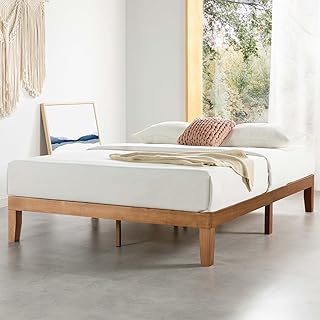
Mellow Naturalista Classic, 12 Inch Solid Wood
Solid pine is the quietest material you can put under a mattress, and this frame’s wooden slat deck eliminates the metal-on-metal squeak entirely. At 12 inches it trades a little storage clearance for warmth and silence — a fair swap in a bedroom you actually sleep in rather than store things in.
Queen Bed Frame, 14 Inch Heavy Duty Steel Platform
The 3,500-pound load rating is overkill for most sleepers, which is exactly why it stays silent under years of use — nothing flexes, so nothing rubs. The scratch-proof feet are a genuinely thoughtful detail for hardwood or laminate floors where a security deposit is at stake.
ZINUS Vivek Deluxe Wood Platform Bed
The slatted headboard delivers a finished, intentional look without the visual weight of an upholstered panel, which keeps a small room from feeling crowded. Wood slat support means no box spring, and assembly is straightforward enough for one person with an afternoon.
GRUSIGN Queen Platform Bed with Velvet Headboard
The adjustable-height slat support is the standout feature here: you can raise the deck for more under-bed storage or lower it if you’re pairing it with a thick mattress and want a shorter total profile. The beige velvet headboard softens a room that’s heavy on hard surfaces.
Frequently Asked Questions
Do I really not need a box spring?
Correct, if the frame has slats spaced 3 inches or less apart. Every frame here is engineered as a complete foundation. Adding a box spring on top only raises your bed height and wastes the clearance you paid for.
What’s the most storage-efficient height?
Fourteen inches is the practical sweet spot. It clears standard under-bed bins and rolling drawers while keeping the mattress top at a comfortable sitting height for most adults.
Metal or wood for a small apartment?
Metal for maximum storage clearance and easier moving. Wood for silence and a warmer visual footprint. If your bed doubles as seating, wood tends to feel less institutional.
Will a foldable frame hold up long-term?
Quality foldable frames like the Amazon Basics model use the same gauge steel as fixed platforms — the hinges are for shipping and storage, not weight-bearing. They’re a strong choice if you relocate frequently.
Final Thoughts
For most small-space sleepers, the NEW JETO 14-inch metal frame offers the best storage-to-footprint ratio on this list. If silence matters more than square footage, the Mellow Naturalista Classic in solid pine is the quieter long-term investment, and the Amazon Basics foldable frame remains the smartest pick for anyone who expects to move within the next two years.