Key takeaways
- Length: A 50-foot hose is a versatile choice for most homes, while a 100-foot model can reach across driveways and around larger properties without moving the washer as often.
- Pressure rating: Choose a hose rated above your pressure washer’s maximum PSI. Extra capacity adds a useful safety margin, but it does not increase the machine’s cleaning power.
- Diameter: A 1/4-inch hose is generally lighter and easier to store; 3/8-inch options can suit higher-flow machines but are usually heavier and less compact.
- Fittings: Check whether your washer uses M22 fittings, quick connects, or both. M22-14mm and M22-15mm connections are not always interchangeable, so verify the specification before ordering.
- Storage: For a small-space setup, prioritize kink resistance, flexibility, and a manageable coil. A wall hook or broad hose reel helps prevent tight bends that shorten the hose’s life.
What's inside
A pressure washer hose can make or break a cleaning session. A stiff line that kinks near the machine, drags across furniture, or uses the wrong connector turns a simple patio or siding job into constant repositioning. In a small garage or utility closet, bulky hoses also consume valuable storage space.
This guide compares pressure washer hoses for maneuverability, reach, connection compatibility, pressure capacity, and storage practicality. The goal is to help you choose a hose that coils neatly, reaches awkward outdoor areas, and suits your existing pressure washer without unnecessary adapters.
As an Amazon Associate we earn from qualifying purchases.


How to Choose a/an Pressure Washer Hoses (2026)
- Length: A 50-foot hose is a versatile choice for most homes, while a 100-foot model can reach across driveways and around larger properties without moving the washer as often.
- Pressure rating: Choose a hose rated above your pressure washer’s maximum PSI. Extra capacity adds a useful safety margin, but it does not increase the machine’s cleaning power.
- Diameter: A 1/4-inch hose is generally lighter and easier to store; 3/8-inch options can suit higher-flow machines but are usually heavier and less compact.
- Fittings: Check whether your washer uses M22 fittings, quick connects, or both. M22-14mm and M22-15mm connections are not always interchangeable, so verify the specification before ordering.
- Storage: For a small-space setup, prioritize kink resistance, flexibility, and a manageable coil. A wall hook or broad hose reel helps prevent tight bends that shorten the hose’s life.
The Best Pressure Washer Hoses (2026)s Reviewed
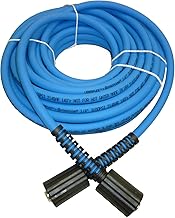
UBERFLEX Kink Resistant 50-Foot Hose
The UBERFLEX 1/4-inch hose is a practical all-around pick for homeowners who want easier handling without sacrificing durability. Its 3,100 PSI rating, flexible construction, and included 22MM fittings make it well suited to routine deck, vehicle, patio, and siding work. The 50-foot length is also easier to coil and store than a 100-foot replacement hose.
YAMATIC 3/8-Inch 4,000 PSI Hose
YAMATIC’s 3/8-inch hose is designed for users who need a more robust replacement line and appreciate a 360-degree swivel quick connect. Steel-braided rubber construction supports a broad working temperature range from 15°F to 212°F, though its larger diameter may require more storage room than a lightweight 1/4-inch hose.
100-Foot 4,200 PSI Steel-Braid Hose
This 100-foot steel-braided hose is the reach-focused option for large driveways, walkways, and homes where moving the pressure washer repeatedly is inconvenient. Its 4,200 PSI rating and kink-resistant design offer substantial capacity, but the extra length is best paired with a reel or oversized wall hook to keep the coil orderly.
Flexzilla 50-Foot Replacement Hose
Flexzilla’s 1/4-inch replacement hose is a strong choice for compact storage and frequent handling. The lightweight, no-kink design is rated to 3,100 PSI and includes M22 fittings, while its bright ZillaGreen color makes it easier to spot in a crowded garage or utility area.
YAMATIC 50-Foot 3,200 PSI Hose
This YAMATIC model balances a modest footprint with broad compatibility for several common consumer pressure washer brands, including Ryobi, Greenworks, Troy-Bilt, and Craftsman. Its kink-resistant build and solid brass fittings make it a sensible everyday replacement, provided the M22-14mm female connection matches your equipment.
Frequently Asked Questions
Is a longer pressure washer hose better?
Not automatically. A longer hose improves reach and reduces how often you reposition the machine, but it adds weight, costs more, and takes up more storage space. Choose 50 feet for most residential jobs and 100 feet when the extra range solves a real access problem.
Can I use any hose with my pressure washer?
No. Confirm the hose’s PSI rating, diameter, fitting type, and M22 specification before buying. A hose can appear compatible while having the wrong thread or connector size, so compare the replacement details with your washer’s manual or original hose.
What is the difference between 1/4-inch and 3/8-inch hoses?
A 1/4-inch hose is usually lighter, more flexible, and easier to coil in a small space. A 3/8-inch hose is often chosen for higher-flow or more demanding setups, but it can be heavier and less convenient for routine household cleaning.
How should I store a pressure washer hose?
Disconnect it, drain remaining water, and coil it in broad loops without sharp bends. Store the coil on a wall hook or reel away from direct sunlight, extreme heat, and abrasive edges. Avoid hanging a heavy, wet hose from a narrow point that can deform it.
Final Thoughts
For most homes, the UBERFLEX 50-foot hose is an excellent balance of flexibility, reach, and compact storage. Choose the Flexzilla when low weight and easy coiling matter most, or the 100-foot steel-braid option when reaching distant areas is more important than keeping the storage footprint small.