Key takeaways
- Noise level: Look for published decibel figures around 60 dB when a quieter conversation-friendly workspace matters. Remember that intake, vibration, and the surface beneath the compressor also affect perceived noise.
- Tank size: A 1- or 2-gallon tank stores easily and suits inflation and short nailing jobs. Larger 6- to 20-gallon tanks reduce cycling during extended work but require more dedicated floor or wall-adjacent space.
- Air delivery: Compare SCFM at 90 PSI with the requirements of your tools. Nailers and inflators are modest consumers, while spray guns, impact wrenches, and sanders need steadier airflow.
- Footprint and mobility: Vertical tanks make better use of limited garage floor area, while wheels and a handle help you move the compressor around stored furniture, shelving, or a parked vehicle.
- Maintenance and recovery: Oil-free pumps simplify ownership, but every tank still needs regular draining. Check duty cycle, maximum pressure, and recovery time before choosing a model for repeated tool use.
What's inside
A loud compressor can make a home garage feel more like a job site than a useful part of the house. For furniture projects, tire inflation, trim work, and occasional air-tool use, the challenge is finding enough capacity without bringing a bulky, rattling machine into a small shared space.
This guide focuses on quiet operation, practical storage, recovery speed, and mobility—not just headline horsepower. The picks below cover compact compressors for light DIY work through larger vertical models for a garage workshop, so you can match the machine to your tools and available floor space.
As an Amazon Associate we earn from qualifying purchases.



How to Choose a Quiet Air Compressor For Home Garage (2026)
- Noise level: Look for published decibel figures around 60 dB when a quieter conversation-friendly workspace matters. Remember that intake, vibration, and the surface beneath the compressor also affect perceived noise.
- Tank size: A 1- or 2-gallon tank stores easily and suits inflation and short nailing jobs. Larger 6- to 20-gallon tanks reduce cycling during extended work but require more dedicated floor or wall-adjacent space.
- Air delivery: Compare SCFM at 90 PSI with the requirements of your tools. Nailers and inflators are modest consumers, while spray guns, impact wrenches, and sanders need steadier airflow.
- Footprint and mobility: Vertical tanks make better use of limited garage floor area, while wheels and a handle help you move the compressor around stored furniture, shelving, or a parked vehicle.
- Maintenance and recovery: Oil-free pumps simplify ownership, but every tank still needs regular draining. Check duty cycle, maximum pressure, and recovery time before choosing a model for repeated tool use.
The Best Quiet Air Compressor For Home Garage (2026)s Reviewed
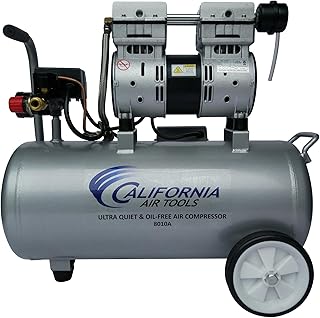
California Air Tools 8010A
The California Air Tools 8010A is a strong all-around choice for a home furniture workspace. Its 8-gallon aluminum tank offers useful reserve air without feeling excessively heavy, while the 60 dBA rating and wheeled design make it easier to live with in a compact garage. It is particularly well suited to brad nailers, finish nailers, inflation, and intermittent air cleaning.
Stealth 20-Gallon Ultra Quiet Air Compressor
This Stealth 20-gallon model is aimed at homeowners who want more reserve capacity for a garage shop. Its vertical form saves some floor space compared with a horizontal tank of similar volume, and the stated 68-decibel operation is quieter than many traditional shop compressors. Choose it when longer tool sessions matter more than easy portability.
Stealth 2-Gallon Air Compressor
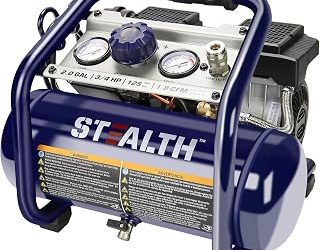
For apartment-adjacent garages, craft rooms, and small furniture projects, the Stealth 2-gallon compressor is an appealing space-conscious option. Its sub-60 dB design, oil-free pump, and compact footprint suit tire inflation, nail guns, and quick DIY tasks. The smaller tank means more frequent cycling, so it is best used with tools that operate in short bursts.
Klutch 20-Gallon Air Compressor
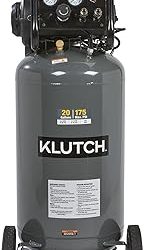
The Klutch 20-Gallon model prioritizes workshop capability with a vertical oil-free layout, 175 PSI maximum pressure, and a 75% duty cycle. Large wheels and an accessible drain improve day-to-day handling, although its published noise level is higher than the quietest options here. It makes sense for users who need dependable recovery for several pneumatic tools and have room for a dedicated corner.
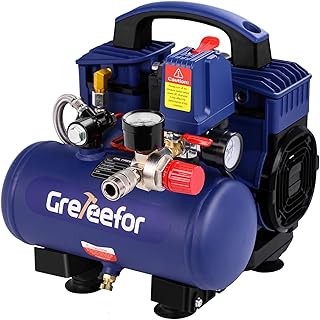
Air Compressor 1-Gallon Ultra Quiet Portable
This 1-gallon violet compressor is the easiest of the group to tuck onto a shelf or move between work areas. Its compact oil-free design and 60 dB rating fit quick inflation, small nail-gun jobs, cleaning, and light home repairs. Think of it as a convenient task compressor rather than a substitute for a larger tank when sustained airflow is required.
Frequently Asked Questions
What is a good noise level for a home garage compressor?
A compressor rated near 60 dB is generally more comfortable for a shared home environment than a conventional loud shop unit. Placement on a stable rubber mat, away from hollow walls and corners, can further reduce vibration and reflected sound.
Is a larger tank always better?
No. A larger tank provides more stored air and usually reduces how often the pump starts, but it also takes up more space and adds weight. Select the smallest tank that comfortably supports your tools and working rhythm.
Can a quiet compressor run a spray gun?
Some can, but spray guns often require continuous airflow that exceeds what compact compressors deliver. Check the gun’s SCFM requirement against the compressor’s SCFM rating at the relevant pressure, and expect the pump to cycle during longer painting sessions.
Are oil-free compressors suitable for furniture projects?
Yes. Oil-free models are convenient for home use because they avoid oil changes and reduce the risk of oil contamination in the air stream. They still need tank draining, clean ventilation, and reasonable cooldown time between demanding jobs.
Final Thoughts
The California Air Tools 8010A is the best balanced pick for most home garages, combining useful capacity with genuinely manageable noise. Choose the Stealth 2-Gallon for tight storage and short tasks, or the Klutch 20-Gallon when your furniture workshop needs more consistent air delivery.