Key takeaways
- Tooth count: Lower counts generally remove material quickly for ripping, while higher counts favor smoother crosscuts and finish cuts.
- Blade diameter: Match the blade diameter to your table saw’s specifications; a 10-inch blade is not interchangeable with an 8-1/4-inch model unless the saw permits it.
- Arbor size: Confirm the center-hole measurement before buying. A common 10-inch table saw uses a 5/8-inch arbor, but larger blades may use a 1-inch arbor.
- Tooth design: ATB teeth are versatile for wood, while specialized grind patterns can improve ripping, crosscutting, or ultra-smooth results.
- Materials: Carbide-tipped teeth are the practical choice for repeated furniture projects because they stay useful through many cuts and can often be resharpened.
What's inside
Choosing a table saw blade can feel like sorting through nearly identical packages: the tooth counts are prominent, but arbor size, kerf, tooth geometry, and the kind of cut you need often matter more. A blade that glides through plywood may struggle with thick hardwood, while an ultra-fine blade can make ripping slow and produce unnecessary heat.
This guide focuses on practical choices for home workshops and compact furniture-making setups. The recommendations cover clean crosscuts, efficient ripping, delicate finish work, and value-oriented multipacks, so you can match a blade to both your saw and the limited storage space in a small shop.
As an Amazon Associate we earn from qualifying purchases.




How to Choose a/an Saw Blade For Table Saw (2026)
- Tooth count: Lower counts generally remove material quickly for ripping, while higher counts favor smoother crosscuts and finish cuts.
- Blade diameter: Match the blade diameter to your table saw’s specifications; a 10-inch blade is not interchangeable with an 8-1/4-inch model unless the saw permits it.
- Arbor size: Confirm the center-hole measurement before buying. A common 10-inch table saw uses a 5/8-inch arbor, but larger blades may use a 1-inch arbor.
- Tooth design: ATB teeth are versatile for wood, while specialized grind patterns can improve ripping, crosscutting, or ultra-smooth results.
- Materials: Carbide-tipped teeth are the practical choice for repeated furniture projects because they stay useful through many cuts and can often be resharpened.
The Best Saw Blade For Table Saw (2026)s Reviewed
FOXBC 10-Inch 80-Tooth Ultra Finish Blade
This high-tooth-count FOXBC blade is aimed at clean, presentation-ready cuts in wood, making it a sensible choice for cabinet parts, trim, and visible furniture edges. It uses a 5/8-inch arbor and favors finish quality over fast stock removal, so it is best reserved for crosscutting and detail work rather than heavy ripping.
12-Inch 100-Tooth ATB Fine Finish Blade
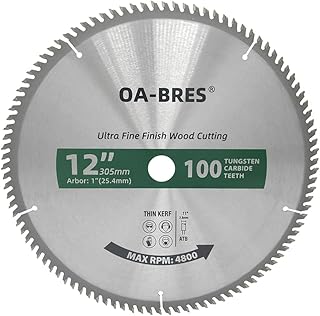
With 100 ATB teeth, this 12-inch blade is built for exceptionally smooth wood cuts when your saw accepts a 1-inch arbor. It suits larger saws and projects where reducing sanding is valuable, though its size and arbor requirement make compatibility the first thing to verify.
FOXBC 8-1/4-Inch 60-Tooth Blade
This compact FOXBC option pairs a 60-tooth configuration with an 8-1/4-inch diameter, fitting smaller table saws that cannot accommodate full-size blades. Its diamond knockout detail and 5/8-inch arbor add compatibility flexibility, while the tooth count offers a useful middle ground between speed and a clean furniture-grade cut.
10-Inch 80T Carbide-Tipped Wood Blade
This 10-inch, 80-tooth blade is a practical pick for makers who work with wood, plastic, and composite materials and want one compact blade for polished cuts. Its carbide-tipped teeth and 5/8-inch arbor suit many common home-shop saws, but the high tooth count is better for controlled finish cuts than aggressive ripping.
10-Inch Three-Blade Cutting Set
This multipack includes 32T, 60T, and 80T blades, giving a small workshop three distinct cutting personalities without requiring separate purchases later. The 32-tooth blade handles faster framing-style work, while the 60T and 80T options move toward fine and ultra-fine results; it is the most flexible choice for varied furniture projects.
Frequently Asked Questions
What tooth count is best for a table saw?
There is no single best count for every task. A lower-tooth blade is generally more efficient for ripping, while 60-tooth and 80-tooth blades are more appropriate when you want smoother crosscuts and cleaner visible edges.
Can I use a miter saw blade on a table saw?
Only if the blade matches the table saw’s diameter, arbor, speed rating, and intended material. A blade marketed for both tools can be convenient, but always follow the table saw manufacturer’s requirements and avoid blades that are incompatible with the saw’s guard or riving-knife setup.
Is a higher tooth count always better?
No. More teeth can improve finish quality, but they also remove less material per revolution and may cut more slowly. Using an 80-tooth blade for thick ripping can create excess resistance, whereas a 32-tooth blade may leave more saw marks on a finished edge.
How often should a table saw blade be replaced?
Replace or resharpen a blade when cuts become noticeably rough, the saw requires unusual force, burning appears despite proper feeding, or teeth are damaged. Cleaning away pitch and resin can restore performance, so inspect and clean the blade before assuming it is worn out.
Final Thoughts
For the broadest home-furniture coverage, the 10-inch three-blade set is the strongest all-rounder. Choose the FOXBC 10-inch 80-tooth blade for dedicated fine work, or the FOXBC 8-1/4-inch 60-tooth model when a compact table saw limits your blade size.