Our Top Picks
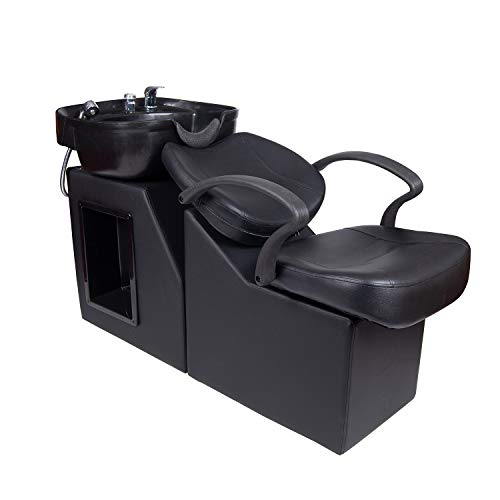 Polar Aurora New Backwash Barber Chair ABS Plastic1 Count (Pack of 1)48.4 x 15.4 x 32.6 Inches78 PoundsCheck on Amazon
The best shampoo bowls for most salons are wall-mounted backwash units with a basin roughly 20–22 inches wide and 7–9 inches deep, a tilting bowl on a locking pivot, a padded neck rest that sits 36–38 inches off the floor, and a 1.5-inch drain tailpiece that drops into a standard 2-inch floor or wall drain — a combination that keeps clients comfortable through a 10-minute wash and lets a stylist wipe the bowl down in under a minute. Everything below explains how to match that baseline to your actual room, plumbing, and client mix, with the measurements and material trade-offs a product listing never gives you.
The Quick Answer by Situation
If you want the short version before the detail, find your situation in the list below and start there. Each entry points to a fuller section later in this article.
Polar Aurora New Backwash Barber Chair ABS Plastic Shampoo Bowl Sink Unit Station Spa Salon Equipment
Picked as a relevant option in this category.
View on Amazon
OmySalon Salon Shampoo Bowl and Chair, Shampoo Chair Extra Wide Seat & Porcelain Hair Washing Sink, Shampoo Unit for Beauty Spa Barbershop, Black
Chosen because it specifies Shampoo Chair Extra Wide Seat & Porcelain Hair Washing Sink and Shampoo Unit for Beauty Spa Barbershop.
View on Amazon
VEVOR Shampoo Basin, Black Hairdresser Sink Shampoo Bowl Sink, ABS Plastic Salon and Spa Hair Washing Sink, Hair Backwash Basin Beauty Salon Equipment for Hair Stylists
Chosen because it specifies Black Hairdresser Sink Shampoo Bowl Sink and ABS Plastic Salon and Spa Hair Washing Sink.
View on Amazon- Single-chair salon or booth renter: wall-mounted front-service bowl, 20–21 inches wide, acrylic or solid-surface, with a locking tilt. Lightest to install and cheapest to replace.
- Two to four chairs in a 10×12 ft room: one freestanding backwash unit per two chairs, or two wall-mounts on the same wet wall sharing a drain line. Budget 42–48 inches of wall per station.
- Home salon in a spare bedroom: portable no-plumbing bowl with a 5–10 gallon reservoir, or a wall-mount retrofitted over an existing bathroom drain if you are willing to open the wall.
- Clients with limited mobility: ADA-style unit with a forward-transfer seat at 17–19 inches and a bowl reachable from a wheelchair, plus a hand-held sprayer on a 60-inch hose.
- Color-heavy service menu: deep basin (9–11 inches) in solid surface or stainless, with a wide rim that holds a color bowl and foils without dripping onto the client.
- Head-spa or relaxation upsell: a reclining shampoo bed with a tilting bowl and an integrated headrest, which needs 78–84 inches of length and a dedicated drain.
Bowl Geometry: The Measurements That Decide Comfort
Comfort in a shampoo bowl comes down to four numbers: basin width, basin depth, bowl rim height, and the angle of the neck rest. Get those wrong and clients will tell you with their shoulders.
Basin width. Most adult heads need 18 inches of interior width at minimum, and 20–22 inches is the sweet spot. Below 18 inches, water and shampoo run down the client’s neck because there is no room for the sprayer to angle inward. Above 24 inches, the bowl starts to swallow the stylist’s working space and looks oversized in a small salon.
Basin depth. A 7–8 inch deep basin is standard for a wash-and-cut clientele. Go to 9–11 inches if you do a lot of color work, because you need room to rinse foils and hold a mixing bowl. Very deep basins (12 inches and up) feel enclosed and can make clients with claustrophobia uneasy — a real consideration in head-spa settings.
Rim height. The bowl rim should land at 32–34 inches for an average-height stylist standing behind it, with the seat or chair at 17–19 inches. If your stylists are tall (over 6 ft), push the rim to 34–36 inches and use a taller seat; if they are shorter, drop the rim to 31–32 inches. A rim that is 2 inches off forces a stylist into a permanent forward lean, and that lean is the single most common cause of the back pain stylists report after a busy Saturday.
Neck rest angle. The neck rest should support the client’s cervical curve, not their skull. A rest that is too high tips the chin toward the chest and blocks the airway slightly; a rest that is too low drops the head back and strains the neck. Adjustable rests with 2–3 inches of vertical travel solve this for mixed client heights, which matters when your clientele ranges from 5 ft to 6 ft 4 in.
Shampoo Bowl Types Compared
The table below compares the main configurations on the numbers that drive installation and cost. Read it as a filter, then use the sections after it for detail.
| Type | Typical basin size | Footprint / wall space | Plumbing needed | Typical price range |
|---|---|---|---|---|
| Wall-mounted front-service bowl | 20 x 22 in, 7–8 in deep | 24–30 in wall width | Hot/cold supply + 1.5 in drain | $150–$500 |
| Freestanding backwash unit | 20 x 22 in, 7–9 in deep | 42–48 in wide, 30–36 in deep | Supply + drain, floor or wall | $500–$1,600 |
| Tilting-bowl backwash unit | 20 x 22 in, 8–9 in deep | 44–50 in wide | Supply + drain | $700–$2,200 |
| Portable no-plumbing bowl | 18 x 20 in, 6–7 in deep | 24–28 in wide, 24 in deep | None; 5–10 gal reservoir | $120–$400 |
| Cabinet / vanity shampoo sink | 16 x 18 in, 6–7 in deep | 30–36 in wide | Standard vanity plumbing | $250–$900 |
| Double-station backwash | 2 x 20 x 22 in | 78–96 in wide | Shared supply, one drain | $1,400–$4,500 |
| Reclining head-spa bed | 20 x 24 in, 8–10 in deep | 78–84 in long, 30–34 in wide | Supply + drain under bed | $1,800–$6,000 |
| ADA / accessible unit | 20 x 22 in, 6–8 in deep | 36–42 in wide, 60 in turning space | Supply + drain, insulated pipes | $900–$3,000 |
Wall-Mounted Front-Service Bowls
This is the workhorse of the industry and the right answer for most single-chair setups. The bowl is bolted to a bracket that fastens to wall studs, and the plumbing runs behind or under the bowl into the wall cavity. Because nothing touches the floor except the client’s chair, a wall-mount keeps the floor easy to sweep and gives the client room to swing their legs in and out.
Mounting height matters more than most buyers expect. The bracket should be anchored into at least one stud, and the blocking behind it should be a minimum of 2×6 lumber or a steel mounting plate, because a filled bowl plus a client’s head can put 40–60 pounds of load on that bracket. Drywall anchors alone are not enough — a 60-pound dynamic load on a 20-inch cantilever will pull toggle bolts through half-inch drywall over time. If you cannot find a stud, install a horizontal 2×6 cleat spanning two studs and mount to the cleat.
Wall-mounts come in two plumbing layouts. Rear-drain models have the drain outlet at the back of the bowl and are designed for a wall drain or a drain that runs horizontally inside the wall. Bottom-drain models drop straight down and need either a floor drain or a P-trap inside a cabinet or a wall cavity below. Check which you have before ordering, because converting one to the other usually means a new bowl, not a new fitting.
Cleaning is simple: the bowl has no seams at the floor line, so hair and product residue collect only in the basin and around the neck rest. Budget two minutes per client with a mild non-abrasive cleaner and a soft cloth. Avoid abrasive pads on acrylic, which leave a haze that traps dye.
Freestanding Backwash Units
A freestanding unit combines the bowl, the seat or chair frame, and sometimes a small cabinet in one footprint. It is the standard choice for salons with four or more chairs because it looks finished from every angle and can be positioned away from a wall if you run plumbing through the floor.
Plan on 42–48 inches of width per unit including the chair and the space a stylist needs to stand behind it, and 30–36 inches of depth. That means a 10×12 ft room (120 sq ft) fits two freestanding units comfortably with a 36-inch aisle between them and a walkway to the door. Three units in the same room start to feel tight once you add a color cart and a rolling stool — at that point, consider wall-mounts instead, which free up 12–18 inches of floor depth per station.
Weight is a real installation factor. A fully assembled freestanding unit with a ceramic bowl can weigh 120–200 pounds, and shipping boxes often arrive at 150–250 pounds. Check your doorway width: most residential interior doors are 30–32 inches, and a unit shipped assembled at 44 inches wide will not fit through. Confirm whether the unit ships knocked down, and if not, whether the backrest and bowl detach. A 36-inch exterior door is the practical minimum for moving a pre-assembled unit into a salon.
Floor protection matters in leased spaces. Look for adjustable leveling feet with a rubber or nylon base rather than bare metal, which will mark vinyl plank and scratch hardwood. If the floor is uneven by more than a quarter inch over the unit’s footprint, use shims under the feet and re-check the bowl’s level — a bowl that tilts even 3 degrees will pool water on one side and leave standing water in the basin.
Tilting-Bowl Backwash Units
A tilting bowl pivots on a locking hinge so the stylist can angle the basin toward the client’s neck for rinsing and away for color application. The mechanism adds roughly $200–$700 to the price of an equivalent fixed bowl, and for salons that do a lot of color and perming, it earns that back in reduced neck strain and fewer water spills.
What to check on a tilting mechanism: the number of locking positions (five or more is better than three), the material of the pivot (nylon bushings wear faster than sealed bearings), and whether the tilt lock can be operated with one wet hand. A mechanism that requires two hands means the stylist has to put down the sprayer every time, which slows service.
Durability is the trade-off. A tilt mechanism has moving parts, and the pivot is the first thing to wear out — typically after three to five years of heavy use at 20-plus clients a day. When it wears, the bowl develops a wobble that clients notice immediately. Look for units where the pivot assembly is a replaceable cartridge rather than a welded component, so you can rebuild rather than replace the whole bowl.
Portable No-Plumbing Shampoo Bowls
Portable bowls use a reservoir and a small pump instead of a plumbed supply. You fill a 5–10 gallon tank with warm water, the pump pressurizes the sprayer, and wastewater drains into a second tank or a bucket. They are the only realistic option for home salons in rentals, mobile stylists, and pop-up events.
Capacity math is straightforward. A typical shampoo rinse uses 1.5–3 gallons per client. A 5-gallon fresh tank therefore serves two clients before a refill; a 10-gallon tank serves three to four. If you book back-to-back appointments, you will be hauling water between clients, and a full 10-gallon tank weighs about 83 pounds — enough that you want it on a wheeled base, not carried.
Water temperature is the hidden limitation. Most portable units hold heat for 30–45 minutes in an insulated tank and considerably less in an uninsulated one. If your appointments are spaced out, plan on reheating or refilling. Wastewater tanks are usually 5–8 gallons and must be emptied into a utility sink or toilet, never a storm drain, because shampoo and color residue are not clean water.
Cleaning a portable unit takes longer than a plumbed one: the pump, the hose, and both tanks need flushing, and the sprayer head needs descaling every few weeks if your water is hard. Budget 10 minutes at the end of each day versus the two minutes a plumbed bowl needs.
Cabinet and Vanity Shampoo Sinks
A cabinet-mounted shampoo sink is a smaller, shallower bowl set into a vanity base, usually 16–18 inches wide and 6–7 inches deep. It works well in small studios where a client sits in a standard chair rather than reclining, and it is the easiest type to install because it uses the same plumbing as a bathroom vanity: two supply lines and a 1.5-inch drain.
The compromise is comfort. Without a reclining chair and a neck rest, clients hold their head over the basin under their own neck strength for the whole wash. That is fine for a five-minute rinse and uncomfortable for a 20-minute scalp treatment. If you choose this type, add a neck-rest cushion that clips to the rim and keep washes short.
Vanity height is worth adjusting. Standard bathroom vanity height is 32 inches, but for a shampoo sink where the client is seated and leaning forward, 30–32 inches works better than 34–36 inches. Check that the faucet has at least 6 inches of spout reach and a pull-out sprayer with a 24-inch hose, or you will not be able to rinse the far side of the basin.
Double-Station Backwash Units
A double unit puts two bowls on one frame, usually with a shared plumbing chase and a divider or console between them. It is the most efficient use of wall space in a busy salon: 78–96 inches of wall serves two clients instead of 84–96 inches for two separate units, and you need only one drain rough-in.
The trade-off is flexibility. If one bowl’s plumbing fails, both stations are out until it is repaired. And a double unit is heavy — 250–400 pounds assembled — so it belongs on a slab or a well-supported floor, not on a second-story wood-frame floor without checking joist direction and span. As a rule of thumb, run double units perpendicular to the joists and near a bearing wall.
Spacing between the two bowls should be 28–34 inches measured center to center if the divider is low, and 36 inches if you want two stylists working side by side without bumping elbows. Anything under 28 inches means the stylists share a sprayer reach and will constantly collide.
Reclining Head-Spa and Massage Shampoo Beds
These units replace the chair-and-bowl arrangement with a single reclining bed: the client lies back, the head rests in a cradle at the end of the bed, and the bowl sits below. They support head-spa services, scalp treatments, and long relaxation washes that command premium pricing.
Space is the constraint. Plan on 78–84 inches of length and 30–34 inches of width per bed, plus 30 inches of clearance on the stylist’s side and 18 inches on the far side for the client to get in and out. Two beds need a room at least 11 ft by 9 ft, and you should leave a 36-inch aisle between them if clients will pass each other.
Plumbing on these units usually runs under the bed frame and out the back, so the drain rough-in needs to be positioned before the floor is finished, or you need a raised platform. Many models have an adjustable-height bowl, which helps stylists of different heights, and a heated neck cradle, which clients notice more than any other feature. Cleaning is more involved than a standard bowl because of the fabric or upholstered surfaces: use a spray disinfectant on the frame and a separate basin cleaner on the bowl, and check that the upholstery is a closed-cell material that will not absorb water and dye.
ADA and Accessible Shampoo Units
If your salon serves clients who use wheelchairs or walkers, or if you are subject to accessibility requirements, the bowl has to be reachable from a seated position without transferring out of the chair. That changes the geometry substantially.
- Seat or transfer surface height: 17–19 inches above the floor.
- Clear floor space beside the unit: at least 30 x 48 inches for a forward approach, or a 60-inch turning circle in the room.
- Knee clearance under the bowl if a client will pull a wheelchair underneath: 27 inches high, 30 inches wide, 19 inches deep minimum.
- Insulated supply and drain pipes under the bowl so contact does not burn.
- Faucet and sprayer controls reachable with one hand, no more than 44 inches above the floor, operable with less than 5 pounds of force.
An ADA-compliant shampoo unit typically costs $900–$3,000, more than a standard wall-mount, because of the reinforced frame and the extended bowl reach. The practical benefit goes beyond compliance: older clients and clients with neck or shoulder injuries also find the forward-transfer design easier to use, so it often becomes the most requested station in the salon.
Bowl Material Trade-Offs
Material determines how the bowl feels, how long it lasts, and how hard it is to clean. The table below compares the four materials you will actually encounter.
| Material | Weight (bowl only) | Stain resistance | Impact resistance | Repairability | Price range |
|---|---|---|---|---|---|
| Ceramic / vitreous china | 20–35 lb | Excellent; non-porous glaze | Low; chips on impact | Poor; chip is permanent | $80–$300 |
| Acrylic / ABS | 3–8 lb | Good if undamaged; scratches trap dye | High; flexes without cracking | Moderate; scratches can be polished out | $40–$180 |
| Solid surface / composite | 12–22 lb | Very good; renewable surface | Good; resists cracking | Excellent; sandable and repairable | $150–$600 |
| Stainless steel | 8–15 lb | Excellent; no porosity | Very high; dents rather than breaks | Fair; dents are hard to remove | $120–$500 |
Ceramic is the classic choice. It feels solid, holds heat briefly so the basin does not feel cold against a client’s neck, and wipes clean with almost anything. Its weakness is fragility: a dropped sprayer or a knocked color bowl can chip the rim, and a chip is a permanent trap for dye and bacteria. Ceramic is also heavy, which makes wall-mount installation a two-person job and puts more load on the bracket.
Acrylic and ABS are the most common materials in mid-priced units because they are light, cheap, and forgiving. A 5-pound bowl is easy to install and easy to replace. The catch is surface hardness: acrylic scratches, and once a scratch is deep enough to catch a fingernail, it holds color. You can polish light scratches with a plastic polish, but a heavily scratched acrylic bowl should be replaced rather than refinished. Acrylic also discolors over years if you use bleach-based cleaners, so stick to pH-neutral products.
Solid surface composites cost more but behave best in a color-heavy salon. The material is non-porous, and because it is homogeneous — the same material all the way through — scratches and even small gouges can be sanded out and the surface restored. That repairability is what you are paying for. A solid-surface bowl that is scratched in year two can be refinished in year five rather than replaced.
Stainless steel is the choice for high-volume shops and for anyone who wants the simplest cleaning routine. Nothing stains it, and it tolerates harsh disinfectants. It does show water spots, and it feels colder than ceramic or composite, which some clients dislike in winter. Stainless also transmits sound, so a sprayer hitting the basin is louder — a small thing that matters in a quiet spa setting.
Dimensions, Clearance, and Room Fit
This is the section most buyers skip and then regret. Below are the numbers to design around.
| Measurement | Recommended figure | Why it matters |
|---|---|---|
| Bowl rim height | 32–34 in | Keeps stylist’s wrists neutral while standing |
| Client seat height | 17–19 in | Feet flat on floor, no sliding forward |
| Wall space per wall-mount station | 24–30 in | Room for elbow swing and a towel hook |
| Floor space per freestanding station | 42–48 in wide x 30–36 in deep | Includes chair recline and stylist standing zone |
| Aisle between stations | 36 in minimum; 42 in preferred | Two people can pass without contact |
| Drain rough-in height (wall drain) | 16–20 in above floor | Allows a 1.5 in P-trap with fall |
| Drain pipe fall | 1/4 in per foot | Prevents standing water and clogs |
| Doorway width for assembled unit | 32 in minimum; 36 in preferred | Most units do not fit through 30 in doors |
| Floor load, double unit | Up to 400 lb over 6–8 sq ft | Check joist span on upper floors |
To sanity-check a room, sketch the stations as rectangles rather than circles. A single wall-mount station with chair occupies about 30 x 48 inches of floor when the chair is pulled out. A freestanding unit occupies about 48 x 36 inches. In a 10×12 ft room (120 sq ft), after subtracting a 36-inch walkway to the door and a 24-inch deep color cart along one wall, you can fit two freestanding units or three wall-mounts. Anything more and clients will be stepping around each other.
Ceiling height matters if you plan a tilting bowl or a head-spa bed with a raised platform. A 9 ft ceiling gives comfortable room; an 8 ft ceiling is workable but leaves less clearance for a stylist standing behind a tall unit. Measure from the finished floor, not the subfloor, and remember that a platform for plumbing can add 4–6 inches.
Neck Support and Comfort Engineering
The neck rest is the part clients remember. A good one distributes the head’s weight — roughly 10–12 pounds — across the base of the skull and the upper neck rather than concentrating it on the cervical spine.
Look for a rest that is at least 3 inches wide and 1.5 inches thick, with a firm but compressible padding. Foam density is the specification that predicts how it ages: a 2.0–2.5 lb per cubic foot foam holds its shape for years, while a soft 1.2 lb foam compresses to nothing within months and leaves clients’ heads resting on the hard rim. If the rest is removable, that is an advantage — you can replace a $15–$40 pad instead of the whole bowl.
Adjustability is worth paying for. A rest with 2–3 inches of vertical travel and a tilt adjustment covers clients from about 4 ft 10 in to 6 ft 4 in. Fixed rests force the stylist to compensate by stacking towels, which never works as well and looks improvised.
Two more comfort details are easy to overlook. First, a bowl with a gently rolled rim rather than a sharp edge prevents pressure points on the back of the neck. Second, a bowl positioned so the client’s chin is level or slightly down — not tipped back — keeps water out of the face and makes conversation possible. If clients keep lifting their heads to talk, the bowl angle is wrong.
Plumbing Compatibility: What Your Space Allows
Before choosing a bowl, confirm what your building can support. The bowl is the cheap part; re-plumbing is the expensive part.
- Standard residential or light commercial: 1/2-inch hot and cold supply lines and a 1.5-inch drain. Most wall-mount and cabinet bowls connect directly.
- Commercial salon build-out: often a 2-inch drain with a floor sink, and code may require a backflow preventer or an air gap on the sprayer hose.
- Concrete slab floor: adding a floor drain means cutting concrete, which typically runs $500–$2,500 depending on access. Prefer a wall-drain or above-floor drain arrangement to avoid it.
- Second floor over a finished ceiling: a leak is a ceiling repair, so use a bowl with a well-sealed drain assembly and add a shutoff valve you can reach without opening a wall.
- Rentals: a portable unit avoids plumbing entirely; a wall-mount requires landlord approval and usually a licensed plumber.
Two code-adjacent details are worth raising with your plumber. First, the drain must be vented; a bowl tied into an unvented drain will gurgle and siphon the P-trap dry. Second, if you are adding a station to an existing line, confirm the line size can carry the additional flow — a 1.5-inch line serving three bowls is usually fine, but a long horizontal run with multiple fixtures may need upsizing.
Water pressure also affects the experience more than buyers expect. A sprayer needs roughly 20–40 psi at the head to rinse efficiently. If your building runs 60 psi at the main but the bowl is at the end of a long run, install a pressure-balancing valve so the temperature does not swing when someone opens a tap elsewhere.
Installation: What the Job Actually Involves
The installation sequence is the same whether you hire a plumber or not, and knowing it helps you budget time.
- Locate studs and mark the bracket. Use a stud finder and confirm with a thin nail. Mark the bracket height at 32–34 inches to the bowl rim, not the bracket center.
- Install blocking if needed. A 2×6 cleat spanning two studs takes 20 minutes and prevents the most common failure mode — a bracket pulling out of drywall.
- Rough in the plumbing. Supply stubs and the drain should be positioned before the bowl goes on. For a wall drain, set the rough-in 16–20 inches above the floor with a 1/4-inch-per-foot fall.
- Mount the bowl and connect. Set the bowl on the bracket, confirm level in both directions, then connect the drain tailpiece and supplies. Use thread sealant, not tape alone, on metal-to-metal fittings.
- Test for leaks under pressure. Run hot water for five minutes with a dry paper towel wrapped around each joint. Any dampness means a re-seat.
- Seal the wall joint. A bead of silicone where the bowl meets the wall keeps water out of the cavity. Use a mold-resistant silicone and let it cure 24 hours before the first client.
Realistic time: 2–4 hours for a wall-mount into existing plumbing, 4–8 hours for a freestanding unit, and a full day or more if new plumbing runs are needed. If you are cutting into a finished wall, add drywall repair and paint to the timeline, and plan to be closed for a day.
Cleaning and Maintenance by Material
Easy cleaning is a buying criterion, so treat it as a specification rather than an afterthought.
| Material | Daily routine | Weekly | Avoid |
|---|---|---|---|
| Ceramic | Mild soap and soft cloth, 1–2 min | Non-abrasive cream cleanser | Abrasive powders, which dull the glaze |
| Acrylic / ABS | pH-neutral soap and soft cloth | Plastic polish on light scratches | Bleach, acetone, abrasive pads |
| Solid surface | Soap and water | Sand with 400-grit then polish if needed | Ammonia-based cleaners on some finishes |
| Stainless steel | Soap and water; dry to prevent spots | Stainless polish along the grain | Steel wool, chloride-heavy cleaners |
The parts that wear first are predictable: the sprayer head (mineral buildup clogs the jets, usually within 12–24 months in hard water), the sprayer hose (kinks at the connection point), the neck-rest pad (compresses and cracks), and the tilt mechanism on tilting bowls. Keeping a spare sprayer head and a spare neck pad on the shelf turns a service interruption into a five-minute fix. Descale the sprayer head monthly by soaking it in a 50/50 white vinegar and water solution for 30 minutes.
Drain maintenance is the other recurring task. Hair and product residue build a mat in the tailpiece. A hair-catching strainer costs $5–$15 and saves a $150–$400 drain clearing. Remove and rinse the strainer daily, and once a month pour a kettle of hot water down the drain to move residue along.
Decision Matrix: Match the Bowl to Your Situation
| Your situation | Best choice | Key spec to insist on | Budget guide |
|---|---|---|---|
| Single chair, rented space | Portable no-plumbing bowl | 10 gal tank, wheeled base | $120–$400 |
| Single chair, own premises | Wall-mount acrylic | 20 in wide basin, locking bracket, 2×6 blocking | $150–$500 installed |
| Two to four chairs, 10×12 ft room | Two wall-mounts or one freestanding unit | 36 in aisle, shared wet wall | $500–$1,600 |
| Color-heavy service menu | Solid-surface tilting bowl | 9–11 in basin depth, renewable surface | $700–$2,200 |
| High-volume, high-turnover shop | Stainless steel double unit | 2 in drain, replaceable sprayer heads | $1,400–$4,500 |
| Clients with mobility limitations | ADA-style forward-transfer unit | 17–19 in seat, 60 in turning circle | $900–$3,000 |
| Premium head-spa service | Reclining shampoo bed | 78–84 in length, heated neck cradle | $1,800–$6,000 |
| Small home studio, occasional clients | Cabinet shampoo sink | Adjustable faucet, 24 in sprayer hose | $250–$900 |
Accessories That Actually Change the Experience
A bowl on its own is incomplete. These add-ons are worth budgeting for at purchase rather than later.
- Hand-held sprayer with a 60-inch hose. The 36-inch hoses on many base units are too short to rinse the far side of a 22-inch basin without pulling the client’s head sideways.
- Vacuum breaker or backflow preventer. Required in many jurisdictions and inexpensive; it prevents dirty water from siphoning into the supply.
- Neck-rest covers. Disposable or washable covers cost pennies per client and are the single easiest way to signal cleanliness.
- Hair strainer basket. $5–$15 and it prevents the most common plumbing call.
- Adjustable-height stool or a locking hydraulic chair. A chair that creeps down during a wash ruins the geometry you carefully planned.
- Towels sized 16 x 27 inches. Standard bath towels are too bulky around a shampoo bowl rim; salon-sized towels wrap the neck without bunching.
Budget Tiers and What You Get
Under $200. Portable bowls and basic acrylic wall-mounts. Expect a plastic body, a short hose, and a fixed neck rest. Fine for occasional use; the sprayer and hose will be the first replacements.
$200–$700. The practical sweet spot. Wall-mounts with ceramic or heavier acrylic bowls, better brackets, longer hoses, and adjustable neck rests. Freestanding units start appearing at the top of this band.
$700–$2,200. Tilting mechanisms, solid-surface basins, reinforced frames, and integrated cabinets. This is where a bowl stops being a fixture and starts being equipment.
$2,200 and up. Double units, ADA-compliant frames, and reclining head-spa beds with heating and powered adjustments. At this level, buy for service life and repairability rather than features.
Common Mistakes to Avoid
- Mounting into drywall only. A filled bowl plus a client’s head loads the bracket dynamically. Always anchor into studs or a spanning cleat.
- Buying before checking the drain location. Rear-drain and bottom-drain bowls are not interchangeable without re-plumbing.
- Ignoring the stylist’s height. A bowl that suits a 5 ft 4 in stylist will wreck a 6 ft 2 in stylist’s back. Set rim height per person, and if you have a mixed team, choose an adjustable-height unit.
- Underestimating the aisle. 24 inches between stations feels fine on a floor plan and impossible in practice.
- Choosing a deep basin for looks. Deep basins are for color work. For standard washes they add weight, cost, and awkward reach.
- Skipping the spare parts. A $30 sprayer head in a drawer prevents a closed station on a Saturday.
- Using abrasive cleaners on acrylic. It creates a haze that traps dye and is impossible to remove.
Frequently Asked Questions
How much space do I need for a shampoo bowl?
A wall-mounted station needs 24–30 inches of wall width and about 48 inches of floor depth including the chair. A freestanding unit needs 42–48 inches of width and 30–36 inches of depth. Add a 36-inch aisle between stations.
Do I need a plumber to install a shampoo bowl?
If you are tying into existing supply and drain lines, a competent DIYer can mount the bowl and connect the fittings. If new lines must be run, if you are cutting a slab, or if local code requires an inspection, hire a licensed plumber. Budget 2–4 hours of labor for a straightforward wall-mount replacement.
What is the best bowl material for a salon that does a lot of color?
Solid surface composite, followed by stainless steel. Both resist dye staining, and solid surface can be sanded and refinished if it does get scratched. Avoid acrylic in a color-heavy shop unless you are prepared to replace the bowl every few years.
Can I install a shampoo bowl in a rental?
Not without permission, because it requires permanent plumbing connections. The rental-friendly option is a portable no-plumbing bowl with a reservoir and pump, which needs no modification to the property.
How high should a shampoo bowl be?
Set the bowl rim at 32–34 inches above the finished floor for an average-height stylist, with the client’s seat at 17–19 inches. Taller stylists should go to 34–36 inches; shorter stylists to 31–32 inches.
How often should a sprayer head be replaced?
In hard-water areas, expect to replace or thoroughly descale the sprayer head every 12–24 months. Monthly vinegar soaks extend that considerably. Keep a spare on hand.
Does a shampoo bowl need a vented drain?
Yes. An unvented drain will gurgle, drain slowly, and can siphon the P-trap dry, allowing sewer gas into the room. Confirm venting with your plumber before finalizing the layout.
The Bottom Line
Buy the bowl that fits your plumbing and your stylists’ bodies, not the one with the most features. For most salons, that means a wall-mounted unit with a 20–22 inch wide, 7–9 inch deep basin in acrylic or solid surface, mounted with the rim at 32–34 inches and anchored into real blocking, with an adjustable neck rest, a 60-inch sprayer hose, and a hair strainer in the drain. If you do heavy color work, step up to a tilting solid-surface bowl. If your clients need accessible or head-spa service, the geometry changes enough that you should plan the room around the unit rather than the other way around. Get those numbers right and the bowl becomes the least interesting, most reliable piece of equipment in the salon — which is exactly what you want.