Key takeaways
- Fit: Check the dimensions of your saw’s miter slots, T-slots, fence, and throat area before ordering. Accessories that fit several machines are useful, but compatibility is never truly universal.
- Control: Favor featherboards, push blocks, and guides that keep stock firmly against the fence or table while leaving both hands in a safe working position.
- Adjustability: Tool-free knobs, positive angle stops, replaceable contact parts, and readable scales save time when switching between furniture components.
- Storage: Choose accessories that hang, nest, or come with a case. In a compact shop, an accessory that cannot be found quickly is rarely used consistently.
- Material: Non-marring contact surfaces and durable nylon or aluminum parts are preferable for finished furniture work, where scratches and crushed edges can erase the benefit of a precise cut.
What's inside
A table saw can make accurate furniture parts quickly, but the wrong accessory setup can leave you fighting narrow stock, inconsistent angles, awkward push cuts, and limited bench space. For a small workshop, every add-on needs to earn its footprint by improving control, repeatability, or safety without creating another pile of parts to store.
This guide focuses on practical table saw accessories for home furniture makers in 2026. The selections cover kickback resistance, narrow ripping, safer feeding, crosscut accuracy, and setup precision, with an emphasis on compact storage and straightforward adjustments. Always follow your saw manufacturer’s instructions and verify slot dimensions before buying.
As an Amazon Associate we earn from qualifying purchases.



How to Choose a/an Table Saw Accessories (2026)
- Fit: Check the dimensions of your saw’s miter slots, T-slots, fence, and throat area before ordering. Accessories that fit several machines are useful, but compatibility is never truly universal.
- Control: Favor featherboards, push blocks, and guides that keep stock firmly against the fence or table while leaving both hands in a safe working position.
- Adjustability: Tool-free knobs, positive angle stops, replaceable contact parts, and readable scales save time when switching between furniture components.
- Storage: Choose accessories that hang, nest, or come with a case. In a compact shop, an accessory that cannot be found quickly is rarely used consistently.
- Material: Non-marring contact surfaces and durable nylon or aluminum parts are preferable for finished furniture work, where scratches and crushed edges can erase the benefit of a precise cut.
The Best Table Saw Accessories (2026)s Reviewed
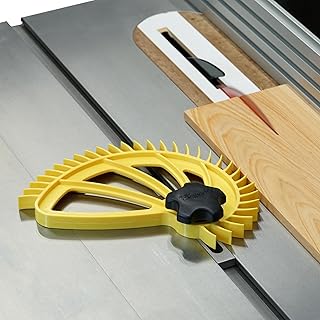
Hedgehog Spiral-Shaped Safety Featherboard
The Hedgehog’s spiral form gives it a small footprint while helping maintain steady lateral pressure against the fence. Its one-knob setup is especially appealing beside a crowded saw, and the DuPont nylon construction is designed to resist wear while supporting safer, more consistent cuts.
GOINGMAKE Thin Rip Jig
For repeated narrow strips, the GOINGMAKE Thin Rip Jig offers a more controlled approach than measuring every piece independently. It is a useful choice for edging, drawer components, splines, and small furniture details, provided your table, band saw, or router table has the specified 3/8-by-3/4-inch T-slot.
BOW Products EVA Featherboard
This EVA featherboard combines a non-marring contact surface with the AnchorPRO miter bar and replaceable feathers. Its tool-free adjustment and claimed kickback-resistance advantage make it a versatile option for a shop that wants one featherboard to serve a table saw, router table, and band saw without scuffing delicate stock.
Milescraft 3406 GrabberPRO
The GrabberPRO is a practical push block for controlling boards as they pass the blade, router bit, or jointer head. Its broad gripping design can feel more secure than a small push stick when working with panels, while still giving a compact workshop one safety tool for several machines.
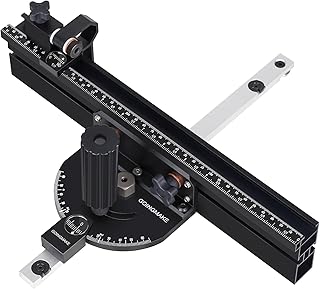
GOINGMAKE Compact Table Saw Miter Gauge
With a 360mm fence, flip stop, and positive angle stops, this compact miter gauge is aimed at repeatable crosscuts rather than improvised positioning. It suits furniture parts that need matching lengths and dependable angles, though buyers should confirm the 3/4-by-3/8-inch slot specification before purchase.
Frequently Asked Questions
Do I need a featherboard for every table saw project?
No, but a featherboard is valuable whenever stock must stay firmly against the fence or table. It is particularly helpful for long boards, narrow rips, and repeat cuts, where small shifts can affect both safety and accuracy.
Are thin-rip jigs useful in a small furniture shop?
Yes. A thin-rip jig can make consistent strips without repeatedly repositioning the fence, which saves material and bench space. It is most useful for edging, lipping, splines, and other narrow components made in batches.
Can one push block replace a push stick?
Not in every situation. A push block can provide excellent control on wider stock, while a push stick may offer better reach and clearance near certain cuts. Keep both styles available and use the one that keeps your hands away from the blade.
What are setup blocks used for?
A precision set such as the 14-piece aluminum alloy Table Setup Blocks helps check blade height, fence alignment, depth, and angles. It can reduce trial-and-error during machine changes, and its storage case is useful when drawer space is limited.
Final Thoughts
For most home furniture makers, the Hedgehog featherboard is a strong everyday safety upgrade, the GOINGMAKE Thin Rip Jig is the standout for repeat narrow parts, and the Milescraft GrabberPRO adds flexible control across multiple machines. Add the setup blocks when precision and quick shop changes matter most, especially in a compact workspace where every adjustment should be deliberate.