Key takeaways
- Bottle size flexibility: Units rated for both 3- and 5-gallon jugs give small-space owners an out. A 3-gallon bottle weighs about 25 pounds instead of 42, which matters enormously when you are lifting overhead in a corner with a cabinet above.
- Vertical clearance, not just floor space: Measure from the floor to the underside of any shelf or cabinet, then add roughly 20 inches above the dispenser’s height for the loading motion. Many buyers get the footprint right and discover they cannot physically invert the jug.
- Spill containment design: Look for a recessed collar or probe-style receiving well. On hard floors in a small kitchen, a half-cup spill becomes a slip hazard in a walkway you use constantly.
- Child lock and hot tap placement: In compact rooms, the dispenser sits within arm’s reach of anyone passing. A dedicated hot-side lock is non-negotiable with kids or pets around.
- Energy Star 3.0 and standby draw: Certified units cycle the heating tank more efficiently. Over a year in a studio where the dispenser runs continuously, that difference is noticeable on the bill.
What's inside
In a 600-square-foot apartment, every appliance has to justify its footprint twice over. A top loading water dispenser occupies roughly the same floor area as a kitchen trash can, yet it replaces the case of plastic bottles stacked behind your couch, the pitcher hogging fridge shelf space, and the electric kettle competing for outlet access. The trade-off buyers wrestle with is real, though: lifting a 42-pound jug shoulder-height in a galley kitchen with 30 inches of clearance is a different proposition than doing it in an open-plan office break room.
This guide approaches top loaders through the lens of tight spaces — narrow galleys, studio corners, dorm alcoves, and rental kitchens where you cannot rearrange the plumbing. We look at which models handle both 3-gallon and 5-gallon bottles (the 3-gallon option changes everything if reach is your constraint), how spill-free loading collars work, why child safety locks matter when the unit sits at toddler eye level, and what Energy Star 3.0 certification actually saves you month to month. Bottom loaders appear here too, because for some layouts they are the smarter answer.
As an Amazon Associate we earn from qualifying purchases.


How to Choose a Top Loading Water Dispenser (2026)
- Bottle size flexibility: Units rated for both 3- and 5-gallon jugs give small-space owners an out. A 3-gallon bottle weighs about 25 pounds instead of 42, which matters enormously when you are lifting overhead in a corner with a cabinet above.
- Vertical clearance, not just floor space: Measure from the floor to the underside of any shelf or cabinet, then add roughly 20 inches above the dispenser’s height for the loading motion. Many buyers get the footprint right and discover they cannot physically invert the jug.
- Spill containment design: Look for a recessed collar or probe-style receiving well. On hard floors in a small kitchen, a half-cup spill becomes a slip hazard in a walkway you use constantly.
- Child lock and hot tap placement: In compact rooms, the dispenser sits within arm’s reach of anyone passing. A dedicated hot-side lock is non-negotiable with kids or pets around.
- Energy Star 3.0 and standby draw: Certified units cycle the heating tank more efficiently. Over a year in a studio where the dispenser runs continuously, that difference is noticeable on the bill.
The Best Top Loading Water Dispensers (2026) Reviewed
Brio 130 Series Top-Load Cooler
The spill-free loading collar is the standout here — it seats the bottle neck before the seal breaks, which is the single most useful feature if you are loading in a cramped spot without a free hand. Accepts both 3- and 5-gallon bottles, includes a child safety lock, and carries Energy Star 3.0 certification.
Feelfunn Top Loading Water Dispenser
A straightforward hot-and-cold unit that handles 3- or 5-gallon bottles with a child safety lock on the hot tap. The slim profile and no-frills control panel make it a sensible pick for kitchen corners and small office nooks where you want function without a large cabinet.
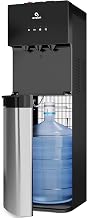
Freestanding Top Loading Cooler with Child Safety Lock
Built for apartment and dorm use, this freestanding model takes either bottle size and keeps the footprint tight enough for a hallway alcove. The child lock and simple two-tap layout suit shared living situations where multiple people use it daily.
Brio Self Cleaning Bottom Loading Cooler (Limited Edition)
Three temperature settings — hot, cold, and cool — plus ozone self-cleaning, and the bottle hides in the cabinet below. If your ceiling clearance rules out overhead loading entirely, this is the workaround, though the enclosed base means the unit itself is deeper.
Brio 130 Series Bottom Load Cooler
Hot, room temperature, and cold water with an empty bottle alert that saves you from a dry pump — genuinely useful when the jug is out of sight. Energy Star 3.0 certified with a child safety lock, and the room-temp setting is a quiet win for anyone who dislikes cold water.
Frequently Asked Questions
How much floor space does a top loader actually need?
Most models occupy roughly 12 by 13 inches. Add two to three inches of rear clearance for ventilation and heat dissipation, and keep the front unobstructed for glass access.
Is a 3-gallon bottle worth the extra refills?
If lifting is a concern, yes. You will swap bottles more often, but a 25-pound lift is manageable for far more people than a 42-pound one, and 3-gallon jugs store easily under a sink.
Can I put one on a countertop?
These are floor-standing units. Placing one on a counter eliminates the vertical clearance you need to load and raises the tipping risk considerably.
How often should I clean the reservoir?
Every three to six months for manual models. Self-cleaning units with ozone cycles reduce the frequency but do not remove the need for periodic exterior and drip-tray cleaning.
Final Thoughts
For most small-space buyers, the Brio 130 Series Top-Load Cooler is the one to beat — the spill-free collar and dual bottle-size support solve the two problems that actually bite in tight kitchens. The Feelfunn Top Loading Dispenser is the value-focused alternative with the same essentials, and if overhead clearance is genuinely impossible, the Brio Self Cleaning Bottom Loading Cooler sidesteps the lift entirely.