Key takeaways
- Color temperature by room size: In compact baths, 2700K reads cozy but can muddy white tile, while 5000K bounces off small mirrors and multiplies perceived space. 4000K is the safe middle for rooms under 50 square feet — crisp enough to feel open, warm enough to be flattering.
- CRI above 85 for grooming zones: Color Rendering Index determines whether your foundation matches your neck and whether that towel is cream or gray. Anything under 80 sabotages both makeup application and your ability to tell the shampoo apart from the conditioner at arm’s length.
- Frosted lens over clear filament: When a fixture sits three feet from your face — normal in a small bath — clear bulbs throw hard glare and harsh shadows. Frosted globes diffuse light across the whole mirror wall, which is what makes a tight space feel considered instead of interrogative.
- Dimmable only if you have the switch: Dimmable bulbs on a standard toggle work fine, but non-dimmable bulbs on a dimmer buzz and flicker. Check the wall plate before you buy, and remember dimming is a genuine asset in a windowless room used at night.
- Moisture rating and bulb count: Damp-rated is the minimum near a shower; wet-rated handles direct exposure. Buy multipacks so every socket in the fixture gets an identical bulb — mismatched color temperatures in one strip is the fastest way to make a small room look chaotic.
What's inside
In a small bathroom, the vanity does the work of three rooms. It’s where you shave at 6 a.m., where guests hunt for a hand towel, and where the entire visual weight of the space collects into one mirrored wall. Anyone who has organized a 40-square-foot bath knows the frustration: you finally get the drawer dividers sorted and the counter clear, and the room still reads dim, cave-like, and vaguely grimy. The culprit usually isn’t the paint or the tile. It’s six bulbs putting out muddy, uneven light that flattens every surface and makes your carefully edited countertop look like a pile of stuff.
Light is the cheapest square footage you can buy. Swap the globes above a mirror and a cramped vanity suddenly has depth, honest color, and legible zones — you can actually see which bottle is which. This guide covers the bulbs worth putting in a tight bathroom: which color temperatures make a compact room feel larger instead of louder, why CRI matters more than raw brightness at close range, and how to match a bulb to fixtures you can’t easily replace. Below are the picks I’d install in my own narrow, north-facing bath.
As an Amazon Associate we earn from qualifying purchases.



How to Choose a Vanity Light Bulbs (2026)
- Color temperature by room size: In compact baths, 2700K reads cozy but can muddy white tile, while 5000K bounces off small mirrors and multiplies perceived space. 4000K is the safe middle for rooms under 50 square feet — crisp enough to feel open, warm enough to be flattering.
- CRI above 85 for grooming zones: Color Rendering Index determines whether your foundation matches your neck and whether that towel is cream or gray. Anything under 80 sabotages both makeup application and your ability to tell the shampoo apart from the conditioner at arm’s length.
- Frosted lens over clear filament: When a fixture sits three feet from your face — normal in a small bath — clear bulbs throw hard glare and harsh shadows. Frosted globes diffuse light across the whole mirror wall, which is what makes a tight space feel considered instead of interrogative.
- Dimmable only if you have the switch: Dimmable bulbs on a standard toggle work fine, but non-dimmable bulbs on a dimmer buzz and flicker. Check the wall plate before you buy, and remember dimming is a genuine asset in a windowless room used at night.
- Moisture rating and bulb count: Damp-rated is the minimum near a shower; wet-rated handles direct exposure. Buy multipacks so every socket in the fixture gets an identical bulb — mismatched color temperatures in one strip is the fastest way to make a small room look chaotic.
The Best Vanity Light Bulbs (2026)s Reviewed
Sunco 10-Pack G25 LED Globe, 3000K Warm White
The vintage filament styling earns its keep in a small bath with open shelving or brass fixtures, where the bulb itself is part of the décor rather than something to hide. At 3000K and wet rated, it’s the pick for period-style vanities and enclosed fixtures near a tub, though the clear filament means you’ll want it positioned above eye level.
TJOY G25 Vanity Bulbs, 5000K Daylight
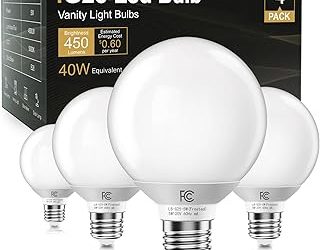
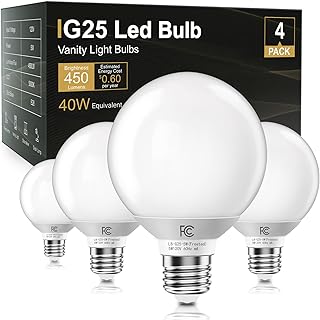
The 5000K output with CRI85+ is genuinely useful for makeup work and for making a windowless room feel like it has a window. A four-pack fits most three- and four-socket bars exactly, but confirm your switch isn’t a dimmer since these are non-dimmable.
8-Pack LED Vanity Bulbs, 4000K Natural Daylight
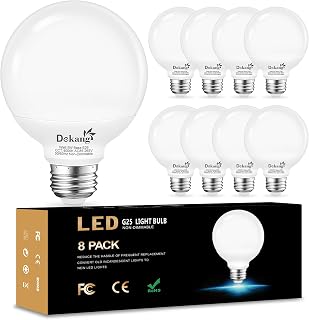
This is my default recommendation for small baths that need to look bigger without feeling clinical — 4000K and 500LM hits the balance that 2700K and 5000K each miss in one direction. The eight-count covers a double vanity or leaves you spares, which matters when replacing one bulb means matching all of them.
Sunco 50-Pack G25 Vanity Globes, 2700K Soft White
Frosted lens, damp rated, dimmable, and priced for people maintaining several bathrooms or an entire rental portfolio. The 2700K soft white is the warm, forgiving choice for a small powder room where atmosphere beats task precision.
DAYBETTER BR30 LED Flood, 5000K, 12-Pack
Not a globe, but recessed cans over a vanity are common in newer compact baths, and these fill that role at 800LM with dimming support. Use them as overhead fill paired with globes at the mirror rather than as your only light source, since downlight alone carves shadows under the eyes.
Frequently Asked Questions
What color temperature is best for a small bathroom?
4000K is the most reliable choice under 50 square feet — it keeps whites clean and the space feeling open without the blue cast some people dislike. Go 5000K if the room is windowless or you do detailed makeup work, and 2700K if it’s a guest powder room where mood matters more than accuracy.
How many lumens do I need above a vanity mirror?
Aim for roughly 1,600 to 2,000 total lumens at the mirror, which means three or four bulbs in the 450–500LM range. Spreading that across multiple bulbs beats one bright source, since even light from several points eliminates the shadows that make a small room feel closed in.
Can I mix bulb types in the same fixture?
Mixing wattages is fine within a fixture’s rating, but never mix color temperatures. Two bulbs at 2700K next to two at 5000K produces a visibly split, unsettled light that reads as disorder — especially damaging in a small room where every surface is in view at once.
Do vanity bulbs need to be damp or wet rated?
Any bulb within a few feet of a shower or tub should be damp rated at minimum. Wet rated is required for genuinely exposed positions, and in a small bath where the vanity sits close to the shower, it’s worth the marginal cost.
Final Thoughts
For most compact bathrooms, the 8-Pack 4000K vanity bulbs are the smart default: neutral enough to expand the room visually, high enough CRI for grooming, and plentiful enough to fill every socket with a match. If your bath has no window, step up to the TJOY G25 5000K globes for maximum brightness and clarity; if you’re outfitting multiple bathrooms or want dimmable warmth in a powder room, the Sunco 50-pack 2700K globes are the most economical way to get frosted, damp-rated light in every fixture at once.