Key takeaways
- Identify the undertone first: Hold a sheet of printer paper against your headboard in daylight. Grey that looks faintly blue next to white needs a wall color with matching coolness or deliberate warmth — never something in between, which is where muddiness lives.
- Use tonal matching to expand small rooms: Painting walls a close cousin of your headboard’s grey removes the visual break between furniture and architecture. The eye stops registering where the bed ends, and the room reads larger than its footprint.
- Add warmth if the room faces north: North-light bedrooms drain color of warmth all day. Creams and blush tones counteract this; another grey will push the space toward gloom no matter how sophisticated the swatch looks in the store.
- Match sheen to wall condition: Eggshell forgives minor imperfections and wipes clean, which matters directly behind a bed where heads and pillows make contact. Reserve semi-gloss for trim and doors unless you genuinely want reflectivity.
- Check coverage claims against your prep time: One-coat formulas are worth the premium in occupied bedrooms where you can’t leave furniture displaced for three days. Verify the claim applies over your existing color, not just over primer.
What's inside
A grey headboard is the most agreeable piece of furniture you’ll ever own, and also the most quietly difficult. Grey carries an undertone — usually blue, green, or violet, occasionally a warm taupe — and that undertone will either harmonize with your walls or fight them. In a small bedroom, where the headboard often occupies a third of the visible wall, a mismatch reads as a mistake rather than a choice. Buyers tend to reach for “greige” and hope for the best, then discover the room feels flat, cold, or muddy under evening light.
This guide approaches the problem the way I approach every tight bedroom: identify the undertone first, then choose a wall color that either extends the grey outward to blur the room’s edges, or contrasts with enough warmth to keep the space from feeling like a storage unit. Below are six paint options worth considering in 2026, spanning tonal greys, soft creams, and blush pinks, with notes on which small-space situation each one actually solves.
As an Amazon Associate we earn from qualifying purchases.



How to Choose a Wall Color For Grey Headboard (2026)
- Identify the undertone first: Hold a sheet of printer paper against your headboard in daylight. Grey that looks faintly blue next to white needs a wall color with matching coolness or deliberate warmth — never something in between, which is where muddiness lives.
- Use tonal matching to expand small rooms: Painting walls a close cousin of your headboard’s grey removes the visual break between furniture and architecture. The eye stops registering where the bed ends, and the room reads larger than its footprint.
- Add warmth if the room faces north: North-light bedrooms drain color of warmth all day. Creams and blush tones counteract this; another grey will push the space toward gloom no matter how sophisticated the swatch looks in the store.
- Match sheen to wall condition: Eggshell forgives minor imperfections and wipes clean, which matters directly behind a bed where heads and pillows make contact. Reserve semi-gloss for trim and doors unless you genuinely want reflectivity.
- Check coverage claims against your prep time: One-coat formulas are worth the premium in occupied bedrooms where you can’t leave furniture displaced for three days. Verify the claim applies over your existing color, not just over primer.
The Best Wall Color For Grey Headboard (2026)s Reviewed
Rust-Oleum Painter’s Touch Satin Stone Gray
Stone Gray sits in neutral territory without a strong bias toward blue or green, which makes it an unusually safe tonal match for headboards you haven’t fully diagnosed. The satin sheen and multi-surface formula also let you carry the color onto a nightstand or floating shelf, a trick that quiets visual clutter in rooms under 120 square feet.
THE ONE All-In-One Paint & Primer, Light Cream Matte
This is my first recommendation for cool-grey headboards in dim or north-facing bedrooms — the cream introduces warmth without tipping into yellow, and the matte finish keeps the walls receding rather than bouncing light back at you. The 8.5 oz size is best treated as a test pot; buy one, paint a two-foot square behind the headboard, and live with it for two days.
RECOLOR Eco-Friendly Interior Latex, Fog
Fog’s cool green-grey is the sharpest tonal partner here for headboards with a green or blue-green cast, and the eggshell finish handles the inevitable contact behind a bed. The low-impact formulation is a genuine advantage in a bedroom you’ll sleep in the same night.
PRESTIGE Paints Interior Paint and Primer, Gray Shimmer Match
A gallon at this price point is the practical choice when you’re committing to a full tonal room rather than an accent wall, and the Behr Gray Shimmer match is a light, slightly warm grey that flatters charcoal and mid-grey upholstery alike. Order semi-gloss only for trim; specify eggshell or satin for the walls themselves.
EVOLVE Interior Paint & Primer, Pale Pink Eggshell
Pale pink is the most underused answer to a grey headboard — the warmth reads as light rather than color, and the combination looks intentional in a way that beige never quite manages. The one-coat coverage and washability make it a realistic choice for a room you can’t take offline for a week.
Frequently Asked Questions
Should the wall be lighter or darker than a grey headboard?
In small bedrooms, keep the wall lighter or within two shades of the headboard. A darker wall behind a lighter headboard creates a hard silhouette that emphasizes how much floor space the bed consumes.
Does a blush wall work with a grey headboard?
Yes, provided the grey has a cool undertone. Blush and cool grey are complementary; blush against a warm taupe-grey can read slightly pink-brown and muddy. Test before committing.
Can I use furniture spray paint on walls?
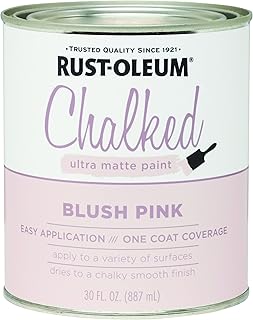
No. Products like Rust-Oleum’s Chalked Blush Pink spray are for furniture and small objects — use it on a nightstand or picture frame to echo a blush wall, not on the wall itself.
How much paint do I need for a small bedroom accent wall?
A quart typically covers 90 to 100 square feet in one coat, which handles most single accent walls behind a bed. Buy a gallon if you’re painting all four walls.
Final Thoughts
For a cool-grey headboard in a room short on natural light, THE ONE in Light Cream is the most reliable warmth correction, with EVOLVE Pale Pink as the more distinctive alternative if you want the room to feel deliberate. If you’d rather blur the boundaries and let a small bedroom breathe, RECOLOR Fog is the tonal match I’d reach for first.