Key takeaways
- Footprint and storage: A palm router with a hard case can slide onto a bookshelf; a plunge router needs a dedicated cubby. Measure your actual storage slot before you shop, and prefer kits where bits, wrenches, and guides nest inside one lid.
- Variable speed: Six-speed control isn’t a luxury feature. Slower speeds tame chatter and burning on hardwood and small-diameter bits, which matters more when you’re clamping to a lightweight bench that can’t absorb vibration.
- Corded vs. cordless: If your work zone has no outlet nearby, a battery router eliminates the extension cord that inevitably drags across your workpiece. If you already own DeWalt 20V packs, a bare-tool option saves both money and shelf space.
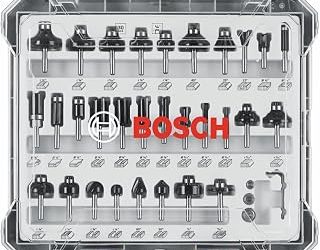
- Included bits: A 12- or 15-piece carbide set covers round-overs, chamfers, straight cuts, and dovetails for your first year. Buying bits individually costs more and scatters them across three drawers.
- Base visibility and guides: Look for a clear or open sub-base plus an edge guide. Cramped quarters mean awkward viewing angles, and being able to see the cut line without repositioning your whole body prevents most beginner mistakes.
What's inside
Most beginner woodworkers don’t stall out because a router is too complicated. They stall because the router they bought assumed they had a garage bay, a dedicated bench, and a dust collector bolted to the wall. If your shop is a closet shelf, a balcony, or the corner of a spare bedroom, a full-size plunge router is the wrong first tool: it’s heavy, loud, throws chips across the room, and demands storage space you simply don’t have. The result is a $200 machine that lives in its box.
Compact palm routers changed that math. They run one-handed, weigh a few pounds, store in a drawer or a stackable case, and handle the edge profiles, dadoes, and hinge mortises that make furniture look finished rather than assembled. This guide looks at six beginner-friendly options through a small-space lens: how much bench they occupy, whether the kit arrives complete so you’re not buying accessories piecemeal, and how manageable each one is when your work surface doubles as your dining table.
As an Amazon Associate we earn from qualifying purchases.


How to Choose a Wood Router For Beginners (2026)
- Footprint and storage: A palm router with a hard case can slide onto a bookshelf; a plunge router needs a dedicated cubby. Measure your actual storage slot before you shop, and prefer kits where bits, wrenches, and guides nest inside one lid.
- Variable speed: Six-speed control isn’t a luxury feature. Slower speeds tame chatter and burning on hardwood and small-diameter bits, which matters more when you’re clamping to a lightweight bench that can’t absorb vibration.
- Corded vs. cordless: If your work zone has no outlet nearby, a battery router eliminates the extension cord that inevitably drags across your workpiece. If you already own DeWalt 20V packs, a bare-tool option saves both money and shelf space.
- Included bits: A 12- or 15-piece carbide set covers round-overs, chamfers, straight cuts, and dovetails for your first year. Buying bits individually costs more and scatters them across three drawers.
- Base visibility and guides: Look for a clear or open sub-base plus an edge guide. Cramped quarters mean awkward viewing angles, and being able to see the cut line without repositioning your whole body prevents most beginner mistakes.
The Best Wood Router For Beginners (2026)s Reviewed
TEENO 6.5 Amp Compact Router Kit
The most complete starter package here: six speeds, edge and roller guides, a 15-piece carbide set, and a carrying case that keeps everything in one grab-and-go unit. For anyone routing on a folding bench and packing up afterward, that consolidation is worth more than raw power.
WORKPRO 6.5 Amp Compact Router Kit
A recognized brand with sensible ergonomics and speeds up to 30,000 RPM, making it the safest pick if you want predictable performance and accessible replacement parts. The base adjustment is smooth enough that dialing in a shallow dado won’t eat half your afternoon.
Cordless Brushless Router for DeWalt 20V/60V Batteries
If you already own DeWalt packs, this bare-tool brushless unit is the leanest way into routing: no charger, no second battery platform, no extra clutter. Five speeds and 28,000 RPM handle edge trimming and grooving comfortably, though brushless efficiency means you’ll want a 5Ah pack for longer sessions.
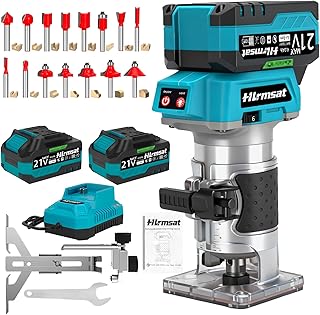
21V Brushless Cordless Palm Router with 2×4.0Ah Batteries
A genuinely cord-free setup out of the box, with two batteries so one charges while the other works. Six speeds plus a 15-piece bit set make it capable of dovetailing and profiling, which is a lot of furniture-grade capability from something that stores like a cordless drill.
TwoWin 800W Compact Router with 15-Piece Bit Set
The budget entry point, and a reasonable one if you’re testing whether routing belongs in your workflow at all. Single-speed operation limits you on dense hardwoods, but for softwood edge work and laminate trimming it does the job without demanding shelf space or commitment.
Frequently Asked Questions
Is a palm router powerful enough for real furniture work?
For edge profiles, hinge mortises, dadoes, and dovetails on typical furniture stock, yes. You’ll want a full-size router only for large-diameter panel-raising bits or deep plunge mortising in thick hardwood.
How do I control dust in a small apartment?
Route inside a cardboard box laid on its side, or clamp a shop vac hose beside the bit with a scrap wood standoff. Even a basic vacuum captures most chips at the source, which matters when there’s carpet nearby.
Do I need a router table to start?
No. Handheld routing with a clamped edge guide covers nearly everything a beginner attempts, and a table is the single largest space commitment in a small shop. Add one later if you find yourself doing repetitive profile work.
Are the included bit sets any good?
Bundled carbide bits are adequate for learning and for softwoods. Once you identify the two or three profiles you actually use, replace those with premium bits rather than upgrading the whole set.
Final Thoughts
For most beginners working in tight quarters, the TEENO kit is the strongest all-in-one choice thanks to its variable speeds, included guides, and self-contained case. The WORKPRO compact router is the safer pick if brand support matters to you, and the 21V brushless cordless palm router with two batteries earns its place when there’s no convenient outlet and every square foot counts.