Key takeaways
- Router style: A palm or trim router is easiest to store and excels at edging, laminate, and small furniture details. A fixed-base router provides more stability, while a plunge model is better for stopped grooves, mortises, and inlay work.
- Power: Around 1 HP is practical for compact projects and edge profiles. Models near 2.25 HP handle larger bits and tougher hardwood work, but they are heavier and take up more room on a shelf or workbench.
- Speed control: Variable speed helps match the cutter to its diameter and the material. Slower settings are useful with larger bits, while smaller bits and clean edge work can benefit from higher speeds.
- Collet size: A 1/4-inch collet is common on compact routers and works with many trim bits. Larger routers may support 1/2-inch bits, which are useful for demanding cuts but require more storage space and a more capable machine.
- Storage and control: Look for a compact footprint, quick depth adjustment, a comfortable grip, and accessories that can stay organized in one case. A tool that is easy to retrieve is more useful than a powerful router buried in a crowded workshop.
What's inside
Choosing a wood router for a small workshop can feel surprisingly complicated. Compact palm routers are easy to store and maneuver, while full-size models offer more power and stability but demand more bench space. Add plunge bases, variable speed, collet sizes, dust collection, and included accessories, and it is easy to buy more tool than your furniture projects actually require.
This guide compares six popular router options with a small-space organization expert’s priorities in mind: useful power without unnecessary bulk, straightforward storage, controllable handling, and versatility for shelves, cabinets, trim, edging, and light joinery. The reviews focus on which tools make sense for different workshop layouts and woodworking skill levels.
As an Amazon Associate we earn from qualifying purchases.




How to Choose a/an Wood Router (2026)
- Router style: A palm or trim router is easiest to store and excels at edging, laminate, and small furniture details. A fixed-base router provides more stability, while a plunge model is better for stopped grooves, mortises, and inlay work.
- Power: Around 1 HP is practical for compact projects and edge profiles. Models near 2.25 HP handle larger bits and tougher hardwood work, but they are heavier and take up more room on a shelf or workbench.
- Speed control: Variable speed helps match the cutter to its diameter and the material. Slower settings are useful with larger bits, while smaller bits and clean edge work can benefit from higher speeds.
- Collet size: A 1/4-inch collet is common on compact routers and works with many trim bits. Larger routers may support 1/2-inch bits, which are useful for demanding cuts but require more storage space and a more capable machine.
- Storage and control: Look for a compact footprint, quick depth adjustment, a comfortable grip, and accessories that can stay organized in one case. A tool that is easy to retrieve is more useful than a powerful router buried in a crowded workshop.
The Best Wood Router (2026)s Reviewed
TwoWin 800W Compact Router Tool
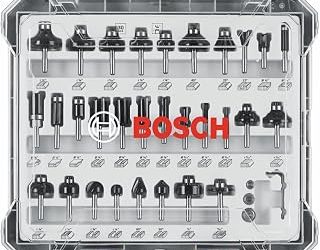
The TwoWin Router Tool is an approachable choice for small furniture jobs, edge trimming, sign work, and occasional decorative routing. Its compact format and included 15-piece tungsten carbide bit set make it appealing when a new woodworker wants a ready-to-use kit without dedicating a large cabinet to accessories. It is best suited to lighter work rather than deep cuts in dense hardwood.
BOSCH 1617EVS Fixed-Base Router
The BOSCH 1617EVS is a dependable full-size option for makers who want controlled, repeatable routing on cabinet parts, tabletops, and larger panels. Its 2.25 HP motor offers substantial capacity, while electronic speed control helps maintain a steady cut. The fixed base is stable and predictable, although the router is a better fit for a permanent bench area than a tiny portable workstation.
BOSCH 1617EVSPK Combination Router
For one-tool versatility, the BOSCH 1617EVSPK combines plunge and fixed bases, allowing it to move from edge profiling to interior cuts without requiring two separate routers. That flexibility is valuable in a compact workshop where every tool must earn its storage footprint. Its size and weight are considerable, but they are justified for furniture builders who regularly make grooves, mortises, and template cuts.
BOSCH PR20EVS Colt Palm Router
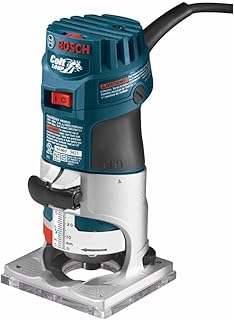
The BOSCH PR20EVS Colt is a refined compact router for flush trimming, hinge recesses, small dados, and edge treatments. Its 1 HP motor, variable speed, soft start, ergonomic grip, and aluminum base create a controlled feel that is especially useful when working on visible furniture edges. It does not replace a full-size plunge router, but it is an excellent everyday tool for a small shop.
AVID POWER 6.5 Amp Compact Router
The AVID POWER compact router offers a useful middle ground, pairing a 1.25 HP motor with six speed settings and practical accessories such as an edge guide, roller guide, and dust hood. It has enough capability for many shelving and cabinet projects while remaining easier to store than a full-size machine. This is a sensible choice for DIY furniture makers who want flexibility without immediately moving to a heavy professional router.
Frequently Asked Questions
Is a compact router powerful enough for furniture making?
Yes, for many furniture tasks. Compact routers are well suited to rounding edges, trimming panels, cutting shallow grooves, and working with templates. Choose a larger fixed- or plunge-base router when you routinely use large bits, cut deep joinery, or work with thick hardwood.
Should I buy a fixed-base or plunge router?
A fixed-base router is usually easier to control for edge profiles and repeated cuts. A plunge router starts above the workpiece and lowers into it, making it better for stopped grooves, mortises, and interior openings. A combination kit is worthwhile if your projects require both techniques.
What router size is best for a small workshop?
A compact palm router is the easiest to store and is often enough for apartment workshops, folding benches, and multipurpose rooms. If you build larger cabinets or tables, a full-size router can be justified, but plan a dedicated shelf or drawer for the tool, bases, cords, and bits.
Do I need a dust hood or dust collection?
Dust collection is strongly recommended, particularly when routing MDF, plywood, or large quantities of hardwood. A dust hood can improve visibility and reduce cleanup, though some compact cuts are easier to perform with a vacuum disconnected. Always wear eye and hearing protection.
Final Thoughts
The BOSCH PR20EVS Colt is the strongest compact pick for everyday furniture details, while the AVID POWER offers useful versatility at a manageable size. For demanding joinery and a broader range of work, the BOSCH 1617EVSPK is the most capable choice—provided you have room to store it properly.