
Key takeaways
- You can build your own sectional sofa by choosing compatible seat, corner, chaise, back and arm modules, planning their exact footprint, then fastening them with the manufacturer’s connectors. This guide is about configuring and assembling a modular sectional, not cutting…
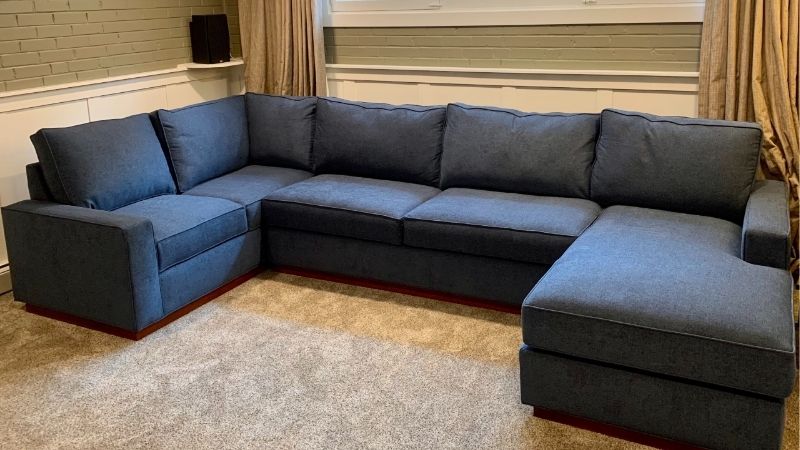
You can build your own sectional sofa by choosing compatible seat, corner, chaise, back and arm modules, planning their exact footprint, then fastening them with the manufacturer’s connectors. This guide is about configuring and assembling a modular sectional, not cutting timber to engineer a new upholstered frame. Start with a room sketch, choose a left- or right-facing layout, and confirm the final module list before checkout.
As an Amazon Associate we earn from qualifying purchases.
By KK Home Furnishings Editorial Team
Plan and Measure Your Sectional Sofa
A sectional that looks right in a configurator can still block an entry or strand one seat without support. Decide where people sit, how they walk through the room and which components are designed to connect. Use the same exact collection for the first configuration; a similar fabric or seat height does not establish cross-brand hardware compatibility.
| Material or Tool | Size or Spec | Cost Tier | Substitute |
|---|---|---|---|
| Tape measure and painter’s tape | Measure wall spans, door swing and seat outlines in inches | Low-cost planning tool | A long ruler plus removable paper strips |
| Room sketch or floor planner | Record doorways, outlets, floor vents and walking routes | No-cost to low-cost | Graph paper with a consistent scale |
| Matching modular seat units | Exact collection and module SKU; verify outside dimensions | Main furniture expense | Smaller matching armless modules |
| Corner or chaise module | Confirm left/right facing and full projection | Optional or layout-dependent add-on | Same-system corner and standard seats |
| Manufacturer connector hardware | Part number and orientation from the assembly manual | Included or replacement part | Manufacturer-approved replacement set only |
| Covers and care instructions | One fabric variant; care tags for every module | Optional replacement cost | Same-system replacement cover |
Measure the Finished Footprint, Not Just the Seats
Measure the longest wall-facing run and the deepest chaise or return, then include the thickness of outer arms and backs. In IKEA’s published JÄTTEBO configurations, a 2.5-seat sofa with chaise is 74 3/4 inches wide by 63 inches deep, whereas a 3.5-seat arrangement with two chaise modules and arms is 112 1/4 inches wide by 63 inches deep. These are whole-sofa dimensions for specified configurations, not universal modular dimensions [IKEA, 2026].
Place painter’s tape on the floor before buying. Check whether a doorway can open fully, an air vent remains clear, and the seating leaves a comfortable route to the exit. Measure stair landings, elevators and the largest individual module as separate delivery questions. A design that fits its final location may still be impossible to bring inside in one piece.
Select the Seats, Corner, Chaise and Arms by Use Case
For conversation, start with an L-shaped arrangement that points seats toward each other. For movie nights, prioritize a deeper lounging side; for frequent rearrangement, prefer freestanding modules that have finished sides. A pit-style layout consumes more central floor area than a simple chaise. Label the side of the room where you want the long return before choosing left- or right-facing parts.
JÄTTEBO provides a useful manufacturer-documented example: IKEA identifies one-seat and 1.5-seat storage modules, separate chaise modules, armrests and matching covers. One published sofa specifies 27 1/8-inch seat depth and 18 1/8-inch seat height, but those measurements belong to that series only [IKEA, 2026]. Do not mix arm and seat parts just because two collections appear similar in photos.
Check Connectors, Covers and Future Repairs
Request the component diagram and count every fastening bracket, back, arm, leg and cover before checkout. A modular seat may be freestanding yet still require dedicated clips for use as a connected sofa. The manufacturer’s diagram, not a generic online photo, determines which brackets are needed. For an unsupported custom frame, obtain a proper structural plan instead of guessing fastener strength.
Upkeep is part of the layout decision. IKEA states that the JÄTTEBO Tonerud cover is removable and machine washable under its specified instructions, and lists a 10-year limited warranty for the series [IKEA, 2026]. That does not mean every fabric option is machine washable or that the warranty covers all wear. Verify the care label and replacement-part availability for the exact color, variant and purchase region.
How to Build a Sectional Sofa Step by Step
Complete the stages below in order. Each stage produces something you can inspect before moving on: a room plan, a compatible module map, a parts list, a safe assembly, connected seating and a final usability check. Steps for a commercially engineered modular system are not instructions for fabricating a load-bearing wooden sofa from scratch.
Step 1: Draw the Room and Mark the Walking Route
Draw the room with the longest seating wall, windows, heater locations, outlets, doors and nearby furniture. Note the clear width of the path people actually use. Mark the intended chaise end and leave a separate space for doors, storage-lid movement and a coffee table. An L shape shown from above should match your standing view of the room, not an ambiguous left-facing label in a listing.
Try a temporary full-size outline on the floor. Sit in the imagined positions and check screen viewing, side-table access and whether one return would trap someone in a corner. If the tape line blocks circulation, shorten the run or move the chaise; buying more modules will not solve the underlying traffic problem.
Step 2: Choose One Compatible Modular Collection
Choose one system whose manufacturer offers the seat, corner, chaise, arms and covers you need. Save the exact collection name and the individual part identifiers. A photo of a ready-made sectional is insufficient: the seller must also disclose which components combine in the proposed order. Check whether the seating has detachable backs and whether exposed sides are finished.
For instance, the IKEA JÄTTEBO planning guide describes freestanding modules that can be rearranged and expanded later; its examples list separate one-seat, 1.5-seat, chaise and arm units [IKEA, 2026]. That is evidence for this particular range, not a promise that other retailers sell interchangeable modules. If expansion matters, ask whether add-on pieces remain available in the same cover color.
Step 3: Create a Component List Before Purchasing
Turn the approved floor shape into an itemized order: every seat module, corner or chaise, outer arm, support element, connector and fabric cover. Compare the part list against the manufacturer’s configuration diagram. Check both sides of each corner because one missing arm or wrong-facing chaise can make the delivered pieces unusable together. Identify which parts are included with each boxed unit.
Use the retailer’s full configuration summary rather than adding rough seat widths yourself; arm and corner dimensions may overlap in an assembled drawing. Capture the SKU-specific outer width, projection, height and cartons. If a component or replacement connector is out of stock, pause the order rather than improvising with a differently shaped part.
Step 4: Assemble the Modules on a Clear Floor
Unpack modules on a clean, level surface, inventory the included hardware and compare it with the current manufacturer instructions. Protect upholstery while installing approved legs or frame components. Keep children and pets away from open storage lids, small fittings and tilted modules. Heavier seating units may require two people to move without damaging joints or flooring.
Follow the exact assembly order supplied with the model. Do not add screws through upholstered rails, enlarge connector holes or mount a backrest in a position the maker does not authorize. Storage seats may use dampers and brackets with specific handling directions. If the connection hardware or instructions are missing, get replacement parts or manufacturer guidance before anyone sits on the unfinished arrangement.
Step 5: Align, Connect and Stabilize the Layout
Place every completed module on its marked outline and connect pieces in the pattern shown by the system guide. Bring adjacent frames flush before engaging clips so the fasteners are not used to pull poorly aligned pieces together. JÄTTEBO materials describe removing and replacing mounting brackets when rearranging modules; use that procedure only for the compatible series named in the guide [IKEA, 2026].
Inspect the result from the front, sides and back. The seats should meet without large steps, the arms should not rock, and no loose connector should be accessible. If the modules shift or separate under ordinary seating, stop using the arrangement and correct the installation according to the maker’s manual. Decorative straps or generic clips are not replacements for missing structural connections.
Step 6: Test Everyday Use and Plan for Changes
Open each storage seat only as its manual permits, walk past the chaise, sit at the corners and verify that doors and exits remain unobstructed. Check that floor protectors sit flat and that a moving footrest or lid cannot strike a side table. If the seating feels cramped, relocate a module or omit a component rather than sacrificing basic circulation for an advertised seat count.
Keep the assembly documents, spare brackets, fabric labels and purchase identifiers together. Photograph the successful configuration before a move so the layout can be reconstructed without guessing. Recheck connectors after relocating modules and follow the specified cleaning method for each cover. A sectional you can alter safely is more useful than a larger one that fits only a single room arrangement.
Frequently Asked Questions
The remaining decisions concern component compatibility, expense and the boundary between home assembly and furniture fabrication. The answers below address issues that are not resolved by the room plan alone.
Can I combine sectional sofa modules from different brands?
Usually you should not assume they fit together. Equal cushion height or matching upholstery color does not establish compatible connectors, load paths, legs or backrest brackets. Different collections from the same retailer can have the same problem. Unless the manufacturer explicitly approves a combination, treat the systems as separate furniture rather than forcing the pieces together.
If you already own modules from multiple lines, ask each manufacturer about approved adapters and whether they maintain the original warranty. A gap between two independent sofas can sometimes work as an intentional room layout, but a homemade connection should not be represented as a tested sectional frame.
Is building a modular sectional cheaper than buying a complete sofa?
Not necessarily. The finished cost depends on the number of seating units, how many arms and corners are billed separately, chosen covers, delivery and any later add-ons. A smaller starter arrangement can reduce what you spend initially, but extra connectors, replacement covers and matching modules may change the long-term comparison.
Request two complete quotations for the same final footprint: one for a ready-made sectional and one for the modular configuration. Compare the delivered contents, warranty conditions, cleaning and return arrangements rather than only the listed seat-module price. The cheapest first purchase is not automatically the cheapest sofa to keep.
Can I build a sectional from plywood and foam instead?
You can make a custom upholstered sofa only with a suitable structural design, upholstery skills, appropriate fasteners and the ability to check the finished load-bearing frame. This guide does not specify safe beam sizes, joinery, maximum loads or foam requirements for a homemade seating structure. Those values cannot be transferred from a commercial modular product.
If your aim is woodworking rather than arranging modules, use a properly engineered furniture plan appropriate to the selected materials. Consider professional advice for frame strength and stability before using the sofa. For most first-time builders, assembling an existing modular system offers a much clearer path to predictable connections and replacement parts.
How do I change the chaise from left to right later?
Only if the purchased system supports that change. Some collections allow independent chaise modules or reversible arrangements; other sectionals are manufactured with a fixed left- or right-facing return. A sofa that can be taken apart for delivery is not automatically reversible. Check the exact component diagram and model numbers before purchasing.
When reconfiguration is permitted, follow the maker’s disassembly order, disengage connectors before lifting and check whether exposed module sides need separate covers or arms. Do not flip a frame or attach a back to an unapproved edge. A configurable plan is useful precisely because you can see these limitations before moving day.
Final Thoughts
To build your own sectional sofa successfully, start with a measured room rather than a shopping cart. Choose modules that share an approved connector system, order the complete hardware and cover set, then follow the maker’s assembly instructions. Leave room for doors, walking paths and future repairs; if you want to fabricate a frame yourself, use a separate engineered woodworking plan.
