Key takeaways
- Find studs first. Standard spacing is 16 inches on center. Rod sockets and shelf cleats in studs hold far more than drywall anchors.
- Check the doorway. Reach-in closet openings are often narrower than the interior. Build towers in pieces or assemble inside the closet.
- Prime and paint before installing. Painting inside a closet is slow; use semi-gloss or a durable enamel so clothes do not stick to fresh paint. Let it cure several days before loading.
- Leave 2–3 inches above the top shelf so you can slide items on and off.
- Light it. A battery motion-sensor LED bar costs little and makes dark corners usable.
The cheapest DIY closet organizer that actually works is a second hanging rod plus one or two plywood or pine shelves, which typically costs $40–$90 and can nearly double usable hanging space in a standard reach-in closet. Beyond that, the best budget ideas are the ones built around real clothing lengths and shelf spans, so this guide gives you measurements first and nine builds sorted by cost.
Measure Before You Buy Anything
Most failed closet projects come from rods set at the wrong height or shelves that sag. These are the standard numbers carpenters work from:
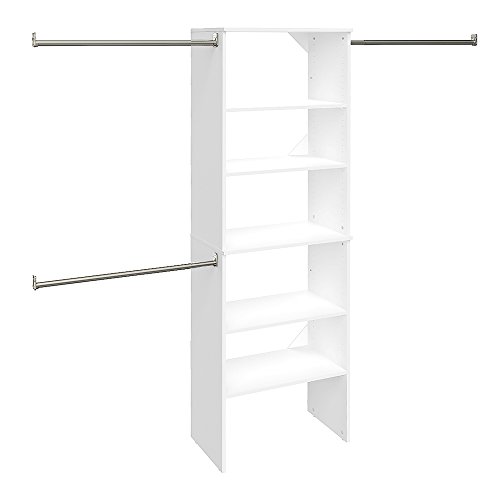
ClosetMaid SuiteSymphony Wood Closet Organizer System, 25-Inch Starter Kit with Tower and 3 Hang Rods and Shelving, Adjustable Shelves, Customizable Insert, Reach-in or Walk-in Closets, Pure White
Included for 'Cheap DIY Closet Organizer Ideas: 9 Builds From $20 to $150 With Real Measurements' because the listing specifies 25-Inch Starter Kit with Tower and 3 Hang Rods and Shelving and Adjustable Shelves, details this guide uses to compare options.
View on Amazon
ClosetMaid ShelfTrack Wire Closet Organizer System, Adjustable from 4 to 6 Ft., With Shelves, Clothes Rods, Hardware, Durable Steel, White
Included for 'Cheap DIY Closet Organizer Ideas: 9 Builds From $20 to $150 With Real Measurements' because the listing specifies Adjustable from 4 to 6 Ft. and With Shelves, details this guide uses to compare options.
View on Amazon
ClosetMaid Wire Closet Organizer System, Adjustable from 5 to 8 Ft., with Shelves, Hardware, Durable Steel, Fixed Mount Installation, White
Included for 'Cheap DIY Closet Organizer Ideas: 9 Builds From $20 to $150 With Real Measurements' because the listing specifies Adjustable from 5 to 8 Ft. and with Shelves, details this guide uses to compare options.
View on Amazon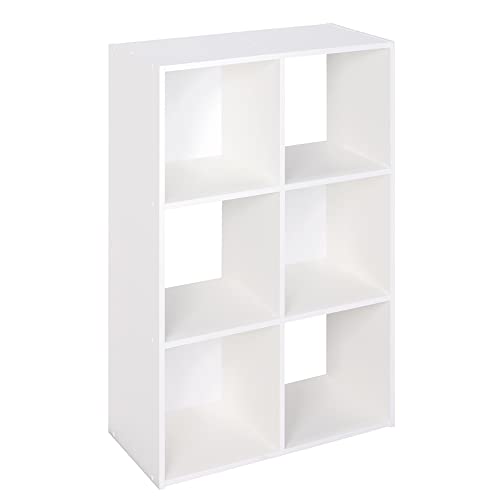
ClosetMaid Cubeicals 6 Cube Storage Shelf Organizer Bookshelf, Stackable, Vertical or Horizontal, Easy Assembly, Wood, White Finish
Included for 'Cheap DIY Closet Organizer Ideas: 9 Builds From $20 to $150 With Real Measurements' because the listing specifies Stackable and Vertical or Horizontal, details this guide uses to compare options.
View on Amazon| Element | Standard measurement | Notes |
|---|---|---|
| Single rod height | 66–72 in from floor | Leaves room for long dresses and coats |
| Double-hang rods | Upper about 80–84 in, lower about 40–42 in | Fits shirts, folded pants and skirts |
| Rod distance from back wall | 12 in minimum | Hangers are about 17–19 in wide |
| Closet depth for hanging | 24 in ideal, 22 in workable | Shallower closets need forward-facing hooks or slim hangers |
| Hanging space per garment | About 1 in (shirts), 2–3 in (coats) | A 5 ft rod holds roughly 50–60 shirts |
| Shelf above rod | 2–3 in above the rod, 12 in deep | Standard placement for a single rod |
| Shelf spacing for folded items | 10–12 in apart | Sweater stacks above 10 in tip over |
Clothing lengths decide where rods go. Shirts and jackets hang about 38–40 inches long, folded pants about 30–32 inches, skirts 25–35 inches, and long dresses or coats 50–66 inches. A double-hang zone needs at least 80 inches of wall height; any long-hang section needs one rod at 66 inches or higher.
Material Choices and Shelf Sag
The material you pick sets how far a shelf can span between supports before it bows under folded clothes.
| Shelf material | Max unsupported span (loaded with clothes) | Typical cost | Pros / cons |
|---|---|---|---|
| 3/4 in plywood | About 32–36 in | $50–$80 per 4×8 sheet | Stiff, holds screws; edges need banding or paint |
| 1×12 pine board | About 28–32 in | $15–$30 per 8 ft board | No cutting from sheets; may cup if humid |
| 3/4 in MDF | About 24 in | $35–$55 per sheet | Smooth for paint; heavy, sags over time, hates moisture |
| Melamine shelf board | About 24–30 in | $10–$25 per board | Pre-finished; chips at cut ends |
| Wire shelving | Per bracket spacing, usually 24–36 in | $15–$40 per section | Cheapest per foot; small items fall through, leaves marks on knits |
Add a center bracket or a vertical divider at any span longer than these figures. A wooden closet rod over 48 inches also needs a center support to stop it from bowing.
Nine Cheap DIY Closet Organizer Ideas
Under $25
- Hanging double rod. A rod that hangs from the existing rod on chains or straps creates a lower tier for shirts in minutes. No drilling, renter-friendly, and usually $10–$25. It works best for lightweight shirts; a full load of jeans can drag it down.
- Tension-rod shelf tier. In narrow closets under 48 inches wide, two heavy-duty tension rods set a few inches apart can hold a 1×10 board for handbags or hats. Keep loads under about 15 pounds.
- Over-door pocket organizer. Clear-pocket shoe organizers hang on the door and hold shoes, scarves, belts or cleaning supplies, adding storage without touching the walls.
$25–$75
- Second fixed rod. Mount a metal or wood rod at 40–42 inches on rod sockets screwed into studs. Combined with the existing upper rod, this is the classic double-hang setup.
- Wooden crate shelving. Unfinished wood crates stacked on their sides on the closet floor make sturdy shoe and sweater cubbies. Screw stacked crates together and anchor the top one to the wall if the stack exceeds 36 inches.
- Stud-mounted shelf above the rod. A 1×12 pine board on 2×2 or 1×3 cleats screwed into studs along the back and side walls is cheap and stronger than most shelf brackets.
$75–$150
- Plywood tower with cubbies. A 12-inch-deep, 24-inch-wide tower cut from one sheet of 3/4 plywood splits a reach-in closet into a double-hang side and a long-hang side, with 10–12 inch shelves for folded items.
- Repurposed bookcase. A basic 12-inch-deep bookcase turned into a closet tower costs little if you already own one or find one secondhand. Check that it fits between the door jambs before you carry it in.
- Wire shelving kit with add-on baskets. Standard wire systems on a top hanging rail can be reconfigured later, which suits renters who patch fewer holes and owners who expect needs to change.
Pick the Right Idea for Your Closet
| Your closet | Best cheap fix | Expected gain |
|---|---|---|
| Standard 5–6 ft reach-in, mostly shirts | Double-hang across two-thirds, long-hang on one-third | About 60–80% more hanging length |
| Renter, no drilling allowed | Hanging double rod plus over-door organizer | Lower rod tier and shoe storage |
| Shallow closet under 22 in deep | Shelves and bins instead of extra rods | Folded storage where hangers will not fit |
| Kids’ closet | Rod at 36–48 in, crate cubbies on the floor | Child can reach and put away clothes |
| Lots of shoes | Crate cubbies or angled shelves at the floor | 15–25 pairs in a 24 in wide zone |
Build Tips That Prevent Do-Overs
- Find studs first. Standard spacing is 16 inches on center. Rod sockets and shelf cleats in studs hold far more than drywall anchors.
- Check the doorway. Reach-in closet openings are often narrower than the interior. Build towers in pieces or assemble inside the closet.
- Prime and paint before installing. Painting inside a closet is slow; use semi-gloss or a durable enamel so clothes do not stick to fresh paint. Let it cure several days before loading.
- Leave 2–3 inches above the top shelf so you can slide items on and off.
- Light it. A battery motion-sensor LED bar costs little and makes dark corners usable.
A Sample $90 Budget Plan
For a 6-foot reach-in closet: one 8-foot 1×12 pine board for a top shelf and two cleats (about $25), a second metal rod with sockets ($15–$25), a set of wooden crates for shoes on one side ($25–$35), and a pack of slim hangers to gain inches on the rod ($10–$20). Result: a full-width shelf, a double-hang zone across about two-thirds of the width, a long-hang zone for dresses or coats, and floor storage for shoes, for roughly $75–$105 and an afternoon of work.