
Key takeaways
- Painted panels fit traditional trim without requiring a feature wall.
- Closed compartments disguise remotes and everyday living-room clutter.
- Neutral finish works with floral, striped, and plain upholstery.
Warm paint, useful storage, and furniture that looks collected over time can make a television feel at home in a cottage-inspired room. The strongest cottage tv stand ideas start with a low media cabinet rated for the TV, then add beadboard, natural wood, woven fronts, or a carefully fitted alcove design without losing everyday function.
As an Amazon Associate we earn from qualifying purchases.
By KK Home Furnishings Editorial Team
Small Cottage TV Stand Ideas With Soft Textures
For a cottage feeling, begin with how a cabinet meets the room: painted beadboard suits traditional trim, pine introduces age-friendly texture, and cane creates a lighter silhouette. These are furniture treatments rather than interchangeable style labels. First choose a TV-rated base that fits the space, then select the finish that complements it.
| Idea | Space or Size Needed | Cost Tier | Effort and Time | |
|---|---|---|---|---|
| Cream beadboard cabinet | Painted panels and inset doors | Traditional small room | Moderate | Freestanding; verify TV rating |
| Natural pine console | Visible grain and turned-leg detail | Warm English cottage | Moderate | Freestanding; finish care |
| Cane-door media stand | Woven fronts and simple frame | Airy cottage lounge | Moderate | Check electronics airflow |
| Dusty-blue Shaker cabinet | Muted paint and plain doors | Coastal cottage room | Moderate | Test finish in room light |
| Scalloped open-shelf console | Curved trim and basket storage | Casual family den | Low to moderate | Plan shelf and basket fit |
| Fitted TV alcove | Painted cabinetry and shallow recess | Older room with odd walls | Premium | Professional site measurement |
A Cream Beadboard TV Cabinet for a Traditional Cottage
Best For: A small sitting room that needs concealed storage and has painted trim, floral fabric, or antique accents.
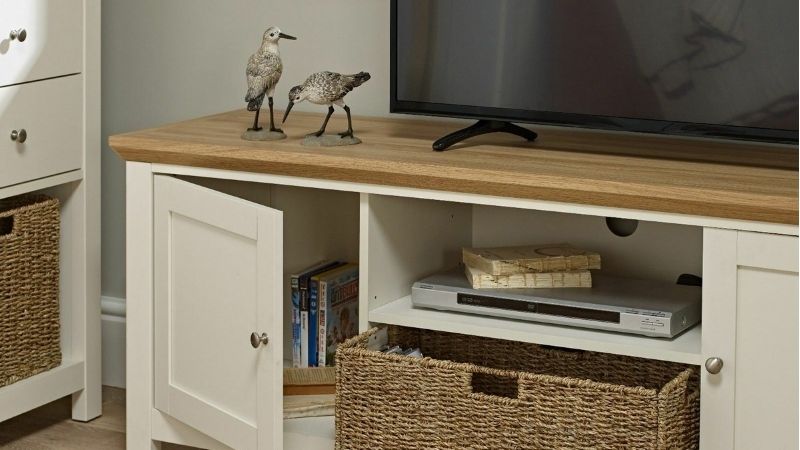
A cream-painted cabinet with beadboard door panels brings quiet cottage detail to a TV wall without turning the whole wall into a display. Choose a purpose-made media unit with simple inset doors and a relatively low profile, rather than resting a television on an unrelated vintage dresser. It is a friendly choice for rooms where soft furnishings already supply the color and pattern.
Check the actual finish sample against your trim: warm ivory and cool white can look mismatched under evening lamps. Inside, favor one generous shelf for remotes and games, plus a separate accessible area for any receiver. Solid doors can conceal clutter, but electronics need the airflow their manufacturers require. Plan cable exits before placing the cabinet against a plaster or paneled wall.
An old brass-style knob, a small lamp at one end, and framed botanical art nearby can soften the screen visually. Keep tall objects away from the image and avoid decorating on top of ventilation openings. If the room is heavily patterned, this pale cabinet provides a calmer base; if the walls are bright white, consider a richer putty finish for contrast.
Pros:
- Painted panels fit traditional trim without requiring a feature wall.
- Closed compartments disguise remotes and everyday living-room clutter.
- Neutral finish works with floral, striped, and plain upholstery.
Cons:
- Painted surfaces may reveal scuffs around frequently used doors.
- Solid doors can restrict remote signals and enclosed device ventilation.
Who Should Skip It: Skip this option if you need permanently exposed game consoles or prefer a distinctly contemporary room.
A Natural Pine Console With Subtle Turned Legs
Best For: An English-cottage-inspired lounge with timber beams, stone details, or a warm neutral palette.
A low pine media console feels less formal than a glossy entertainment center. Look for a TV-rated design with warm grain, understated feet, and modest hardware, letting the wood supply texture instead of piling on carved ornament. A gently aged finish can complement cottage details, but the goal is a comfortable collected look, not artificial wear on every surface.
Pine ranges from pale honey to orange, and its appearance changes with surrounding paint and sunlight. Request a finish sample if the cabinet must coordinate with oak flooring or an existing table. Real wood can dent more easily than some harder materials, so assess the household and finish before buying. Also check top load rating, TV-foot spacing, and how the center shelf handles cables.
Balance the timber with a slipcovered chair, a small striped cushion, or off-white ceramics rather than matching every wood item perfectly. Leaving breathing room around the cabinet prevents a low-ceilinged cottage room from feeling packed. This choice is particularly effective beside pale painted walls; in a heavily wood-lined space, a light rug may provide needed separation.
Pros:
- Visible grain adds character without demanding additional wall decor.
- Warm timber works well with linen, ceramics, and muted upholstery.
- A low profile can feel appropriate beneath older windows.
Cons:
- Softwood surfaces may mark under hard or sharp accessories.
- Orange-leaning stain can clash with cooler floor finishes.
Who Should Skip It: Avoid this finish if you want a near-white palette or have no appetite for caring for visible timber.
A Cane-Door Media Stand for a Light Cottage Look
Best For: A bright cottage room where bulky solid-door storage would feel too heavy or visually closed off.
Cane or woven-look doors soften the face of a rectangular TV cabinet and introduce a handmade texture. Select a media cabinet engineered for a television rather than a decorative wicker cupboard. Natural-colored panels look especially welcoming with cream walls and modest wood accents, while darker framing can give the same design a more tailored, contemporary-cottage effect.
Cane fronts are not automatically a substitute for ventilation openings. Check the media unit instructions and the requirements of each powered device before placing equipment behind the doors. Test whether infrared remotes work through the chosen weave or whether a repeater is needed. Families should also consider how the panel will tolerate frequent touching, pets, and routine cleaning.
Keep surrounding accessories restrained: a pottery bowl or one trailing plant nearby is often enough. A textured cabinet already contributes pattern and does not need a busy gallery wall to feel complete. In a room with patterned wallpaper, choose a frame tone that relates to the floor; in a plainer room, pale cane provides gentle contrast without making the TV wall appear stark.
Pros:
- Woven texture softens the appearance of electronic equipment.
- Pairs naturally with linen, pale wood, and simple ceramics.
- Visually lighter than large uninterrupted painted cabinet fronts.
Cons:
- Woven panels may collect dust and require gentle cleaning.
- Equipment cooling and remote compatibility must be checked separately.
Who Should Skip It: Choose solid doors instead if you need child-resistant surfaces or dislike maintaining woven fronts.
More Colorful and Custom Cottage Media Cabinet Ideas
When the room calls for more personality, color, decorative edges, and fitted storage can each solve a different design problem. Soft blue adds a gentle accent, scalloped shelves make small objects easy to reach, and made-to-measure cabinetry deals with awkward recesses. None should compromise TV support or device ventilation.
A Dusty-Blue Shaker TV Cabinet for a Coastal Cottage
Best For: A seaside-inspired or airy family room with light oak, white walls, and a preference for subtle color.
A muted blue media cabinet borrows the plain-door geometry of Shaker furniture while giving a cottage room a recognizable color story. Choose a matte or low-sheen finish and small, simple hardware rather than a heavily distressed painted surface. The TV should remain the only dark rectangular focal point, while the cabinet reads as furniture that belongs with the rest of the room.
Look at swatches both in daylight and under the lamps used for television viewing. Gray-blue can turn steel-cool at night, while blue-green may sit better with creamy trim. If shopping online, scrutinize finish photographs across several lighting conditions. Check that the door swing clears a nearby chair and that the top and center compartments meet the television and device instructions.
Introduce a few coastal notes through a natural-fiber rug, a framed landscape, or woven coasters, not a row of nautical ornaments. If the room gets strong direct sun, position the TV to reduce reflections before deciding where the cabinet belongs. The result should feel like a relaxed cottage sitting room, with enough closed storage to keep daily entertainment items out of sight.
Pros:
- Subtle paint color creates interest without a dramatic feature wall.
- Shaker-style fronts are easy to pair with understated trim.
- Closed doors keep extra cables and media accessories less visible.
Cons:
- Blue-gray samples can shift noticeably with room lighting.
- Colored finishes may be harder to match with future furniture.
Who Should Skip It: Pass on painted blue if your room already has strong competing wall color or elaborate patterned cabinetry.
A Scalloped Open-Shelf Console With Storage Baskets
Best For: A casual cottage den where books, throws, and low-profile TV accessories need easy everyday access.
A media stand with a shallow scalloped apron or softly curved shelf edge gives a practical cabinet a playful cottage identity. Keep the silhouette low, the base stable, and the main open bay large enough for the devices you actually own. A purpose-built TV stand can carry the decorative detail; a delicate entryway table with a pretty edge is not a safe replacement.
Use matching small baskets for objects that do not need ventilation, such as spare cables, blankets, and game controllers. Leave a separate open area for any electronic component that requires airflow and a clear signal path. Measure basket handles and shelf openings together; an attractive basket that sticks out from the cabinet can interfere with walking clearance.
Pair this design with gingham cushions or a muted floral rug, but allow the cabinet itself to stay relatively plain. Dust is more visible on exposed shelves, so expect light maintenance. The advantage is flexibility: move baskets, swap books, and change the look seasonally without replacing a large piece of furniture. That makes it especially useful for multipurpose rooms.
Pros:
- Curved trim gives character without using ornate hardware.
- Baskets can adapt as household storage needs change.
- Open access makes frequently used accessories easy to retrieve.
Cons:
- Exposed shelves need more frequent tidying and dusting.
- Decorative baskets must not obstruct device airflow or controls.
Who Should Skip It: Skip the open shelves if hiding every visible object is more important than flexible storage.
A Fitted Cottage TV Alcove With Shallow Painted Cabinets
Best For: An older cottage room with uneven walls or an unused recess and a willingness to commission careful joinery.
A shallow TV cabinet fitted into an existing alcove can make awkward cottage architecture feel intentional. A low painted base with narrow side shelves can frame the screen while keeping the room’s original beams, plaster, or fireplace as the main character. This is cabinetry design, not a suggestion to fasten a television to old paneling or unsupported shelving.
Before ordering joinery, verify the wall structure, television support method, cable route, and the access needed to service equipment. Leave the ventilation space specified by each device maker and avoid enclosing heat-producing components behind fixed panels. Because old walls can be out of square, the installer should confirm measurements on site rather than ordering from a rough room sketch.
Choose the cabinet paint to echo the window trim, then add a small amount of oak or brass to keep the built-in from looking flat. Narrow bookshelves and a single woven basket are enough to make the alcove inviting. This approach costs more effort than a freestanding console, but it protects valuable floor space when the television must live in a room with limited straight walls.
Pros:
- Uses an awkward recess without filling the room with loose furniture.
- Painted joinery can relate directly to historic trim details.
- Built-in side storage can keep books and media together.
Cons:
- Requires site measurements and suitable structural fixing methods.
- Permanent cabinetry is harder to adapt if screen sizes change.
Who Should Skip It: Avoid a fitted alcove in a rental or when the existing walls cannot safely support the planned installation.
Frequently Asked Questions
A cottage cabinet still has to handle modern equipment and everyday use. Before choosing a finish or commissioning cabinetry, check whether the unit was designed to support the actual television, how doors open, and how devices are cooled. These questions address the practical decisions that styling photos often leave unanswered.
How wide should a cottage TV stand be?
Choose a cabinet whose top safely supports your particular TV, including the placement of its feet, and that meets the maker’s published weight limit. The cabinet often looks more balanced when it extends beyond the screen, but there is no universal decorative width that makes every television safe.
Measure the TV feet and actual overall width, then check the stand specification rather than relying only on the diagonal screen size. Allow room for furniture anchors, cord access, and nearby doors. A compact cabinet that only fits the screen visually may still fail the manufacturer’s support instructions.
Can an antique cottage dresser be used as a TV stand?
An antique dresser should not automatically be treated as a television support. The U.S. Consumer Product Safety Commission advises placing televisions on furniture designed to hold them. A handsome vintage chest may have uncertain capacity, moving drawers, or a high center of gravity.
To capture the antique look, look for a purpose-built media cabinet with turned legs, classic pulls, or painted panels. If you own an heirloom dresser, keep it for appropriate storage rather than assuming a TV is safe on top. Anchor the TV and furniture according to their instructions.
How do you hide game consoles in a cottage cabinet?
Use a media cabinet with cable exits and compartments sized for your devices, while preserving the ventilation required in their individual manuals. Solid doors are good for hiding controllers and discs, but shutting a heat-producing console in an unventilated cupboard can cause problems.
Open-bay shelves, approved ventilated door arrangements, or an accessible adjacent component shelf may work better than a sealed antique-look cupboard. Also check the remote and wireless controller signal paths. Keep loose baskets for nonpowered accessories rather than packing them around a running console.
Which cottage TV cabinet ideas work for renters?
A freestanding, purpose-built media console in cream, pine, blue, or woven-front style is usually easier to move than fitted alcove cabinetry. Select a size that can pass through stairs and doorways, and avoid permanent built-in work if your lease does not permit it.
Renting does not remove tip-over hazards, so plan suitable anchoring and obtain any required landlord permission rather than leaving a tall or unstable setup unsecured. Portable accessories such as baskets, removable nonstructural decor, and table lamps can provide cottage character without altering the room.
Final Thoughts
The best cottage tv stand ideas combine a relaxed finish with reliable TV support and enough practical storage. Choose beadboard for concealed clutter, pine or cane for natural texture, blue Shaker doors for gentle color, scalloped shelves for flexible baskets, or a fitted alcove for tricky walls. Match the cabinet to the room, then confirm load limits, anchoring, and airflow before buying.
