
Key takeaways
- Routine maintenance for fireplace tv stand units is mainly about keeping two components in good condition: the furniture cabinet and its electric fireplace insert. Turn the unit off, unplug it and allow it to cool; then dust the cabinet, gently…
Routine maintenance for fireplace tv stand units is mainly about keeping two components in good condition: the furniture cabinet and its electric fireplace insert. Turn the unit off, unplug it and allow it to cool; then dust the cabinet, gently clean accessible glass and vents, and check the cord, TV support and anchoring. Do not open the electrical housing for routine cleaning. Your exact cabinet and firebox manuals govern what you can safely remove or service.
As an Amazon Associate we earn from qualifying purchases.
By KK Home Furnishings Editorial Team
How to Clean and Maintain a Fireplace TV Stand
A fireplace TV stand is not a wood-burning fireplace and does not need ash removal, a chimney sweep or fuel-system maintenance. It is also more than an ordinary TV cabinet: an electrical heater and air passages are built into the furniture. A sensible routine separates ordinary surface cleaning from electrical inspection and manufacturer-authorized service [Dimplex, FAQ and Documentation; Real Flame, Indoor Electric Fireplaces, accessed October 2026].
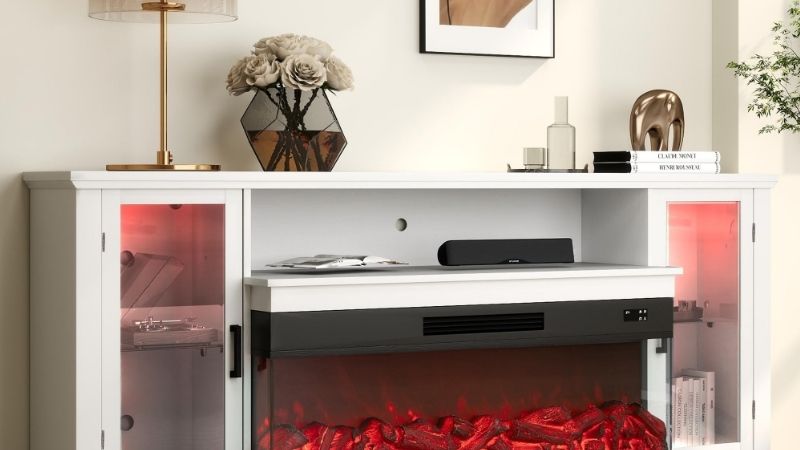
| Part to Check | Owner-Safe Routine | What to Avoid | When to Recheck |
|---|---|---|---|
| Cabinet top, shelves and doors | Remove loose dust with a soft cloth; use only finish-compatible cleaning methods | Abrasives, soaking panel joints, moving furniture by dragging it | When dust or spills appear |
| Accessible front glass | Wipe gently when fully cool; follow the firebox manual for cleaner and cloth | Scrubbing pads and spraying liquid into seams or controls | When fingerprints obscure the flame view |
| Air intake and heater outlet | Clear surface dust from accessible grilles, using a soft brush or vacuum if permitted | Taking apart electrical parts or obstructing airflow | Before a heating season and whenever dust builds up |
| Cord, plug and wall outlet | Look for visible wear, discoloration, looseness or unusual heat | Using a damaged connection or adding a power strip | Before use after moving and if an electrical symptom appears |
| Cabinet hardware and TV position | Check stability, manufacturer-approved fasteners and any anti-tip restraint | Overloading the top or leaving a TV unsecured | After moving, reassembly or a stability change |
| Remote and controls | Check battery condition and test normal functions after safe reassembly | Opening a sealed control board or substituting incompatible components | When buttons respond inconsistently |
The table is a practical inspection checklist, not a universal schedule set by every brand. Dimplex advises checking fan intake and exhaust grilles for dirt; Real Flame identifies blocked front or rear vents as a possible cause of a specific firebox error; and Ameriwood’s furniture instructions caution against harsh cleaners and dragging the cabinet [Dimplex, PF3033HG Owner’s Manual, 2020; Real Flame, Troubleshooting; Ameriwood Home, model 1822908COM instructions].
1. Shut Down the Heater and Identify Your Manuals
First turn off the flames and heat, disconnect the plug from the wall outlet and allow the housing to cool completely. The cabinet and firebox may be made by different manufacturers, so save the model numbers for both. Look for a firebox rating label or cabinet instruction booklet without pulling the heavy stand away from the wall or disturbing wiring. Do not rely on another brand’s cleaning sequence.
Dimplex’s PF3033HG owner’s manual explicitly requires disconnecting power before cleaning and says other service should be done by an authorized representative [Dimplex, PF3033HG Owner’s Manual, 2020, Maintenance]. That is a model-specific example of why unplugging and keeping service boundaries clear are essential. If the insert is hardwired rather than plug-in, follow its isolation instructions or use a qualified professional.
2. Dust the Furniture and Protect Its Finish
Start with a clean microfiber or similarly soft cloth on the top, sides, shelves and door fronts. Lift removable electronics carefully rather than pulling their cords. For light marks, use only the small amount of moisture and cleaner permitted by the furniture maker, then dry edges and seams promptly. Particleboard and MDF edges can be vulnerable to swelling after prolonged wetting even when the visible surface has a protective laminate.
Ameriwood Home tells owners not to use harsh chemicals or abrasive cleaners and not to push, pull or drag its assembled TV stand; Dimplex’s TV-stand guidance favors a clean, damp cloth over furniture polish [Ameriwood Home, model 1822908COM assembly booklet; Dimplex, Electric Fireplace Technical Support, TV Stands]. Cleaning should preserve the factory finish, not strip it. Deep scratches, swollen panels or separating joints call for a condition assessment, not stronger chemicals.
3. Clean Accessible Glass and Keep Vents Clear
For glass panels, remove ordinary dust with a clean, dry, lint-free cloth; wipe marks gently with a manufacturer-approved method and dry the surface. Dimplex’s PF3033HG manual permits a damp cloth for fingerprints but warns against abrasive cleaners and spraying liquids onto glass. Do not remove decorative glass, crystals or logs unless your specific manual describes that task and the correct reassembly procedure [Dimplex, PF3033HG Owner’s Manual, 2020].
Dust near accessible heater openings should be removed without dismantling the appliance. A soft brush or a vacuum around exterior intake and outlet grilles may be appropriate where your manual allows it. Keep a vacuum nozzle from striking fragile fins, wiring or controls. Real Flame specifically recommends clearing accessible front and rear vents during troubleshooting for an 88 display error, but its reset and service instructions apply to its own fireboxes, not every fireplace stand [Real Flame, Troubleshooting Your Real Flame Fireplace, accessed October 2026].
Six Fireplace TV Stand Maintenance Situations
How often you clean depends on room dust, heater use, household traffic and the finish. Instead of adopting an unsupported rule to clean every component weekly, use the following six situations to choose the right task and recognize when to stop. These are maintenance decisions, not instructions to troubleshoot or repair internal electronics.
When the Cabinet Collects Everyday Dust
In a typical living room, shelves attract dust from fabrics, pets and open windows long before the fireplace needs service. Dust the accessible surface and media equipment, then examine door gaps and cable openings. If electronics are stacked tightly, adjust their placement to preserve ventilation described in their own manuals. Surface dusting does not require removing the insert, and rearranging shelves should not compromise its factory mounting.
Use this inspection to check furniture condition: look for swelling near drink spills, a loose hinge, damaged shelf support or a backing panel that has pulled away. When the unit has assembled cam locks or other fasteners, follow the furniture maker’s directions before making adjustments. A finish blemish is cosmetic; a structural issue beneath a television deserves a different and more cautious response.
When You Run the Heater Frequently in Winter
A heater used regularly can pull household dust toward its air intake. Before sustained seasonal use, inspect the accessible grilles for lint or a dust blanket. Dimplex recommends checking the fan intake and exhaust grilles and removing dirt by vacuuming on the PF3033HG model [Dimplex, PF3033HG Owner’s Manual, 2020, Servicing]. That does not authorize opening a different insert or vacuuming around live electrical components.
After the cleaned and fully dried unit has been safely reconnected, pay attention to whether air moves normally and whether the fan sounds significantly different from its usual operation. A new grinding noise, repeated shutdown or reduced heating that persists after external dust removal warrants service advice. Do not oil the fan or bypass a thermal cutoff to get more heat; a sealed electric appliance is not a user-maintained motor assembly.
When Fingerprints or Smudges Cover the Flame Window
A cloudy flame window can make an otherwise working unit look neglected. Clean only after the insert is off and cool, using a soft cloth that has not collected abrasive grit. Start dry. If marks remain, check whether your model permits a slightly damp cloth or a particular non-abrasive cleaner. Apply permitted liquid to the cloth, not into openings, buttons or seams.
Distinguish surface marks from haze that appears behind sealed glass. The former is a housekeeping task; the latter may require a model-specific glass-removal procedure or qualified service. For Dimplex’s PF3033HG example, the manual describes cleaning accessible front glass but directs other servicing to an authorized representative [Dimplex, PF3033HG Owner’s Manual, 2020]. Resist forcing trim panels loose to chase a small fingerprint.
When Children or Pets Use the Living Room
Maintenance includes confirming that the furniture is still stable after daily bumps, cable pulls or climbing attempts. Check the manufacturer’s supplied anti-tip system and whether the TV is separately restrained as required. The US Consumer Product Safety Commission advises anchoring televisions and heavy furniture, placing televisions on furniture designed to hold them, and keeping tempting objects off elevated shelves [CPSC, Anchor It! safety guidance, accessed October 2026].
Keep the heater opening free of toys, throws and loose cables. Assess heat-clearance requirements using the insert’s actual manual. CPSC’s general guidance for portable space heaters is to keep combustibles at least three feet away, but that broad precaution should not be substituted for a built-in fireplace insert’s required model-specific clearances [CPSC, 2026, Winter Heater Safety]. Physical anchoring and unobstructed heated airflow address different risks and both need attention.
When You Move the Stand or Reassemble It
Moving an assembled cabinet may loosen connectors or change how it sits on the floor. Disconnect it from power, protect the glass and follow the maker’s moving instructions. Do not lift by a shelf, door or decorative mantel edge, and do not drag the cabinet across flooring. Once it is positioned, check that its feet make stable contact, the back panel is secured as specified and the TV remains within published size and weight limits.
Inspect the power cord’s full accessible route before plugging it in. Avoid pinching it between the cabinet and wall or routing it across the heater opening. Reinstall anchoring or TV restraints according to the original instructions; do not assume a stand is stable simply because it previously held the same television. If you discover a cracked support panel or missing structural hardware, stop using it as a TV support until resolved.
When the Fireplace Has Been Idle for Months
Before the first cool evening, look for accumulated dust in accessible vents, inspect the cord and verify that the fireplace is free of moisture or signs of pest intrusion. Cleaning the furniture first avoids blowing surface dust directly toward the heater. Confirm that any removable glass and decorative pieces are seated exactly as your manual requires, and that shelves and electronics do not block airflow.
After these checks, operate the unit using its normal controls only if it appears undamaged. Stop immediately if you notice burning-plastic odor, sparks, a damaged plug, abnormal noise or a hot wall outlet; disconnect safely if possible and seek qualified help. A brief odor described by a particular manufacturer on first use should not be used to dismiss persistent or new signs of overheating. Do not attempt to reset a repeatedly tripping safety device as a maintenance workaround.
Frequently Asked Questions
These additional questions clarify which tasks belong to the owner and which depend on the firebox manufacturer. Product labels, the original owner’s manual and the current condition of the unit should prevail over a generic maintenance guide.
Does a Fireplace TV Stand Need a Yearly Professional Service?
There is no universal annual chimney-style service schedule for ordinary plug-in electric fireplace TV stands. Dimplex describes routine care as dusting glass and vents, without wood-burning chimney or fuel-system cleaning [Dimplex, FAQ and Documentation, accessed October 2026]. A hardwired installation, damaged cord, repeated electrical fault or internal fan problem is a different case and may require an authorized service technician or licensed electrician.
Consult the warranty and service section for your exact model before arranging work. Some units treat the cabinet and firebox as separate components with different support routes. A professional check can be worthwhile for a concerning symptom, but it is inaccurate to promise that every electric insert needs an annual internal teardown or motor lubrication.
Can I Blow Compressed Air Into the Heater?
Do not assume compressed air is an approved cleaning method for every insert. Real Flame suggests a vacuum or compressed air to clear accessible vents while addressing its specific 88 error, whereas Dimplex’s PF3033HG manual describes vacuuming dirt from grilles [Real Flame, Troubleshooting; Dimplex, PF3033HG Owner’s Manual, 2020]. Different designs mean that advice cannot be transferred automatically.
If your manual allows a method, use it only where described with the appliance disconnected and cool. Avoid forcing dust deeper into an enclosure, loosening decorative material or spraying any product into the electronics. If the instruction requires opening sealed housing panels, leave that work to authorized service unless the manual expressly designates it as an owner task.
What if the Power Plug or Wall Outlet Feels Hot?
A plug or outlet that becomes unusually hot, discolored, loose or emits a burning smell is not a cleaning problem. Turn the appliance off and stop using the connection; if the plug or outlet is too hot to touch or there are signs of arcing, avoid handling it and obtain qualified electrical assistance. Never try to cool a live outlet with water or hide a damaged cord behind the cabinet.
The CPSC advises plugging electric portable heaters directly into wall outlets rather than extension cords or power strips [CPSC, 2026, Winter Heater Safety]. Real Flame also requires direct wall connection in its firebox troubleshooting instructions [Real Flame, Troubleshooting, accessed October 2026]. For a fireplace TV stand, follow the firebox’s own connection instructions and do not substitute a larger power strip for a defective outlet.
Should I Replace Filters, Bulbs or Remote Batteries?
Do not buy a generic filter kit or bulb replacement simply because the unit uses a fan and a flame effect. Many conventional LED electric fireboxes have no user-serviceable air filter, while some special flame technologies use different removable parts. Dimplex’s maintenance guidance says most units have no filter and directs owners to the specific manual if one exists [Dimplex, FAQ and Documentation, accessed October 2026].
Remote-control batteries are a routine owner-replaceable item when the remote has a battery compartment and documented cell type. Match the polarity and battery specification printed on that remote. For a failed LED flame effect or internal fan, identify the exact insert model and request supported parts or service; a flickering display is not proof that a standard household bulb should be replaced.
Final Thoughts
Effective maintenance for a fireplace TV stand is simple but specific: care for the furniture finish, keep accessible glass clear, remove dust from approved air openings, and regularly assess the cord, support structure and anti-tip protection. A short inspection after heavy use, moving or long storage is more useful than an invented universal service calendar. For anything involving internal wiring, a persistent fault or damaged load-bearing furniture, stop and refer to the correct manufacturer or a qualified professional.
