
Key takeaways
- A narrow bedside table is defined by its width, the measurement that lets it slip into a tight gap beside the bed, but a narrow table can still be surprisingly deep. This roundup compares four verified picks by width first,…
A narrow bedside table is defined by its width, the measurement that lets it slip into a tight gap beside the bed, but a narrow table can still be surprisingly deep. This roundup compares four verified picks by width first, then by the floor they actually occupy, so a slim-looking nightstand does not take more room than you expect.
As an Amazon Associate we earn from qualifying purchases.
By KK Home Furnishings Editorial Team
How to Choose a Narrow Bedside Table
Narrow and small are not the same thing, which is the key to shopping this category. A table 14 inches wide can be 24 inches deep, taking more floor than a wider but shallower rival, so start with the width that has to fit the gap, then check the depth and footprint, the storage inside and the height against your bed and mattress.
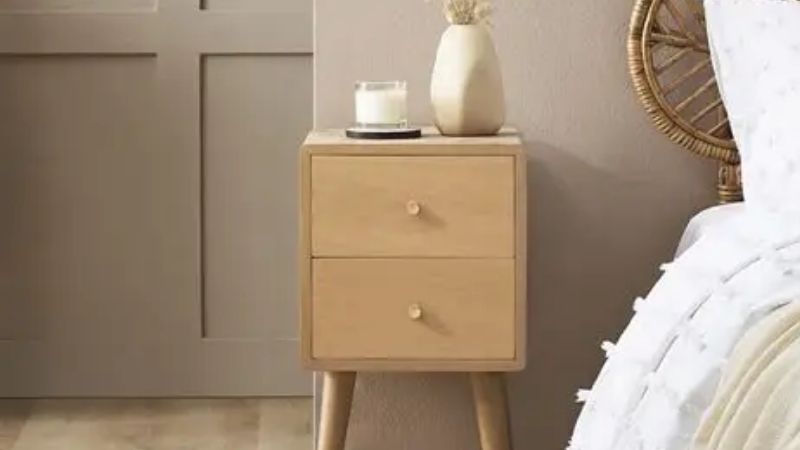
Measure the Available Width First
Width is the whole point of a narrow table, so measure the gap it must fit first. The picks here run from 14 inches on the Pottery Barn Winslet and WyndenHall Norfolk to 15.4 inches on the round West Elm Belle, with the IKEA GULLABERG at 15, so the usable range is barely over an inch across the group of four.
Measure the clear space between the bed and the wall or the nearest furniture, then subtract a little so the table does not wedge in tightly. A 14-inch table suits the narrowest gaps, while 15 to 15.4 inches needs slightly more room. Because the widths here are so close, the gap you have will often decide which actually fits.
Round tables measure width by diameter, which can mislead. The West Elm Belle is 15.4 inches across at its widest point, not 14, so it needs more clearance than its compact look suggests. Read a round table’s diameter as its width, and confirm it against the gap, rather than assuming a small round top is narrower than a square one.
Check Depth So a Narrow Table Does Not Protrude
A narrow table can still be deep, which changes how far it sticks out beside the bed. The WyndenHall Norfolk is 14 inches wide but a full 24 inches deep, while the Pottery Barn Winslet is 14 by 14 and the GULLABERG 15 by 15.75, so two tables of the same width can occupy very different amounts of floor front to back.
Measure the depth against how far the table can project before it blocks a walkway or a door. A deep table like the Norfolk offers more surface and storage but reaches further into the room, which a tight bedroom will feel. If the walkway is the constraint, a square 14-by-14 table protrudes far less than a 24-inch-deep one does.
This is where footprint beats width as the real test. The Norfolk is tied for the narrowest width yet has the largest footprint here, about 2.33 square feet, precisely because of that 24-inch depth. So judge the floor cost by width and depth together, not width alone, which is what makes a narrow table genuinely space-saving in practice.
Compare Storage Per Square Foot
Storage and the floor it costs vary a lot across these. The Pottery Barn Winslet packs three drawers into a 14-by-14 footprint, the GULLABERG hides a drawer plus a cabinet behind a door in a taller body, and the Belle offers a compartment and two shelves on a round steel frame, so each delivers storage differently per square foot.
Decide whether you want hidden or open storage in the space you have. Drawers like the Winslet’s keep clutter out of sight in a tiny footprint; a door-fronted cabinet like the GULLABERG’s hides more but needs the height; open shelves on the Belle keep items reachable. Match the type to your bedside habits and the floor you can give up.
Mind the load limits, which differ widely. The Winslet lists a 132-pound top but only about 5.5 pounds per drawer, while the steel Belle is rated to 250 pounds, so what you can store and stack is not the same. Keep heavy items on the stronger surfaces and within the drawer limits so a compact table does not sag or jam.
Match Height to the Bed and Mattress
Height should land near the top of the mattress so the surface is easy to reach from bed. These run from the WyndenHall Norfolk at 20 inches to the IKEA GULLABERG at 29.5, with the Winslet at 26 and the Belle at 24, so the right one depends entirely on how tall your bed and mattress sit together in the room.
Measure from the floor to the top of your mattress, then choose a table within a few inches of it. A low platform bed pairs with a shorter table like the Norfolk, while a tall bed with a thick mattress suits the GULLABERG at 29.5 inches. A table far below the mattress makes a lamp or glass an awkward downward reach.
A tall, narrow table also raises a stability point. The GULLABERG stands 29.5 inches tall on a slim base, so like any tall narrow piece it is steadier anchored and loaded low, with heavier items near the bottom. Matching the height to the bed and keeping the weight low keeps a slim nightstand both usable and stable over time.
Top Picks
Each pick below fills a clear role, with width, footprint, storage and height drawn from the makers’ listings, current as of October 2026. Prices move and some reflect sales, so confirm before buying. The table pairs the standout figure with the main catch for each nightstand before the detail that follows below it here.
| Product | Best For | Key Spec | Watch Out For |
|---|---|---|---|
| Pottery Barn Winslet Mini | Best Overall | 14 × 14 in; 3 drawers | Higher price tier |
| West Elm Belle | Best Smallest Footprint | ~1.29 sq ft; 15.4 in round | Diameter is 15.4 in, not 14 |
| WyndenHall Norfolk | Best Deep Storage on 14 in | 14 in W; drawer + shelf | 24 in deep; largest footprint |
| IKEA GULLABERG | Best Tall Hidden Storage | 15 in W; 29.5 in tall; drawer + door | Taller than the others |
Pottery Barn Winslet Mini: Best Overall
The Pottery Barn Winslet Mini is the overall pick for the most storage in the smallest footprint. It measures 14 inches wide by 14 deep by 26 tall, packs in three drawers, lists a 132-pound top with roughly 5.5 pounds per drawer, and sells for around $399 at Pottery Barn as of October 2026, the premium option in this group.
It suits a tight bedside where you still want drawers to hide clutter, since three of them fit within a compact 14-by-14 footprint that stays out of the walkway. The 26-inch height pairs with a standard bed. Confirm the 14-inch width and footprint against your gap, and keep each drawer within its roughly 5.5-pound limit when loading.
The catch is price: at around $399 it costs the most here, so it suits a buyer who values the three-drawer storage and the brand over a budget figure. The modest 5.5-pound-per-drawer limit also means keeping heavy items off the drawers. Choose it when hidden storage in a small footprint matters more than the cost does.
West Elm Belle: Best Smallest Footprint
The West Elm Belle is the pick for the smallest floor footprint. Round and 15.4 inches in diameter by 24 inches tall, it occupies about 1.29 square feet on a steel frame rated to 250 pounds, with a compartment and two shelves, and lists around $199 at West Elm as of October 2026 in the mid tier for a compact nightstand.
It suits a tight corner beside the bed where a round top with no sharp corners keeps a walkway safe, and the 250-pound steel frame is far sturdier than its slim look suggests. The open shelves keep items reachable. Note its footprint is only about 5.2 percent smaller than the Winslet’s, so the two have similar compact footprints.
The catch is that its width is 15.4 inches, the diameter, not 14, so it needs a little more clearance than the square 14-inch tables despite the smaller footprint. Read that diameter as the width when measuring your gap. Choose the Belle when a round, sturdy, floor-saving table suits the spot better than a boxy drawered one does.
WyndenHall Norfolk: Best Deep Storage on a 14-Inch Width
The WyndenHall Norfolk is the pick when you want depth-driven storage on a narrow width. It is 14 inches wide but a full 24 inches deep and 20 tall, built from solid wood with a drawer and an open shelf, carries a one-year warranty, and lists around $122.39 at Target as of October 2026 in the budget-to-mid range.
It suits a bed where the gap is narrow but there is room to project back, since the 24-inch depth adds surface and storage front to back that a square table cannot. Solid-wood construction is a plus at the price. Measure the depth, not just the width, because this table reaches far further into the room than its 14-inch face implies.
The catch is exactly that depth: at 14 by 24 inches it has the largest footprint here, about 2.33 square feet, so it is narrow but not space-saving overall. If the walkway beside the bed is tight, that depth may protrude too far. Choose it when you can spare the floor front to back and want the extra solid-wood storage it brings.
IKEA GULLABERG: Best Tall Hidden Storage
The IKEA GULLABERG is the pick for hidden storage in a tall, slim body. It measures 15 inches wide by 15.75 deep by 29.5 tall, the tallest here, and hides a drawer plus a cabinet behind a door, listing around $99.99 at IKEA as of October 2026 in the budget tier for a nightstand with fully concealed storage inside.
It suits a taller bed with a thick mattress, where the 29.5-inch height keeps the surface within easy reach, and the door-fronted cabinet hides more than drawers alone. The compact 15-by-15.75 footprint stays out of the way. Measure your mattress height against the 29.5-inch top, since this table is clearly taller than the other three.
The catch is that height on a slim base: a 29.5-inch narrow table is steadier when loaded low and, like any tall piece, benefits from keeping heavy items near the bottom. Pair it with a tall bed so the proportions work, and keep the weight low in the cabinet, and its hidden storage earns its place beside a higher mattress.
Frequently Asked Questions
Buyers of narrow nightstands ask the same core questions, mostly about how narrow is practical, whether 14 inches is enough, and how the table sits beside the bed. Each answer below leads with the direct reply, then adds the condition that changes it, so you can apply it to your exact gap and bed rather than a single rule.
How narrow can a bedside table be?
Around 14 inches is about as narrow as these practical nightstands go while still holding a lamp and a few items. The WyndenHall Norfolk and Pottery Barn Winslet are both 14 inches wide, the narrowest here, with the GULLABERG at 15 and the round Belle at 15.4, so 14 inches is a realistic floor for everyday bedside use.
How narrow you can go depends on what you keep on it. A 14-inch top holds a lamp, a phone and a book comfortably, but a wide tray or large lamp base may need more, so measure your items against the top. Narrower than 14 inches tends to sacrifice usable surface faster than it saves meaningful floor space in most rooms.
Because the narrowest tables here tie at 14 inches, do not single one out as the narrowest. The Norfolk and Winslet share that width, and the choice between them comes down to depth and storage, not width. Measure your gap, confirm a 14-inch table clears it, and then let the footprint and layout decide between close widths.
Is 14 inches wide enough for a nightstand?
For most bedsides, yes. A 14-inch width, as on the Winslet and Norfolk, holds a lamp, a phone and a book or glass, which covers typical nightstand duty. If you keep only the essentials within reach, 14 inches is enough; the limit shows only when you want a wide tray or several items spread out at once across the top.
It depends on the surface shape and what you place on it. A 14-inch square top like the Winslet’s gives more usable area than a round top of similar width because it has no rounded corners, so shape matters alongside the number. For a larger lamp or a stack of books, a couple more inches of width helps noticeably in practice.
Weigh the surface against the floor you save. A 14-inch table keeps the walkway clear in a tight room, which is often worth more than a slightly bigger top, especially beside a single or platform bed. If you find 14 inches cramped, the issue is usually what you are storing, so trim the bedside clutter before sizing up at all.
Does a narrow nightstand save floor space?
Only if it is shallow as well as narrow, because footprint is width times depth. The WyndenHall Norfolk is narrow at 14 inches yet has the largest footprint here, about 2.33 square feet, because it is 24 inches deep, so a narrow table can actually take the most floor of the group despite its slim face at the front.
To genuinely save space, check the depth too. A 14-by-14 table like the Winslet or a round Belle at about 1.29 square feet occupies far less floor than the deep Norfolk, so compare the full footprint, not just the width. The near-tie between the Belle and Winslet shows how close the most compact options really are to each other.
Match the saving to where you need it. If the gap beside the bed is narrow but deep, a deep table fits and adds storage; if the walkway in front is tight, a shallow footprint matters more. So narrow saves floor only when paired with a modest depth, which is why footprint, not width, is the number to compare here.
Should a bedside table be level with the mattress?
Roughly level with or just below the top of the mattress is the usual aim, so the surface is easy to reach from bed. These range from 20 to 29.5 inches tall precisely because mattress heights vary, so the right table is the one that lands near your mattress top rather than a single standard height for all beds.
Measure from the floor to the top of your mattress, then pick a table within a few inches of that. A low platform bed suits a shorter table like the 20-inch Norfolk, while a tall bed with a thick mattress suits the 29.5-inch GULLABERG. A surface far below the mattress makes reaching a lamp or glass awkward each night.
Slightly below the mattress top usually beats well above it. A table a little lower keeps a drink from being knocked at pillow height and still reads neatly beside the bed, while one much taller can feel looming and block the view. Match the height to your actual bed build, since mattresses and frames together set that number.
Final Thoughts
Choosing a narrow bedside table means separating narrow from small: measure the width for the gap, then the depth and footprint for the floor it costs, before weighing storage and height. The compact Winslet, round Belle, deep Norfolk and tall GULLABERG each suit a gap and bed, and the narrowest width rarely saves the most floor.
