
Key takeaways
- The right platform bed frame for memory foam mattress support is decided by one number you do not set — the maximum slat gap your mattress brand allows. Exceed it and you can void the warranty. This guide compares support…
The right platform bed frame for memory foam mattress support is decided by one number you do not set — the maximum slat gap your mattress brand allows. Exceed it and you can void the warranty. This guide compares support types against the foundation rules Casper, Tempur-Pedic and Purple actually publish.
As an Amazon Associate we earn from qualifying purchases.
By KK Home Furnishings Editorial Team
How to Choose a Platform Bed for Memory Foam
A foam mattress needs even, firm support, so a platform frame is judged by its slats, not its looks. The decisive spec is the gap between slats against your mattress warranty, which varies by brand. Four things decide the buy: the slat gap, slat width and support, frame capacity, and whether it matches your warranty.
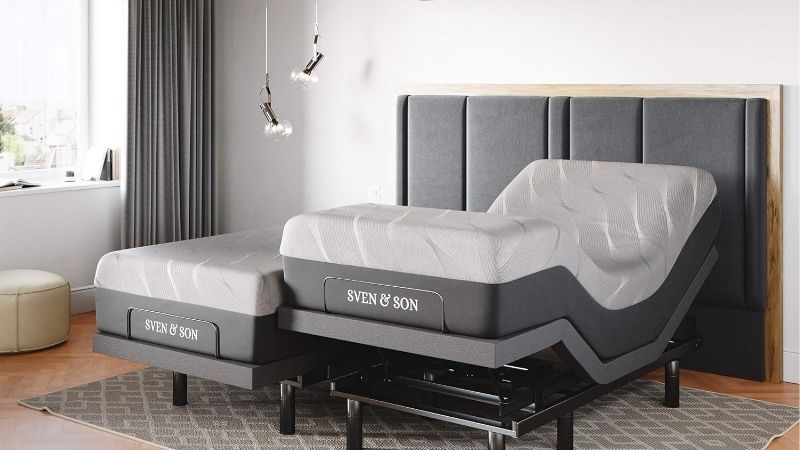
Slat Gap Is the Decisive Spec
The number that matters most is the maximum slat gap your mattress brand allows. Casper, for example, specifies flat wooden slats no more than 4 inches apart; Tempur-Pedic calls for structurally sound slats around 3 inches wide and no more than 4 inches apart. Exceed the brand’s figure and you risk voiding coverage.
Brands differ, so read yours before buying any frame. Purple, for instance, requires a maximum slat gap under about 3.5 inches on a third-party platform — tighter than Casper’s 4. The frame has to meet the exact rule for the mattress you own, so the decisive number comes from your warranty, not the frame listing.
A gap that is too wide is the quiet warranty-killer. Foam sags into over-wide slats over time, which the brand treats as misuse, not a defect, so coverage lapses. Measure any frame’s actual slat gap and compare it to your mattress rule before buying, since this one number decides whether the bed is even eligible for a claim.
Slat Width and Real Support
Gap is only half of support; slat width and material matter too. Tempur-Pedic asks for slats around 3 inches wide so they carry load without digging in, and Casper specifies flat wooden slats rather than thin rounded ones. Thin or widely spaced slats flex under a heavy foam mattress even if the gap looks acceptable.
Match the support to the mattress weight and your body. A heavy hybrid or thick all-foam bed loads the slats more, so wider, closer, sturdier slats hold their shape longer. Check that the slats are secured to the rails, not just resting, since slats that shift open a gap wider than the warranty allows over time.
Support failures show as a dip you can measure, not just feel. A slat that bows or a gap that widens lets the foam settle unevenly, which reads as a sag. Favor a frame with secured, adequately wide slats and, ideally, replacement slats available, since a single bowed slat should not retire a sound mattress or its warranty.
Frame Capacity and Center Support
Capacity matters for larger beds and heavier sleepers. Purple lists a minimum frame capacity around 750 pounds for its mattresses, counting the bed and sleepers together, not body weight alone. Match the frame’s rating to the real load — mattress plus occupants plus bedding — rather than assuming any platform is strong enough.
Wider frames need center support. A Queen or larger platform should have a center rail and legs that reach the floor, since the middle is where a wide deck sags under a heavy foam mattress. Count the center legs and confirm they touch the floor, as this carries the span that the perimeter frame alone cannot.
Capacity ratings are not standardized between makers, so a bigger number is not automatically sturdier. Treat the figure as a floor and prioritize verified center support and secured slats over a headline rating. Favor a frame that sells replacement legs and slats, since those parts, not the frame as a whole, are what give out first.
Match the Frame to Your Warranty
Before anything else, line the frame up with your specific mattress warranty. The required slat gap, slat type and sometimes a center support all come from the brand, and they override any generic platform claim. A frame marketed as foam-friendly still has to meet your brand’s exact numbers to keep coverage valid.
Where a frame does not publish its slat gap, measure it or ask the seller for the exact figure before buying, and compare it to your warranty. If a frame’s gap is too wide, a bunkie board or a sheet of plywood closes it, though that can reduce airflow, so weigh that against simply choosing a closer-slatted frame.
Keep the proof. Save your mattress warranty’s foundation clause and note the frame’s slat gap, since a claim can hinge on showing the bed sat on compliant support. The decisive spec is a rule you must document, not just meet, so a frame whose gap you can verify is worth more than one whose spec you are guessing at.
Support Types Compared
No single platform reliably publishes its slat gap, so the honest comparison is by support type against your mattress rule, not a ranked list of SKUs. The table weighs four support approaches on the gap that decides compliance. Each leans on the mattress-brand rules above and a tier, not a fixed price — confirm it.
| Product | Best For | Key Spec | Watch Out For |
|---|---|---|---|
| Close-spaced wooden slats | Most foam warranties | Gap ~3–4 in max per brand | Must meet your exact brand rule |
| Metal platform or wire deck | Durability and capacity | Verify gap; needs center support | Many exceed foam slat-gap rules |
| Solid platform or bunkie board | Any mattress, closes gaps | Effectively zero gap | Can reduce under-mattress airflow |
| Slatted frame plus foundation | Mixed or uncertain frames | Match to your warranty figure | Adds height; confirm total height |
Close-Spaced Wooden Slats: Best for Most Foam Warranties
The gold standard for foam is a frame with close-spaced, flat wooden slats. It meets the common brand rules directly: Casper’s 4-inch maximum gap, Tempur-Pedic’s roughly 3-inch-wide slats no more than 4 inches apart. It reads budget-to-mid tier depending on the frame; confirm the current price and the measured slat gap.
This support suits most all-foam and hybrid mattresses because the slats carry load evenly and breathe underneath. Measure the actual gap on any wooden-slat frame and compare it to your brand’s figure, since listings often omit it. A frame at or under your mattress rule needs no extra board, which keeps airflow intact.
The failure point is slats that shift or bow, widening the gap over time, so favor slats secured to the rails and sold as replacements. A bowed or missing slat is a cheap fix if parts exist, but a frame whose gap creeps past the warranty limit is a claim risk, so re-check the spacing after moves and heavy use.
Metal Platform or Wire Deck: Best for Durability and Capacity
A metal platform or wire deck offers strength and higher capacity — Purple’s rule, for instance, asks for at least a 750-pound frame — but the support geometry varies. Some metal decks have wide-set bars or wires that exceed foam slat-gap rules, so the gap, not the metal, is what you verify against your warranty.
It suits heavier sleepers and larger beds where capacity and a sturdy center are priorities, provided the deck’s gaps meet your mattress rule. Confirm center support legs reach the floor on a Queen or larger. Where the deck’s spacing is too open for foam, a bunkie board on top closes it while keeping the metal frame’s strength.
Metal frames can creak at the joints over time and, if the deck flexes, let foam settle unevenly. Judge by the gap and the center support, not the capacity headline, since ratings are not standardized. Favor a frame that sells replacement parts, and verify the deck’s spacing against your warranty before trusting it with foam.
Solid Platform or Bunkie Board: Best for Closing Gaps
A solid platform, or a bunkie board added over slats, gives foam a continuous base with effectively no gap, which satisfies any brand’s slat rule by eliminating the gap entirely. It reads budget-to-mid tier depending on whether it is a full solid platform or a board added to a frame you own; confirm the current price.
This is the safest route when a frame’s slat gap is too wide or unverified, and for mattresses with strict rules. The trade is airflow: a fully solid base reduces the under-mattress ventilation that slats provide, which can matter for moisture and heat, so a slatted bunkie board is often a better compromise than a solid sheet.
Over time, moisture is the thing to watch under a solid base, since trapped humidity can affect the mattress. A perforated or slatted bunkie board mitigates this while still closing the gap. Favor a board sized to your bed, and check your warranty accepts a bunkie board, since a few brands specify slats directly instead.
Slatted Frame Plus a Foundation: Best for Uncertain Frames
If a frame’s slat gap is unverified or borderline, adding a foundation or a bunkie board on top brings it into compliance with your warranty. This pairs a frame you like with support your mattress requires. It reads mid tier once you add the foundation; confirm the current price of both and the resulting total bed height.
This suits mixed situations — a stylish frame with wide slats, a hand-me-down platform, or a listing that omits the gap. Measure the frame’s gap, then add a board that closes it to your brand’s figure. Remember the added layer raises the sleep surface, so total the frame, foundation and mattress heights before committing.
The watch-out is stacking without checking the warranty, since a few brands require slats of a specific width rather than any added board. Confirm your mattress accepts the combination, and that the foundation does not reduce airflow more than you want. Done right, this makes almost any frame compliant without replacing it.
Frequently Asked Questions
Foam-mattress buyers ask the same support questions: how far apart slats can be, whether they need a box spring, whether a metal frame works, and how to tell if a frame is foam-friendly. The answers below use the published brand rules above rather than a generic platform claim on a listing.
How Far Apart Can Slats Be for a Foam Mattress?
It depends on your brand, but roughly 3 to 4 inches is the common ceiling. Casper allows up to 4 inches between flat wooden slats; Tempur-Pedic is similar; Purple is tighter at under about 3.5 inches. Read your own warranty, since the exact maximum is set by the mattress maker, not by a general rule or the frame.
Measure the actual gap on any frame and compare it to your figure before buying. If the gap is too wide, add a bunkie board or plywood to close it rather than risking the warranty, accepting the small airflow trade. The gap is the decisive spec, so verify it rather than trusting a foam-friendly label on the listing.
Keep slats secured so the gap does not widen as they shift, and re-check after moving the bed. A frame whose spacing meets your brand rule and holds it is what keeps both the mattress supported and the coverage valid. When in doubt, a closer gap is safer than a wider one for any foam or hybrid mattress.
Do I Need a Box Spring With a Platform Frame?
Usually not. A platform frame with compliant slats or a solid deck supports a foam mattress directly, so a traditional box spring is not required and can even be wrong, since its springs do not suit foam. What a foam mattress needs is a firm, even, gap-compliant base, which a proper platform already provides underneath.
If your frame’s slat gap is too wide, add a bunkie board rather than a box spring, since the board closes the gap while a box spring does not. Check your warranty, as it specifies the base type. The goal is firm, even support within the brand’s slat rule, not the bounce a box spring adds to an innerspring bed.
Watch the total height if you add any layer, since a frame plus foundation plus a thick foam mattress can sit high. Total the heights before buying so the bed is comfortable to get into. For most platform frames, the right answer is compliant slats and no box spring, with a bunkie board only to close a wide gap.
Can I Use a Metal Platform for Memory Foam?
Yes, if its gaps meet your mattress rule. Metal platforms and wire decks can support foam well and often carry higher capacity, but some have bars or wires spaced wider than foam warranties allow. The metal is fine; the spacing is what you verify, comparing the deck’s actual gap to your brand’s maximum before buying.
On a Queen or larger metal frame, confirm center support legs reach the floor, since the middle is where a wide span sags under foam. If the deck’s gaps are too open, a bunkie board on top closes them while keeping the metal strength. Treat any capacity number as a floor, not proof of suitability for your mattress.
Metal frames can creak as joints loosen, so re-tighten after a move and add felt where slats meet rails. Judge the frame by its verified gap and center support rather than its rating, and favor one with replacement parts. A compliant metal platform is a durable base for foam when the spacing actually meets your warranty.
How Do I Know If a Frame Is Foam-Friendly?
Check three things against your warranty: the slat gap, the slat width and support, and the frame capacity. A foam-friendly frame has slats within your brand’s maximum gap — often 3 to 4 inches — that are wide and secured, plus enough capacity and center support for your bed. If any is missing from the listing, ask or measure.
Do not rely on a foam-friendly or platform label alone, since those are not warranty terms. The decisive proof is the measured slat gap matching your brand’s figure. Where a frame omits the number, measure it yourself or request it from the seller, and treat an unverifiable gap as a reason to close it with a board.
Document what you buy: note the frame’s gap and keep your warranty’s foundation clause, since a claim can turn on showing compliant support. A frame whose spec you can verify and record is foam-friendly in the way that counts; one whose gap you are guessing at is a risk no matter how it is marketed on the page.
Final Thoughts
The right platform bed frame for memory foam mattress support is the one whose actual slat gap meets your mattress brand’s rule — Casper’s 4 inches, Purple’s under 3.5, your warranty’s figure — not the one that merely calls itself foam-friendly. Measure the gap before buying, close a wide one with a bunkie board, and keep the warranty clause on file.
