Key takeaways
- A round outdoor dining table is chosen by its diameter and how many chairs fit around it, then by a material you can actually maintain outdoors. This roundup compares four verified round tables from 47 to 54.5 inches across by…
A round outdoor dining table is chosen by its diameter and how many chairs fit around it, then by a material you can actually maintain outdoors. This roundup compares four verified round tables from 47 to 54.5 inches across by seating, outdoor construction and weather care, so the one you pick fits the patio and the way you will look after it.
As an Amazon Associate we earn from qualifying purchases.
By KK Home Furnishings Editorial Team
How to Choose a Round Outdoor Dining Table
A round outdoor table earns its place on two things: the diameter that sets how many fit, and the material that sets the upkeep. Before the look or the price, confirm diameter and chair count, leave room for chairs and a walkway, compare the materials, and read each maker’s weather notes, because outdoor never means maintenance-free.
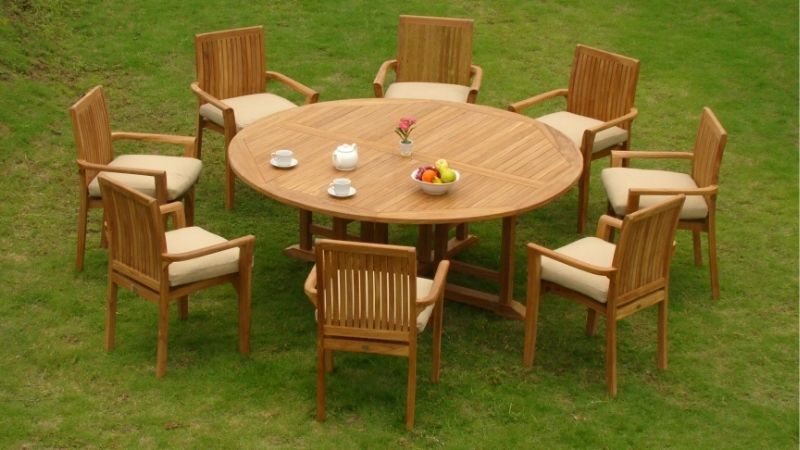
Start With Diameter and Chair Count
Diameter drives how many chairs fit, so start there. These run from 47 inches on the Article Ballo to 54.5 on the Article Calliope, with the IKEA NAMMARO at 51.125 and the Pottery Barn Abbott at 48, and the makers rate seating from two to four, so match the diameter to the number of people you actually need to seat regularly.
Read the maker’s seating figure alongside the diameter. The Ballo seats four, the Calliope three to four, and the Abbott two to four, while the NAMMARO’s seating was not published, so use the stated capacity where given. A round table seats people more flexibly than a rectangle, since chairs tuck anywhere around the edge not only on the sides.
Do not rank these on diameter alone, because they are close. Each adjacent pair here differs by under about seven percent, so none is far larger than the next, and the diameter determines fit. Choose the size that seats your group and suits the patio, then weigh material and care rather than chasing an inch of width.
Leave Space for Chairs and Circulation
A round table needs clearance for pulled-out chairs and a walkway, not just its own diameter. Plan roughly two to three feet of space beyond the table edge on each side so chairs can pull out and people can pass, which means a 48-to-54-inch table needs a patio area several feet wider than the table in every direction to work comfortably.
Measure the full circle the setup occupies, including chairs. Add the table diameter plus the clearance for chairs to slide back and a path around them, then check that against the patio or deck. A round table suits a square or open space better than a long narrow one, so match the shape of the table to the shape of the area it will sit in.
Account for the chairs you will use, since they vary. Deep lounge-style chairs need more pull-out room than slim bistro chairs, so the same table can need very different total space depending on the seating. Map the table and chairs on the patio before buying, because a table that fits the floor can still leave no room to actually sit down.
Compare Acacia, Aluminum, Steel/Wicker and Concrete
The four tables use very different outdoor materials, and each ages on its own terms. The NAMMARO is solid acacia, the Ballo powder-coated aluminum, the Calliope acacia with powder-coated steel and resin wicker, and the Abbott FSC acacia with a sealed concrete top, so the upkeep and weather tolerance differ markedly across the group.
Match the material to the care you will do. Acacia needs oiling or re-staining to hold its color; powder-coated aluminum resists rust and asks little beyond wiping; a concrete top can mark and benefits from sealing; a steel-and-wicker build handles sun but the steel wants its coating intact. Pick the upkeep that fits your climate.
No outdoor material is maintenance-free, so judge by the routine. Aluminum is the lowest-care here, wood and concrete the highest, and a mixed build sits between, so the material is a commitment, not a guarantee. The real failure points are drying wood, chipped coatings, and sealed surfaces left to weather, so care matches the material you choose.
Read Weather-Care Instructions Before Buying
Each maker gives specific weather care, and the rules differ. IKEA says the NAMMARO needs re-staining, often once or twice a year; Article recommends storing the Ballo indoors in rainy, cold climates and not pressure-washing it; and Pottery Barn covers the Abbott in bad weather and stores it indoors during extended bad spells.
Follow the instruction for your table’s material, not a general rule. A protocol that fits acacia, like re-staining, does not apply to aluminum, which has no such need, so do not assume one material’s care covers the whole category. Read the maker’s notes for the exact table and build your seasonal routine around them.
Treat outdoor as weather-tolerant, not weatherproof. Even a sturdy concrete or aluminum table benefits from covering or storage in harsh weather, and Pottery Barn makes that explicit for the Abbott. So plan to cover or store whichever table you choose during the worst of the season, not leaving any of them out indefinitely through a full winter.
Top Picks
Each pick below fills a clear role, with diameter, material and weather care drawn from the makers’ listings, current as of October 2026. Prices move, so confirm before buying. The table pairs the standout figure with the main catch for each, and every one needs seasonal care rather than being left out all year round.
| Product | Best For | Key Spec | Watch Out For |
|---|---|---|---|
| Article Ballo 47 | Best Overall | 47 in; seats 4; aluminum | Store indoors in rainy/cold climates |
| IKEA NAMMARO | Best Solid-Acacia Pick | 51.125 in; solid acacia | Needs periodic re-staining |
| Article Calliope | Best Larger Acacia/Wicker | 54.5 in; seats 3-4 | Avoid prolonged sun and extreme weather |
| Pottery Barn Abbott | Best Concrete-Top Premium | 48 in; 226 lb; seats 2-4 | 145 lb table; cover in bad weather |
Article Ballo 47: Best Overall
The Article Ballo 47 is the overall pick for low-maintenance outdoor dining. It is a 47-inch round table 29 inches tall in powder-coated aluminum, seats four, and lists around $799 at Article as of October 2026 in the mid tier, offering the easiest upkeep here since aluminum resists rust without the oiling or sealing wood and concrete need.
It suits a patio where you want a seat-four round table with minimal fuss, and the aluminum build wipes clean and tolerates sun and rain better than wood. Measure the 47-inch diameter plus chair clearance against the patio. The light aluminum is also easier to move than the heavy concrete or acacia tables when you rearrange the space.
The catch is that aluminum is low-care, not no-care: Article still recommends storing it indoors in rainy and cold climates and not pressure-washing it, so it is weather-tolerant not weatherproof. Follow that guidance to protect the finish. Choose the Ballo when easy upkeep and a clean seat-four round table matter more than a natural look.
IKEA NAMMARO: Best Solid-Acacia Pick
The IKEA NAMMARO is the pick for solid wood at the lowest price. It is a 51.125-inch round table in solid acacia with an acrylic stain, and lists around $249.99 at IKEA as of October 2026, by far the cheapest option here and the choice for a buyer who wants the warmth of real wood on a budget out on the patio.
It suits a patio that wants a natural acacia look and a generous 51-inch diameter for a group, at a price well below the others. Measure the diameter plus chair clearance against the space. The seating capacity was not published, so judge how many chairs fit by the diameter and the chairs you plan to use around its round edge.
The catch is upkeep: IKEA recommends re-staining the acacia regularly, often once or twice a year, to keep its color and resist drying, so this is the highest-maintenance table here. That is the nature of solid wood outdoors, not a flaw. Choose the NAMMARO when you want real acacia at a low price and will keep up the re-staining.
Article Calliope: Best Larger Acacia/Wicker
The Article Calliope is the pick for the largest round top in a mixed build. It is a 54.5-inch round table 30 inches tall, seating three to four, built from a solid acacia top with a powder-coated steel frame and resin wicker, and lists around $699 at Article as of October 2026 in the mid tier for an outdoor dining table.
It suits a patio that wants the biggest round surface here and a textured wicker-and-wood look, with the acacia top and steel frame giving it substance. Measure the 54.5-inch diameter plus chair clearance, since it needs the most space. The mix of materials combines the warmth of wood with the structure of a coated-steel and resin-wicker base.
The catch is care across materials: Article advises avoiding prolonged sun and extreme weather, the acacia top wants periodic care, and the steel frame needs its coating kept intact at joints. So it asks more attention than the aluminum Ballo. Choose the Calliope when the larger surface and the acacia-and-wicker look are worth the added upkeep.
Pottery Barn Abbott: Best Concrete-Top Premium
The Pottery Barn Abbott is the premium pick with a concrete top. It is a 48-inch round table 30 inches tall seating two to four, built from FSC acacia with a sealed concrete top and adjustable levelers, carries a 226-pound capacity, and lists around $1,598 at Pottery Barn as of October 2026, the most expensive option in this group.
It suits a patio that wants the solid, modern look of a sealed concrete top and the stability of adjustable levelers on uneven ground, and the 226-pound capacity is generous for dining. Measure the 48-inch diameter plus chair clearance. The concrete-and-acacia build reads substantial and premium, which the price reflects.
The catches are weight and care: at a listed 145-pound table weight it is heavy to move, and Pottery Barn instructs covering it in inclement weather and storing it indoors during extended bad spells, so outdoor does not mean maintenance-free. Choose the Abbott when the concrete-top look and build justify the price and the seasonal covering it requires.
Frequently Asked Questions
Buyers of round outdoor tables ask the same core questions, mostly about seating, materials, winter and clearance. Each answer below leads with the direct reply, then adds the condition that changes it, so you can apply it to your patio and climate not a blanket claim that an outdoor table is weatherproof and can stay out all year.
What size round outdoor table seats four?
A round table of roughly 47 to 54 inches across typically seats four comfortably, which is the range these picks cover. The Ballo at 47 inches seats four, and the larger tables here seat three to four, so a diameter in the high 40s to low 50s suits a group of four, though the chairs and how people sit affect the real fit.
Allow room per seat around the circle. A rough guide is about two feet of edge per person, so a 48-inch round table gives roughly enough perimeter for four, but bulkier chairs or larger guests want more. Count the chairs you will actually use and check they fit around the edge without crowding before settling on a diameter for four.
Remember diameter sets fit, not comfort alone. A table that technically seats four can feel tight if the chairs are deep or the center is cluttered, so favor the upper end of the range if you dine often or host. For occasional use, the smaller end works; for regular meals with four, a little more diameter makes the table more comfortable.
Is aluminum easier to maintain than acacia?
Yes, powder-coated aluminum is generally lower-maintenance than acacia outdoors. Aluminum resists rust and mostly needs wiping, while acacia, like the NAMMARO’s, needs periodic oiling or re-staining to hold its color and resist drying, so the aluminum Ballo asks far less routine care than a solid-wood table does.
The trade-off is look and feel, not just effort. Aluminum reads cooler and more modern and shrugs off weather with little care, while acacia offers natural warmth that rewards the upkeep with character. Decide whether you prefer the low-care metal or the renewable, natural wood you are willing to oil or re-stain once or twice a year.
Neither is no-care, though. Aluminum still benefits from storage in harsh climates, as Article advises for the Ballo, and its coating can scratch, so even the lowest-maintenance option here has a routine. Compare aluminum and acacia on how much care you will realistically do, and plan the same seasonal covering for both to extend their life.
Can a concrete outdoor dining table stay outside all winter?
Not safely in most climates, despite concrete’s sturdiness. Pottery Barn instructs covering the Abbott in inclement weather and storing it indoors during extended bad-weather periods, so a concrete-top table is weather-tolerant not weatherproof, and leaving it exposed all winter risks marking, staining or damage to the sealed surface.
Climate and sealing decide how strict to be. In a mild, dry region a sealed concrete table copes better than in a freezing, wet one, where moisture and frost are harder on the surface, so match the care to your winter. Covering the table or moving it under shelter in the worst weather protects both the concrete and the wood base beneath.
Do not treat concrete as indestructible. It can stain and chip like any material, and the acacia frame beneath has its own care needs, so follow the maker’s instruction, not an assumption that a heavy table can be ignored. Plan to cover or store the Abbott through harsh weather, and it lasts; leave it fully exposed all winter and it will not.
How much room should I leave around a round dining table?
Leave roughly two to three feet of clear space beyond the table edge on every side, so chairs can pull out and people can pass. For a 48-to-54-inch round table, that means a patio area several feet wider than the table in each direction, so measure the full circle the table and pulled-out chairs occupy before you buy one.
The exact clearance depends on the chairs and the traffic. Deep or armed chairs need more pull-out room than slim bistro chairs, and a path people walk through needs more than a corner nobody uses, so map how the space is actually used. Add the table diameter, the chair pull-out, and a walkway to find the total footprint you need.
A round table is forgiving here, which helps a tight patio. Because chairs tuck anywhere around the circle and there are no corners to bump, a round table often fits a compact space better than a rectangle, but it still needs that clearance to be usable. Mark the full setup on the patio first, so the table leaves room to sit and move.
Final Thoughts
Choosing a round outdoor dining table means matching diameter and chairs, then material to your care: confirm the size, leave room for chairs and a walkway, and read each maker’s weather notes. The low-care Ballo, acacia NAMMARO, larger Calliope and concrete-top Abbott each suit a patio and climate; none is weatherproof all year.