
Key takeaways
- The right twin bed box spring is really a question of actual dimensions, height, and construction, since Twin does not mean one fixed foundation size across brands. This guide compares four current Twin foundations on real measurements and build so…
The right twin bed box spring is really a question of actual dimensions, height, and construction, since Twin does not mean one fixed foundation size across brands. This guide compares four current Twin foundations on real measurements and build so the base fits your frame and mattress.
As an Amazon Associate we earn from qualifying purchases.
By KK Home Furnishings Editorial Team
How to Choose a Twin Bed Box Spring
A foundation is chosen by numbers, not by looks, so these criteria cover measuring the actual Twin length and width, picking a low or standard height, checking the slat and frame construction, and confirming the mattress warranty accepts the base you plan to put under the bed in a given bedroom at home.
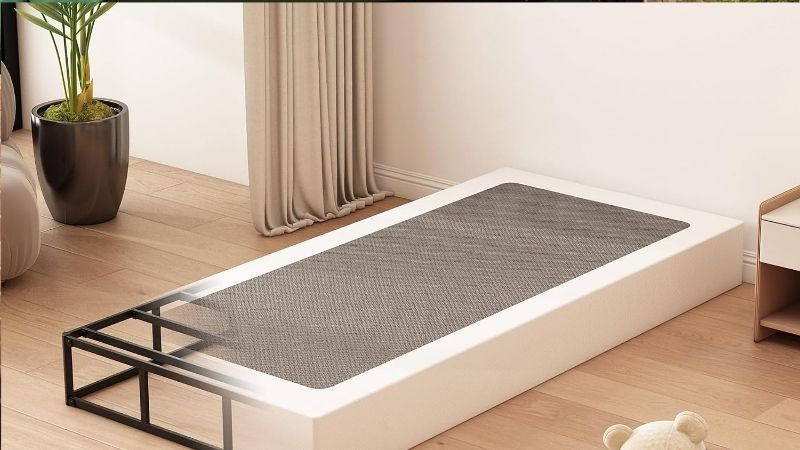
Measure Actual Twin Length and Width
Twin foundations are listed close to but not exactly 38 by 75 inches, and the differences matter for fit. The bases here measure 74 by 37.5, 74 by 38, and 74 by 38.5 inches, so a one-inch spread in width is normal, and the figure that counts is whether the base drops inside your frame’s rails cleanly.
Measure the frame’s interior length and width, then compare them to the foundation’s listed size before buying. A base at 38.5 inches wide will not seat in an opening cut for 37.5, so the frame measurement, not the mattress size, is what decides whether a given foundation fits the bed frame you already own.
Nominal size refers to a set of dimensions, not a single number, so do not expect every Twin base to be identical. Confirm the exact listed length and width for the model, since returning a bulky foundation that is half an inch too wide costs more in freight than the measurement would have taken to check first.
Choose 5-6 in vs 7-9 in Height
Foundation height sets how tall the bed sits and whether it reads as low or standard profile. The options here span a 5-inch Purple low base to a 9-inch Beautyrest standard, with Serta offering 6 or 9 inches, so the same mattress can sit noticeably lower or higher depending only on the base you pair with it.
Pick height for the user and the frame: a low 5-to-6-inch base keeps a child’s bed or a tall mattress within easy reach, while a 7-to-9-inch base restores a standard height under a thinner mattress. Add the frame’s deck height too, since the real number is the foundation plus the mattress plus the frame.
Low-profile bases exist precisely so a thick modern mattress does not create a bed that is hard to climb into at night. Decide the target total height first, then choose the foundation height to reach it, because swapping a base later means handling a bulky piece and often lifting the mattress off entirely to do it.
Check Slat and Frame Construction
Construction decides how evenly a foundation supports the mattress and how long it lasts under daily use. The Beautyrest base uses spruce with welded steel, and the Casper foundation lists 4-inch slat spacing, a gap tight enough to back foam and hybrid mattresses without the center dip that wide-slat bases allow.
Look at both the slat spacing and the material, since a steel-reinforced wood frame resists sagging better than thin unsupported slats. For foam and hybrid mattresses, closely spaced slats or a solid deck matter most, so a base with gaps near 4 inches or less gives the even surface those mattresses are designed to rest on.
Wide gaps are where failures start, letting a mattress bow between boards until the dip becomes permanent over time. If a foundation or frame lists slat gaps wider than roughly 3 inches, add a bunkie board, and check that a center support leg is included for the Twin size so the base is backed along its length.
Confirm Mattress Warranty Compatibility
A mattress warranty often names the support the bed must sit on, and the wrong base can void it entirely. Many foam and hybrid brands require a solid or closely slatted foundation, so the base’s slat spacing, like Casper’s 4 inches, should be checked against the mattress terms before the two are paired together.
Read the warranty for the exact requirement, since some brands demand a center support leg for Twin-and-up sizes while others accept any firm flat surface. A base rated for high structural loads, such as the Purple foundation’s line rating up to 2,000 pounds, also signals the kind of even support warranties expect.
Matching the foundation to the warranty protects both the mattress and the claim, so the fine print is worth reading before the purchase. If an older box spring is sagging, replacing it with a compliant flat foundation usually extends a newer mattress’s life, since a worn coil base can let the bed dip at the center.
Top Picks
These picks are current Twin foundations, compared on actual dimensions, height, construction, and rated support; all sit in the value-to-mid range, so confirm the exact listed height and check that your frame adds a center leg before ordering the base for a specific mattress and bed frame set at home.
| Product | Best For | Key Spec | Watch Out For |
|---|---|---|---|
| Casper Foundation | Best overall | 74×37.5×7.5 in; 4 in slat spacing | Check frame center support |
| Beautyrest Flat Foundation Standard | Best value | 74×37.5×9 in; spruce + welded steel | Taller 9 in profile |
| Purple Flat Foundation Low | Higher structural capacity | 74×38.5×5 in; up to 2,000 lb line rating | Low 5 in height |
| Serta Foundation | Two height options | 6 in or 9 in height | Confirm which height ships |
Best Overall – Casper Foundation
The Casper foundation suits buyers who want tight, mattress-friendly support at a moderate height. It measures 74 by 37.5 by 7.5 inches with 4-inch slat spacing, a combination that backs foam and hybrid mattresses evenly and sits between low and standard profile, which keeps most beds at a comfortable height.
The 4-inch slat spacing is the highlight, since closely set slats prevent the center dip that wide-gap bases cause, and it meets the support terms many bed-in-a-box warranties require. The 7.5-inch height gives a moderate total that fits most rooms without making a thick mattress sit uncomfortably tall overall.
The trade-off is that a slatted base relies on the frame beneath it, so confirm your frame adds a center support leg for the Twin size. Keep the assembly hardware as well, since a slatted foundation’s fasteners can loosen over time and are easier to tighten than to source again from the maker much later.
Best Value – Beautyrest Flat Foundation
The Beautyrest flat foundation fits budgets that still want a sturdy, well-built base under the mattress. It measures 74 by 37.5 by 9 inches and uses spruce with welded steel, a construction that resists sagging better than thin unsupported slats and sets a standard bed height under a thinner mattress.
The spruce-and-steel build is the draw, giving firm, even support without the flex of an old coil box, and the 9-inch height restores a classic standard profile. It pairs well with a thinner mattress where a low base would leave the bed sitting too close to the floor for comfortable entry and exit each day.
The 9-inch height is also the catch: under a thick mattress it can make a tall bed, so measure the total against the user’s reach. As a flat foundation rather than a coil spring, it offers steadier long-term support, but still needs a frame with center backing for the Twin size to avoid any mid-span flex.
Best for Higher Structural Capacity – Purple Flat Foundation
The Purple low foundation suits buyers who want a low profile with strong rated support. It measures 74 by 38.5 by 5 inches and carries a line load rating up to 2,000 pounds, so it keeps the bed low while signaling the kind of even, high-capacity support that heavier mattresses and users benefit from.
The 5-inch height is the standout, dropping a thick mattress to an easy-to-enter level, and the high line rating indicates a robust internal structure. It works well under a tall, heavy mattress where a standard base would push the bed uncomfortably high, giving a low total without sacrificing the support underneath.
The low height is also the limitation: at 5 inches it may leave a thinner mattress sitting lower than some users prefer. Its width is listed at 38.5 inches, slightly wider than the others here, so measure the frame opening carefully, since that extra half inch can decide whether the base seats cleanly in the rails.
Best for Two Height Options – Serta Foundation
The Serta foundation fits buyers who want to choose the bed’s height at the point of purchase. It comes in 6-inch and 9-inch versions, so the same base line can sit low for a child’s room or standard for an adult, which makes it flexible for households matching one model to different rooms and thicknesses.
The choice of height is the practical highlight: a 6-inch base keeps the total low under a thick mattress, while the 9-inch version restores standard height under a thinner one. Picking the height at the point of sale avoids the later hassle of swapping a bulky foundation just to change how tall the bed sits.
The watch-out is simply confirming which height ships, since the 6-inch and 9-inch versions change the bed’s total noticeably and are easy to mix up. As with any foundation, verify the frame adds a center support leg for the Twin size so the base is backed along its full length rather than only at the edges.
Frequently Asked Questions
These answers cover the fit and support questions buyers face when choosing a Twin foundation, from whether the base must match the mattress exactly, to how tall it will make the finished bed, and whether a modern mattress still needs a traditional coil box spring underneath it at all these days or not.
What size is a Twin box spring?
Twin foundations list close to 38 by 75 inches but vary slightly: the bases here measure 74 by 37.5, 74 by 38, and 74 by 38.5 inches. Nominal size means a set of dimensions rather than one exact figure, so small differences between models are perfectly normal and not a sign that a base has been mislabeled.
The number that decides fit is your frame’s interior opening, since the base must drop inside the rails to sit level. Measure the frame length and width and compare them to the foundation’s listed size, because a base wider than the opening will not seat no matter how closely it matches the mattress dimensions.
Height is the other variable, ranging here from 5 to 9 inches, so confirm both the footprint and the profile for the model. If you reuse an existing frame, check that it includes a center support leg for the Twin size so the foundation is backed along its length rather than only at the two perimeter rails.
Do I need a box spring or a foundation?
For most modern mattresses, a flat foundation rather than a coiled box spring is the right support underneath. Foam and hybrid beds usually call for a solid or closely slatted base, like Casper’s 4-inch spacing, so the term matters less than whether the support is firm, even, and accepted by the warranty.
A traditional box spring with internal coils can flex under a modern mattress and let it sag, while a flat foundation holds a steadier plane. Searches for a box spring often return flat foundations for exactly this reason, so read the construction and match it to the mattress type rather than the label alone.
If a platform bed already has closely spaced slats, it may need no separate base at all, only enough support and a center leg. Check the mattress warranty first, since it sets the requirement, and add a foundation only when the frame’s slats are too widely spaced to support the bed evenly on their own.
How tall should the foundation be?
That depends on the mattress and the user, with options here running from 5 to 9 inches. A low 5-to-6-inch base keeps a thick mattress within easy reach, while a 7-to-9-inch base restores a standard height under a thinner one, so the right profile is set by the bed’s total rather than the base alone.
Add the mattress and the frame’s deck height to the foundation to find the real number people step onto each night. For a child’s room or a very thick mattress, a low profile avoids a bed that is hard to climb into, while a standard height suits adults who would prefer not to bend down low to sit on the edge.
Decide the target total first, then choose the base height to reach it, since swapping later means moving a bulky piece. A line like Serta’s, offered in 6 and 9 inches, makes this easier, but confirm the shipped height, as the two versions change the bed’s total by a clearly noticeable margin either way.
Can I put a new mattress on an old box spring?
Sometimes, but an old coil box spring is often the wrong base for a new foam or hybrid mattress. Years of use can leave coils flexing unevenly, which lets a newer mattress sag at the center, and many warranties require a firm flat foundation rather than an aging coil spring box placed underneath it.
Inspect the old base for sagging, broken slats, or a soft center before reusing it, and check the new mattress warranty for its support terms. If the box spring flexes under hand pressure or the mattress warranty calls for a flat foundation, replacing the base is the safer move for the new mattress you bought.
A high-capacity flat foundation, such as Purple’s base rated up to 2,000 pounds along the line, restores even support an old box spring may have lost. Matching a compliant base to the mattress protects the warranty and usually extends the bed’s life, so the inspection is worth doing before the mattress goes on.
Final Thoughts
Choosing a twin bed box spring well comes down to the frame-fit measurement, the height you want, the slat construction, and the warranty terms. The Casper leads on tight 4-inch slat support, the Beautyrest on value, the Purple on a low profile with high rated capacity, and the Serta on two heights, so measure the frame first.
